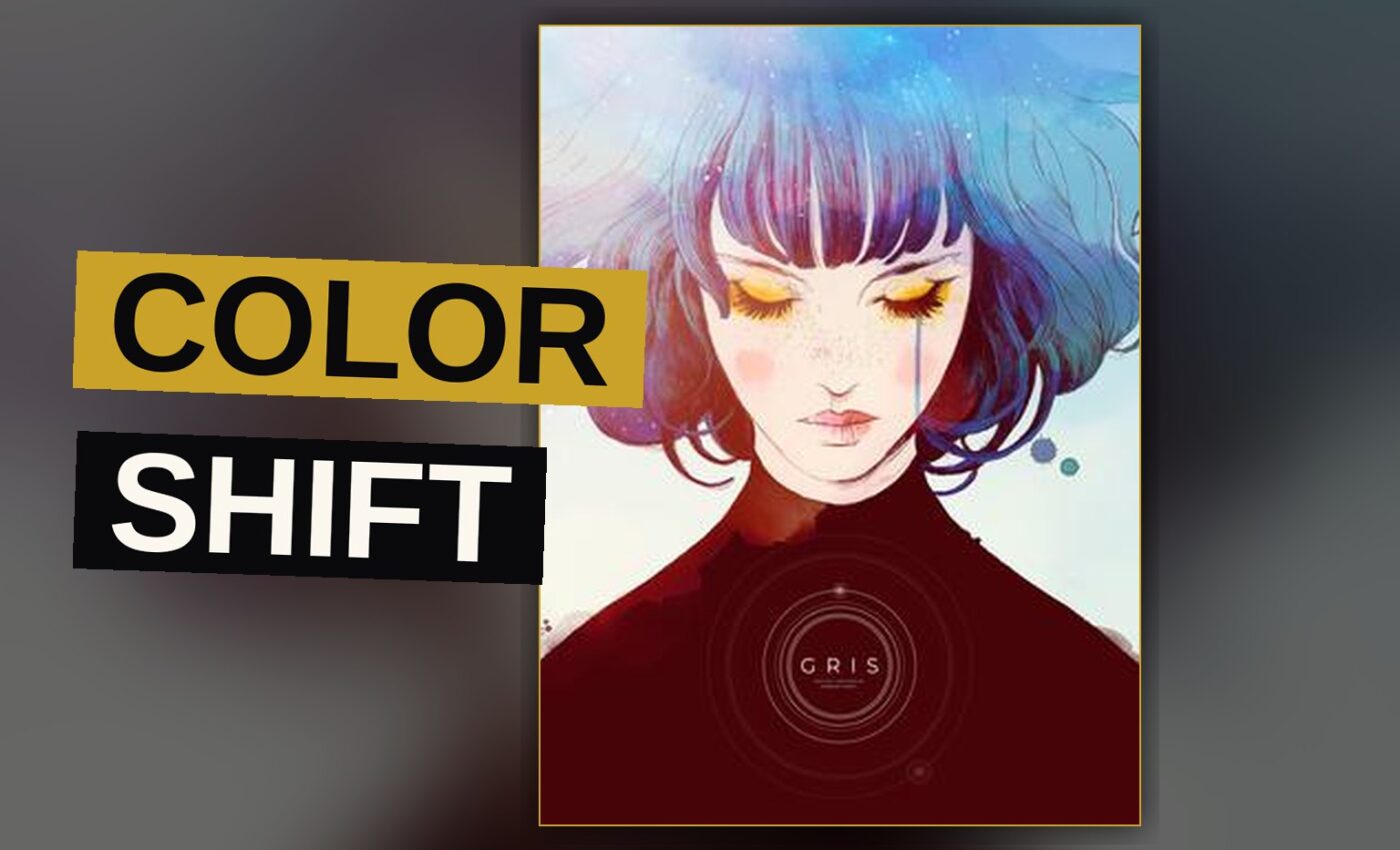
Gris is a quiet game about grief, and it knows exactly how much noise it needs to make that idea land. Made by the studio Nomada Studio, released for Series X|S, PS4, Android and PC in 2018, it follows a young woman named Madalena as she moves through a world that changes shape around her. The game does not explain itself much, and it does not need to. What it offers instead is a visual language so precise that every color shift and new power feels like a weight lifted off her shoulders.
Trailer, via DevolverDigital.
The World That Changes Shape
Gris opens with Madalena waking on a stone platform, small and afraid. The world around her is gray and flat, a landscape of dull rock and empty water. As she walks forward, she finds a light source that grants her a new ability — the power to climb walls. That first change sets the pattern for the whole game. Each new region brings a new way to move, and each new way to move opens a path she could not see before.
The game’s design is built on layers. Early rooms feel closed off, but once Madalena learns to double-jump or glide, the walls stop being walls and start being paths. The game rarely tells you what to do next. It shows you, and trusts you to connect the dots. The result is a world that never feels like it is holding your hand — you are always figuring things out for yourself, and that trust between player and game is one of the things that makes Gris work.
Color As Storytelling
Gris is not a game that explains its own metaphor. It performs it. The world shifts from gray to blue to green to gold, and each color carries a distinct feeling. The blue stage is cold and wet, full of waterfalls and pools. The green stage is softer, with grass and leaves, and it feels like a breath of air after the chill. The gold stage is bright and warm, and it lands as the game’s emotional peak.
“The world is a mirror of her soul.”
That line, spoken by the game’s narrator, sums up the whole project. Everything Madalena sees outside herself is a reflection of what she is carrying inside. The game does not waste time telling you this. It simply shows you, and lets the image sit. The color shift from blue to green to gold is not just decoration — it is the story being told, in a language that does not need words.
Sound And Silence
The music, composed by Ólafur Arnalds, carries as much weight as the visuals. It swells during the gold stage, building to a climax that matches the game’s emotional high point. The sound design is sparse but effective — a splash of water, a distant bell, a soft hum. The game knows when to hold back, and that restraint is part of what makes it work.
The score is not background noise. It is a character in its own right, shifting alongside the colors and the narrative. When Madalena reaches a new area, the music changes, and the change is immediate and unmistakable. The sound and the visuals work together so closely that the two feel like a single, unified piece of storytelling.
Controls And Difficulty
The controls are simple and precise. Madalena moves with a light touch, and the game rewards patience over haste. Enemies exist, but they are few and mostly serve as obstacles to think through rather than fights to win. The challenge comes from finding the right path, not from reacting fast.
There is a moment near the middle of the game where the difficulty spikes suddenly, and it catches some players off guard. The game does not warn you. It simply presents a room that demands a new skill you have not yet learned, and the frustration can be real. Once you learn the trick, though, the spike passes quickly. The game never explains why the difficulty rises, but it does not need to — the sudden challenge is part of the journey, and mastering it feels earned.
Comparing Platforms
| Platform | Strength | Weakness |
|---|---|---|
| Series X | S / PS4 | Smooth performance, consistent look |
| Android / PC | Portable, accessible | Performance can lag on lower-end hardware |
| All platforms | Consistent look, shared save data | Limited screen resolution on mobile |
The game runs at a steady pace across all four platforms, and the shared save system means progress carries over no matter where you pick it up. On Series X|S and PS4, the presentation holds together well, with little to no stutter. On Android and PC, the game remains playable even on modest hardware, though the frame rate dips in busier scenes. The shared save system is a convenience that keeps players from having to restart their journey on a different device.
A Short Journey
Gris is short. Most players finish it in three to four hours, and that brevity works in its favor. The game does not drag, and it does not overstay its welcome. Every minute builds toward the final scene, which lands with real force.
The ending pulls the game’s metaphor together. Madalena’s journey through the changing world mirrors her own process of healing, and the game closes on a note of acceptance rather than triumph. It is a small game, but it aims for a small, specific effect, and it hits it.
Where It Falls Short
Not everything works. Some of the puzzles repeat ideas the game has already used, and the sudden difficulty spike in the middle can feel out of place. The lack of multiplayer support limits its replay value, though the short length means that loss is not severe.
The game also leans heavily on its visual language, which means players who struggle to read symbols and signs may find parts of it opaque. The game does not hold your hand, and it does not explain itself. That can be frustrating for anyone who prefers a clearer guide. But for players willing to sit with the silence and the symbols, the game rewards that patience.
Final Score
Gris is a game about grief dressed in bright colors, and it succeeds because it trusts its audience to sit with the sadness rather than rush past it. The controls are tight, the music is excellent, and the world is beautiful. It is not a long game, and it is not a game for everyone, but for those willing to slow down, it offers a rare kind of comfort.