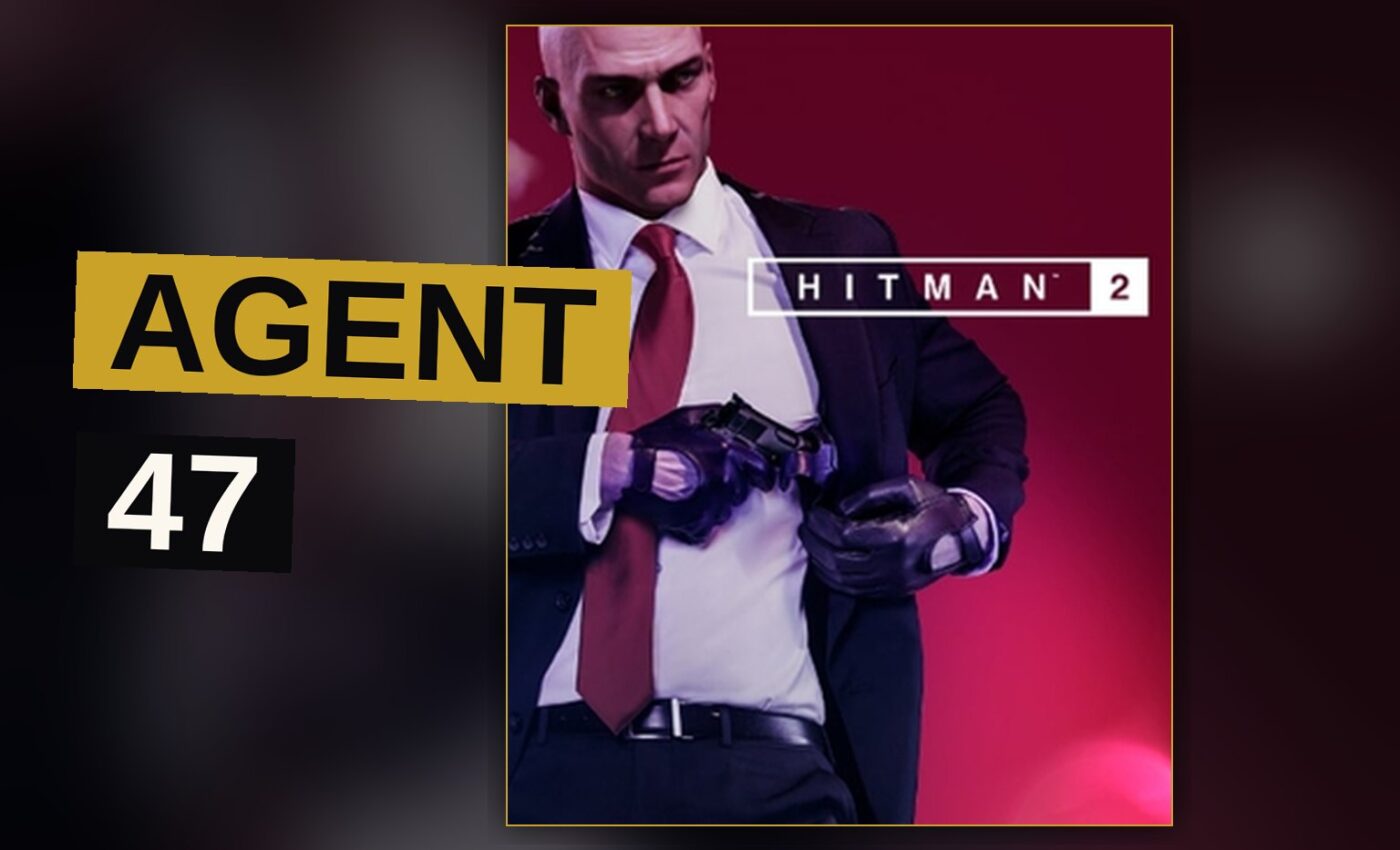
Hitman 2 is a game about patience, and it arrived at a studio that had none to spare. IO Interactive shipped the sequel to 2016’s Hitman on PlayStation 4, Xbox One, and PC in 2018, and it later came to Google Stadia. The seventh main entry in the series, it closes the second act of the World of Assassination trilogy. It is also the work of a team that nearly did not get to make it. That backstory matters, because the game’s best qualities are the ones that survived a squeeze.
Trailer, via HITMAN.
Six Sandboxes and a Bank
The structure is the same as the 2016 game: six large locations, each a sandbox you are meant to learn rather than run through. Agent 47 starts in Hawke’s Bay, New Zealand, then moves to a Miami racetrack, a Colombian village, the slums of Mumbai, a Vermont suburb called Whittleton Creek, and Sgàil, a fictional island in the North Atlantic within Scotland’s Northern Isles. Two post-launch updates added a bank in New York City and a resort in the Maldives.
Each map is a puzzle box with a social layer on top. You can carry firearms and gadgets, but 47 is fragile in a straight fight, so stealth is the sane route. Bodies have to be hidden. Restricted areas require a disguise, taken off an incapacitated NPC or found on the ground. Eavesdropping on conversations uncovers mission stories, the scripted sequences that reveal a target’s routine and open up an unusual kill. Some kills can be dressed up as accidents.
That last idea is where Hitman 2 earns its keep. A level is not a corridor with a target at the end; it is a clockwork room full of people who will notice the wrong thing. Learning Miami’s race schedule or Whittleton Creek’s neighborly habits is the actual game.
The Running Order
The campaign runs in a fixed order across its eight missions, and the two DLC locations sit outside it.
| Order | Location | Notes |
|---|---|---|
| 1 | Hawke’s Bay, New Zealand | Opening mission; Alma Reynard |
| 2 | Miami, Florida | Racetrack; Robert and Sierra Knox |
| 3 | Colombia | Village setting |
| 4 | Mumbai, India | Slums |
| 5 | Whittleton Creek, Vermont | Suburb |
| 6 | Sgàil | Fictional North Atlantic island |
| DLC | New York City | Bank |
| DLC | Maldives | Resort |
Sniper Assassin, Ghost Mode, and What Got Cut
Beyond the campaign, Hitman 2 carries the modes the 2016 game established and adds two. Escalations stack stages, each one raising difficulty with extra targets or requirements like a specific disguise or kill method. Elusive targets are time-limited and can only be attempted once. Contracts mode lets players set their own targets and conditions and share them.
The two new modes are the interesting ones.
- Sniper Assassin: eliminate targets from a distance within 15 minutes, solo or with a partner who controls Stone or Knight, characters carrying concussive shockwave rounds and wall-piercing ammunition respectively.
- Ghost Mode: two players race to kill the same target, starting with no equipment, unable to interact directly but able to see each other’s avatar and get notified of certain actions. Shared ghost crates hold disguises and weapons, and the player who arrives last may be stuck with worse gear.
The online servers for both modes have since been shut down. Sniper Assassin can still be played single-player, so the mode survives in a reduced form. Ghost Mode, the competitive one, is gone entirely.
That is a real loss, and it is worth being blunt about it: Ghost Mode was the most novel thing here, and it is no longer available.
A Studio That Almost Didn’t Ship This
Sales of 2016’s Hitman fell short of expectations. Publisher Square Enix sold IO Interactive, which became independent through a management buyout. Cash flow was limited. The studio laid off nearly half its employees and cut the scope of the sequel.
Read that against the game. Hitman 2 is not a bloated production. It reuses the engine and the structure of its predecessor, and it lets owners of the 2016 game download those chapters into Hitman 2, where they run with the sequel’s gameplay changes. That is an unusual amount of respect for a player’s existing library, and it reads as a studio making the most of what it had rather than pretending it had more.
Agent 47 and the Shadow Client
The story picks up after Hitman. 47 hunts the Shadow Client for Providence, described as a secretive organization that controls global affairs. 47’s employer, the International Contract Agency, has formed an uneasy alliance with Providence to stop the Shadow Client, whose actions are causing global panic. 47 agreed to help in exchange for Providence revealing his past.
The campaign opens with the killing of Alma Reynard, one of the Shadow Client’s top lieutenants, at her home in New Zealand, then moves to Providence defectors Robert and Sierra Knox, father and daughter, at the Miami racetrack.
It is serviceable spy-thriller material, and it is the least important thing in the box. The plot exists to justify the travel. Nobody is here for the cutscenes.
The Case for 8.2
Here is what matters. Hitman 2’s level design is the strongest argument the series has made for itself, and it does that work without a single new idea about how a stealth game should control. The maps are dense, legible, and full of authored opportunities that reward a second and third pass. Whittleton Creek and Miami in particular are the kind of spaces you keep thinking about after you put the controller down.
The problems are narrower than they look. Combat remains a punishment rather than a choice, which is correct for the fantasy but leaves little room when a plan collapses. And the mode that gave Hitman 2 its own identity online has been switched off. A game’s most distinctive feature being shut down is not a footnote.
The scope cuts are visible if you look for them. The game runs on the same engine and the same six-location structure as its predecessor, and the two post-launch additions, New York and the Maldives, extend that structure rather than change it.
None of that changes the verdict. Hitman 2 is a tightly built stealth game made under bad conditions by a studio that had laid off nearly half its employees, and its level design still stands as the series’ high point. The World of Assassination trilogy needed this middle chapter to work, and it does.
Get the Notebook.
The day's best stories and every fresh verdict, in plain English, in your inbox by seven. One email a day, no more.