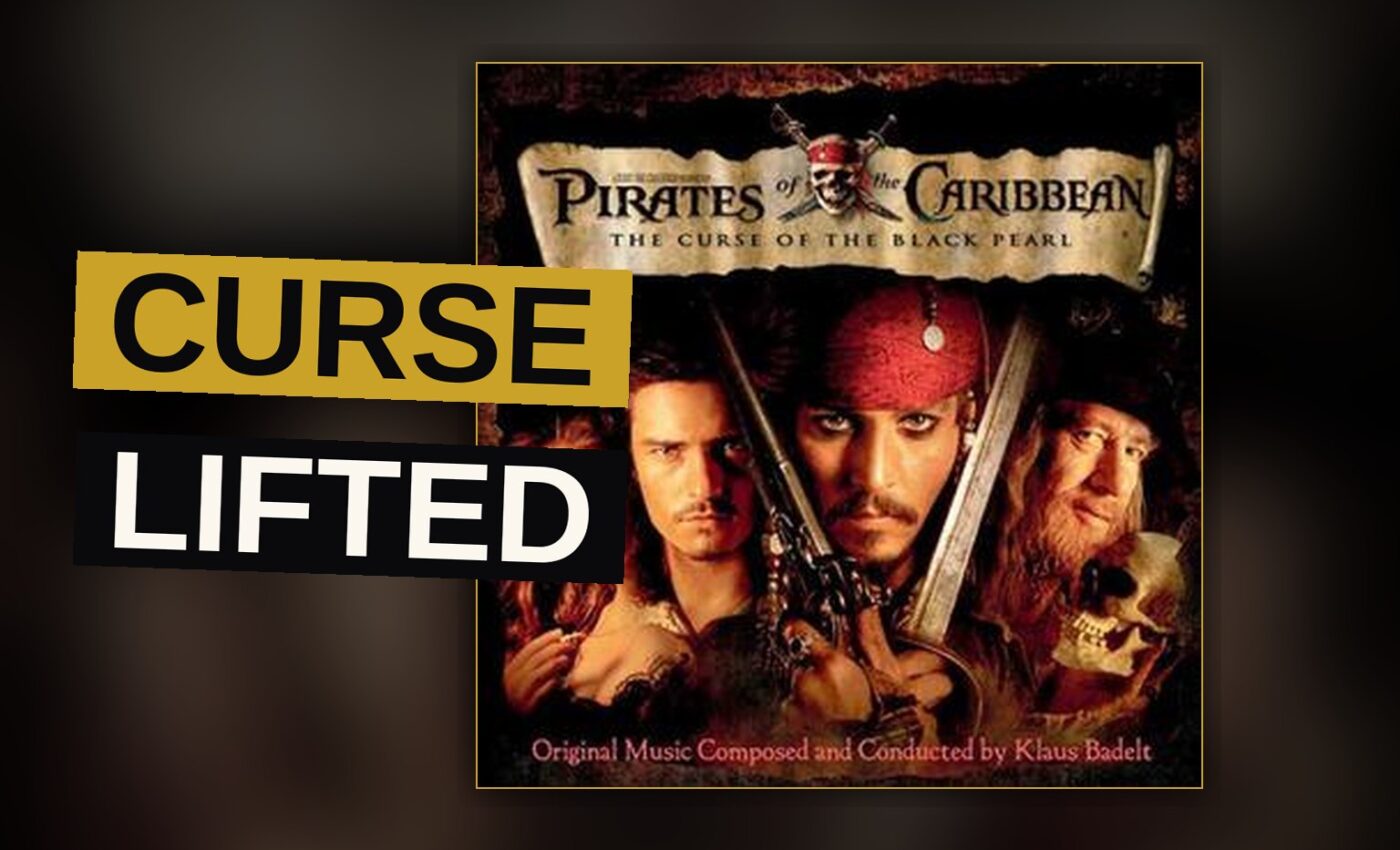
Pirates of the Caribbean: The Curse of the Black Pearl arrived in 2003 with no one expecting much. Disney had not made a pirate movie in decades. The genre was dead. Johnny Depp was a character actor who played oddballs, not blockbuster leads.
The film changed all of that. It made $654 million worldwide. It launched a franchise that would span five movies. It turned Depp into a global star. And it did it with a script that treats its own absurdity with total seriousness.
Trailer, via Disney UK.
Opening Gambit
The first act is a model of efficiency. Elizabeth Swann meets Will Turner as children. She takes a gold medallion from his neck. That single act sets off a curse, a kidnapping, and a rescue mission that never stops moving.
The plot is simple. Captain Barbossa and his crew stole cursed Aztec gold. They cannot feel pleasure or die. They are skeletons in the moonlight. Elizabeth has the last coin. Will wants her back. Jack Sparrow wants his ship.
Every scene pushes the next one forward. There is no filler. The writers, Ted Elliott and Terry Rossio, built the story around a curse that gives every fight a ghostly stakes. You can shoot a pirate, but he will stand back up.
Depp’s Gamble
Depp plays Jack Sparrow as a drunk rock star with a compass that points to what you want. He is vain, clever, and never fully reliable. He also never stops being funny. The eyeliner, the slurred speech, the way he walks on a moving ship — none of it should work.
It works because Depp commits completely. He does not wink at the audience. He plays Jack as if he is the smartest man in every room, even when he is wrong. The performance earned him an Oscar nomination for Best Actor. That is rare for a summer action movie.
Orlando Bloom and Keira Knightley do their jobs. Will Turner is earnest and dull. Elizabeth Swann is smarter than the script lets her be. But they are the straight lines. The film lives or dies on Depp and Geoffrey Rush as Barbossa.
Rush chews every scene. His Barbossa is theatrical, cruel, and oddly charming. He explains the curse in a monologue that is the film’s best scene. He delivers the line “the code is more what you’d call guidelines than actual rules” with perfect timing.
Action and Craft
Director Gore Verbinski shot the film on real locations in the Caribbean. The beaches are bright. The water is clear. The ships look like ships, not sets. That physicality matters. The sword fights feel like they could actually happen.
The best sequence is the nighttime battle. The pirates are revealed as skeletons. They march across the ocean floor. They fight in moonlight with their bones showing. The effects hold up because they are used sparingly. The movie does not explain the curse with a montage. It shows you.
The score by Hans Zimmer and Klaus Badelt gives the film its heartbeat. The main theme is a simple string line that builds into something heroic. It is one of the most recognizable movie themes of the 2000s.
Pacing Trouble
The film runs 143 minutes. That is long for a family adventure. The middle section drags. Will and Elizabeth spend too much time separated.
The final act is better. The curse is broken at the last second. The pirates become mortal again. Barbossa dies with an apple in his hand, finally tasting it. It is a good ending. It earns the setup.
Box Office Run
The film’s theatrical run followed a clear pattern. It opened strong in July, held through the summer, and kept drawing audiences into the fall.
| Period | Milestone |
|---|---|
| Global finish | $654 million worldwide |
The worldwide total placed it among the highest-grossing films of 2003. It proved that a pirate movie could be a summer event, not a niche curiosity.
Lasting Impact
The film set a new standard for theme park adaptations. Before it, those movies were cheap cash-ins. After it, studios treated them as event films. The success also changed Depp’s career. He went from indie darling to franchise anchor, a shift he never fully reversed.
The sequels grew bloated. The fourth and fifth films lost the plot. But the original still works. It is a self-contained story with a clear arc. You can watch it without knowing anything about the franchise.
Final Tally
Pirates of the Caribbean: The Curse of the Black Pearl is not a perfect movie. The pacing is uneven. The romance is thin. The supporting cast is mostly forgettable. But the core trio of Depp, Rush, and Verbinski delivers something that still entertains 23 years later.
It is a comedy, an adventure, and a horror movie in one package. It respects its source material without being trapped by it. It made pirates cool again, and it did it with style.
The TMDB audience score is 7.8 out of 10 from 22,734 votes. That is fair. The film is better than most blockbusters, worse than the classics it borrows from. It earns its place.