
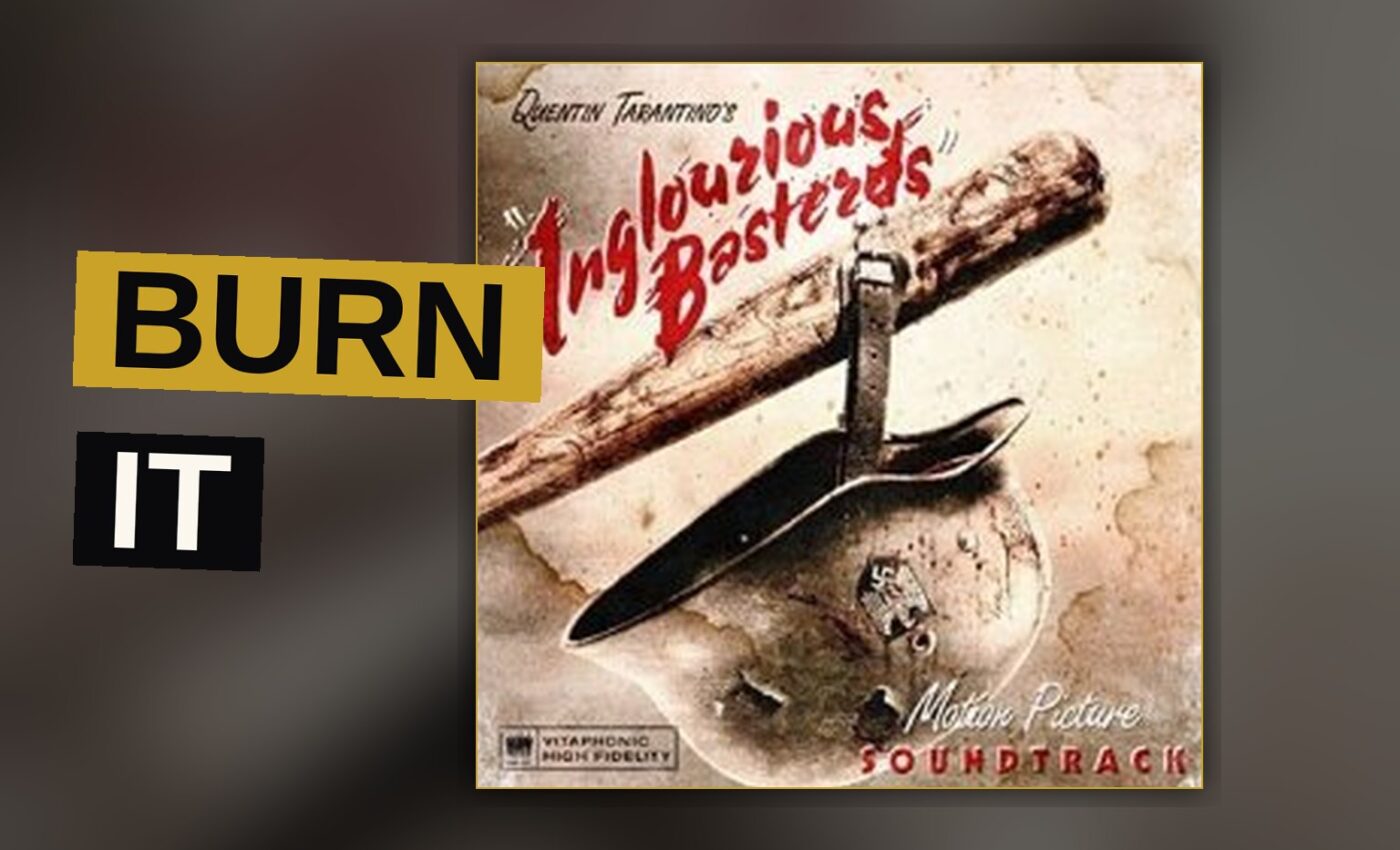
Quentin Tarantino’s “Inglourious Basterds” is a war film that plays by its own rules. It rewrites history, gives the Nazis a brutal comeuppance, and turns a movie theater into a weapon of mass destruction. The film is less a documentary of World War II and more a furious, witty, and violent fantasy about the power of cinema itself.
The plot splits into two threads. One follows a group of Jewish-American soldiers, the Basterds, who scalp Nazis and spread terror behind enemy lines. The other tracks Shosanna Dreyfus, a young Jewish woman who escapes a massacre and later runs a cinema in Paris. Both threads converge on a premiere night that promises fire, blood, and a finale that could only come from Tarantino.
It is a long film, and it is a talky one. But the talk is the weapon. Tarantino builds tension through conversation, holding shots for minutes while characters circle each other with words. The result is a thriller that feels more like a series of set pieces than a traditional narrative. It is bold, messy, and utterly confident.
Trailer, via Universal Pictures Home Entertainment Benelux.
Landa at the Farm
The film begins on a farm in occupied France. Colonel Hans Landa, the “Jew Hunter,” arrives to question a dairy farmer about a missing Jewish family. The scene runs over twenty minutes, and it is almost entirely dialogue. Landa is polite, charming, and terrifying. He drinks milk, compliments the farmer’s daughters, and slowly tightens the noose.
The farmer hides the Dreyfus family under the floorboards. Landa knows. He plays with the farmer, drawing out the confession, and then orders his men to fire through the floor. Shosanna alone escapes, running into the woods as her family is shot behind her.
Christoph Waltz plays Landa with a grin that never quite reaches his eyes. The performance won him the Academy Award for Best Supporting Actor, and it is easy to see why. He makes the character magnetic and monstrous at once. The scene establishes the film’s method: long, patient, and brutally effective.
Aldo Raine’s Recruits
The other half of the story belongs to Lieutenant Aldo Raine, played by Brad Pitt. Raine is a Tennessee hillbilly with a drawl and a plan. He recruits Jewish-American soldiers to “do one thing” — kill Nazis. He wants scalps, and he wants a hundred of them. The Basterds carve swastikas into the foreheads of survivors so they can never hide what they are.
The group is less a squad than a collection of cartoonish avengers. They are not realistic soldiers. They are Tarantino’s toys, built for revenge. Pitt plays Raine with a broad, comic edge. He delivers lines about “Nazi scalps” with the energy of a man enjoying his work.
The Basterds’ first mission is a success. They ambush a patrol, kill most of the men, and let one soldier go after marking him. The scene is quick, violent, and establishes the rules of the game. There is no moral complexity here. The Nazis are bad, the Basterds are fun, and the audience is invited to cheer.
The Basement Tavern
The middle of the film is a long, tense sequence in a basement tavern. The Basterds meet with a British spy, a German actress, and a room full of Nazi soldiers. The scene is a powder keg. Everyone is trying to keep their cover while the camera watches every hand, every glance, every sip of beer.
It goes wrong. A Gestapo officer notices something off. He demands the British spy’s accent be tested. The spy fails, and the room erupts into gunfire. Most of the Basterds die. The scene is a reminder that Tarantino can kill his own toys.
The tavern sequence is a masterclass in suspense. It runs nearly half an hour, and the payoff is a sudden, messy shootout. It is also a turning point. The Basterds are reduced, and the plan shifts. The film becomes less about the squad and more about the premiere.
Shosanna’s Cinema
Shosanna Dreyfus, played by Mélanie Laurent, is the film’s quiet heart. She has changed her name, taken over a cinema in Paris, and buried her past. Then she meets Frederick Zoller, a German war hero who is also a movie star. He is infatuated with her. He convinces the Nazi leadership to hold the premiere of his propaganda film at her theater.
Shosanna sees her chance. She and her boyfriend, Marcel, plan to burn the theater down with the entire Nazi high command inside. They stock the projection booth with flammable nitrate film reels. They lock the doors. They wait.
Her revenge is personal. She paints her face, prepares her final message, and plans to project it onto a screen of smoke before the theater goes up. The film gives her a moment of pure, cold fury. She is not a soldier. She is a survivor who has decided to burn it all.
Fire in the Projection Booth
The premiere is the film’s climax. Every thread comes together in one night. The Basterds have infiltrated the theater, posing as Italian guests. Landa is there, suspicious as ever. Shosanna is ready to light the match.
The propaganda film plays. The audience laughs. Then the projection cuts to Shosanna’s face, and she tells them they are going to die. The theater erupts. Marcel locks the doors and sets the reels alight. The Basterds open fire. The building burns.
It is a spectacle. Tarantino stages the chaos with a grin, letting the flames consume the screen and the crowd. The Nazi leadership dies, including Hitler, who is shot and then blown up. The film does not care about historical accuracy. It cares about catharsis.
Landa’s Deal
The last scene belongs to Landa. He has made a deal. He lets the surviving Basterds go, and in exchange, he surrenders and gets to live in America. He has switched sides at the perfect moment. He walks into the American lines, gives himself up, and expects a hero’s welcome.
Aldo Raine is not satisfied. Raine carves a swastika into Landa’s forehead himself. The “Jew Hunter” will spend the rest of his life marked, unable to hide. Raine tells him it is his masterpiece.
The ending is dark and funny. Landa’s cleverness saves him, but it also brands him. The film closes on Raine’s voice, declaring that this is his greatest work. It is a punchline, a punishment, and a final act of defiance.
Craft and Style
Tarantino’s direction is precise. He uses long takes, close-ups, and sudden bursts of violence. The score mixes Ennio Morricone’s spaghetti western themes with David Bowie’s “Cat People.” The sound design is sharp, every bullet and every bootstep landing with weight.
The dialogue is the real star. Tarantino writes speeches that circle, tease, and threaten. Landa’s opening monologue about rats and squirrels is a small essay on power. The “three glasses” scene in the tavern is a duel of manners. The film trusts its actors to hold the screen, and they do.
The cinematography, by Robert Richardson, is clean and bright. The film does not look like a gritty war movie. It looks like a pop-art version of the past, with bold colors and careful framing. The farm is golden. The theater is red and plush. The violence is stark.
War Film Comparisons
“Inglourious Basterds” is often compared to other war films, but it is not really one of them. It is a revenge fantasy, closer to a comic book than a documentary.
| Film | Tone | Historical Accuracy | Primary Weapon |
|---|---|---|---|
| Inglourious Basterds | Satirical, playful, violent | None — history is rewritten | Fire, film, scalp knives |
| Saving Private Ryan | Somber, realistic, heroic | High — depicts D-Day and its costs | Rifles, grenades, sacrifice |
| The Dirty Dozen | Rugged, team-based, conventional | Moderate — a fictional squad in WWII | Guns, explosives, teamwork |
The table shows the difference. “Saving Private Ryan” asks the audience to mourn. “The Dirty Dozen” asks them to root for a squad. “Inglourious Basterds” asks them to cheer for a massacre. It is a film about the joy of watching bad people die, and it does not apologize for it.
Final Score
“Inglourious Basterds” is a film of scenes, not a film of a single story. Some scenes are perfect. The opening is a classic. The tavern is a masterclass. The premiere is a fireworks display. Others drag, especially the middle sections where the Basterds’ plan stalls.
The performances carry the film. Waltz is the standout, but Laurent gives Shosanna a quiet steel that anchors the revenge plot. Pitt is fun, if one-note. The supporting cast, including Michael Fassbender and Diane Kruger, fills the edges with life.
The film is not for everyone. It is violent, talky, and proud of its own cleverness. It rewrites history with a smirk. But it is also confident, stylish, and deeply entertaining. It is Tarantino at his most Tarantino.
The film earned eight Academy Award nominations and won one, for Waltz’s performance. It has aged well, holding up as one of the most quoted and discussed films of its decade. It is a war film that is really about movies, and it loves both with equal fury.
It is a great film, not a perfect one. The pacing stumbles, and some of the Basterds feel like sketches rather than characters. But the highs are high enough to forgive the lows. The opening alone is worth the price of admission.
“Inglourious Basterds” is a bold, bloody, and brilliant piece of cinema. It takes history, lights it on fire, and laughs while it burns. It earns its place among Tarantino’s best work.


