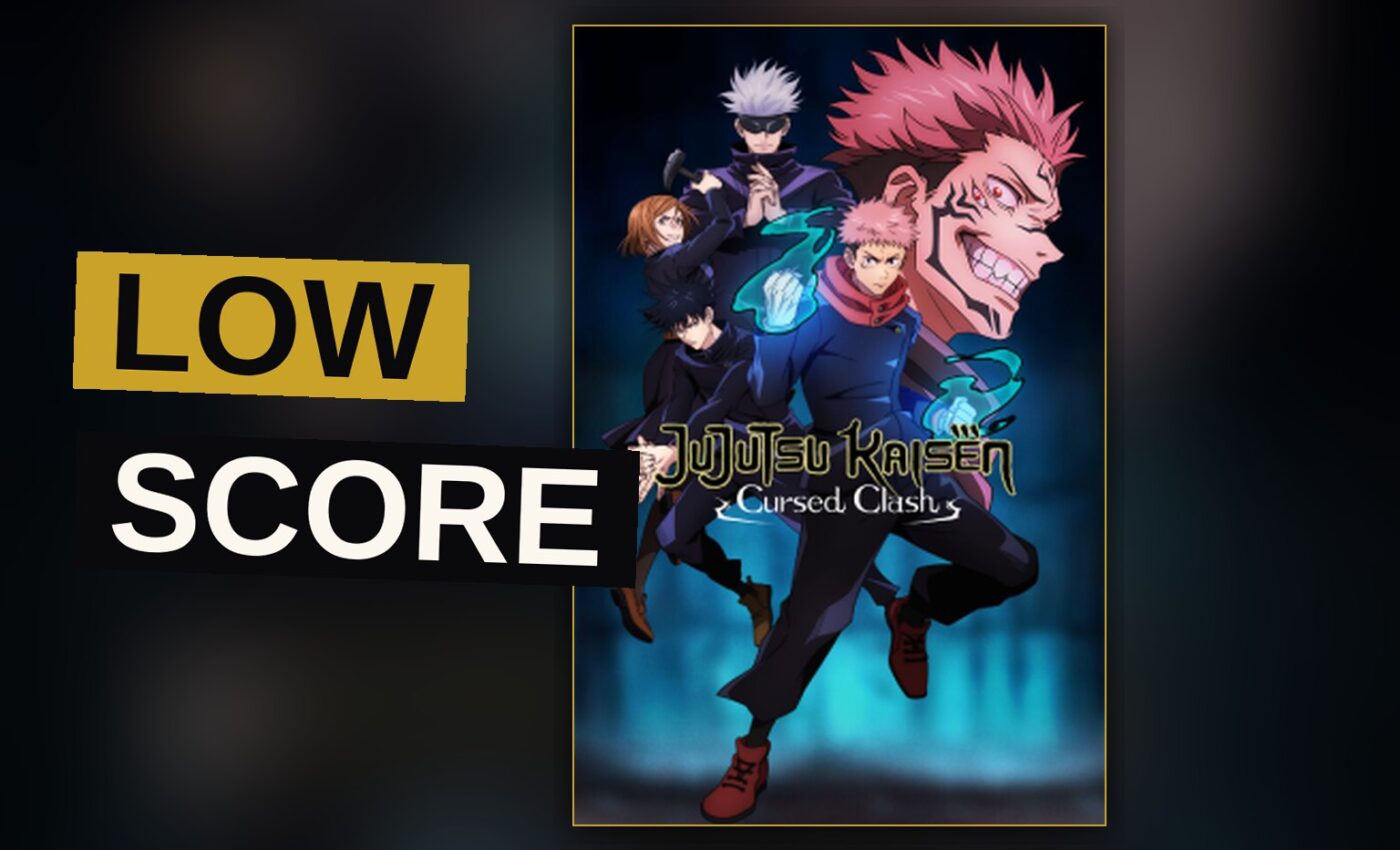
Jujutsu Kaisen: Cursed Clash arrived on PS5, Xbox Series X/S, PC and Nintendo Switch two years ago, in 2024. The verdict from critics then was rough: 4.4 out of 10. That score has not moved since, and the game’s reputation has settled into a familiar shape — a licensed fighter with a wide cast and a shallow core.
Trailer, via Bandai Namco Entertainment Southeast Asia.
The Roster
Cursed Clash brings together characters from the Jujutsu Kaisen series for an arena fighter built around 3-on-3 team battles. The roster spans familiar faces from the source material, and fans will recognize the places pulled from key story arcs. The character count is wide, and the game leans on that width as its main selling point.
Platforms include:
- PS5
- Xbox Series X/S
- PC
- Nintendo Switch
Each version carries the same roster and modes, though not the same level of polish. The Switch build in particular shows the strain of running the same fights on weaker hardware, a gap that was clear at launch and remains visible in any side-by-side look.
Fighting the Fights
The fighting system aims for ease over depth. Button combinations are simple, special moves trigger with little effort, and matches move fast. That speed comes at a cost.
Repetition sets in fast. Combos rarely ask for timing or care, and most fights end the same way no matter which characters are chosen. Cursed move attacks, meant to be the main focus of each battle, often look and act nearly the same across the whole roster. The skill on display rarely rewards study or practice.
That sameness wears down interest quickly. Players who pick up the game for a weekend will find the surface fun, but the layers beneath that surface do not hold up to repeated play. The mechanics do not deepen with time; they simply repeat.
Cracks on Switch
Performance trouble follows the game across every platform, but the Switch version struggles hardest. Frame drops appear during team attacks, load times stretch between matches, and visual detail takes a clear hit compared to PS5 and Xbox Series X/S.
None of the four versions escape technical complaints entirely, though the gap between Switch and the others is wide enough to matter for anyone weighing which copy to buy. Players on Switch get the same roster and the same modes, but they also get the roughest way to experience them.
A Thin Tale
Cursed Clash includes a story mode that retraces plot points from the comic and the show. It plays out mostly through still pictures and text boxes rather than full animated scenes, broken up by brief fights.
The presentation feels thin for a mode meant to carry players through many hours of content.
A fighting game that rarely asks players to fight in any true way.
That line sums up the trouble at the center of Cursed Clash. The core system, the part that should carry the whole package, keeps stepping aside for spectacle instead of asking anything hard of the player. The story mode doubles down on that problem, presenting narrative beats without the mechanical engagement to back them up.
Life After Launch
Online modes exist but see little support beyond plain matchmaking. There are no ranked seasons, no rotating events, and no strong reason to keep returning once the roster has been tried.
Fans hoping Cursed Clash would serve as a lasting draw are likely to be let down. The game leans entirely on licensed appeal rather than depth of play, and once that pull fades, little remains to hold attention. A wide cast and a known name can carry a launch weekend. They cannot carry a fighting game on their own once players start asking what the moves actually demand of them, and here the answer is not much.
The 4.4 of 10 score reflected that reality at launch. Two years later, the game has not added the ranked seasons or rotating events that might have drawn players back. What remains is a roster full of familiar names and a combat system that never asks for more than a few button presses. For anyone still weighing a purchase in 2026, the question is simple: whether name recognition alone is worth the price of entry. The critical answer has not changed since 2024, and neither has the game.
Get the Notebook.
The day's best stories and every fresh verdict, in plain English, in your inbox by seven. One email a day, no more.