
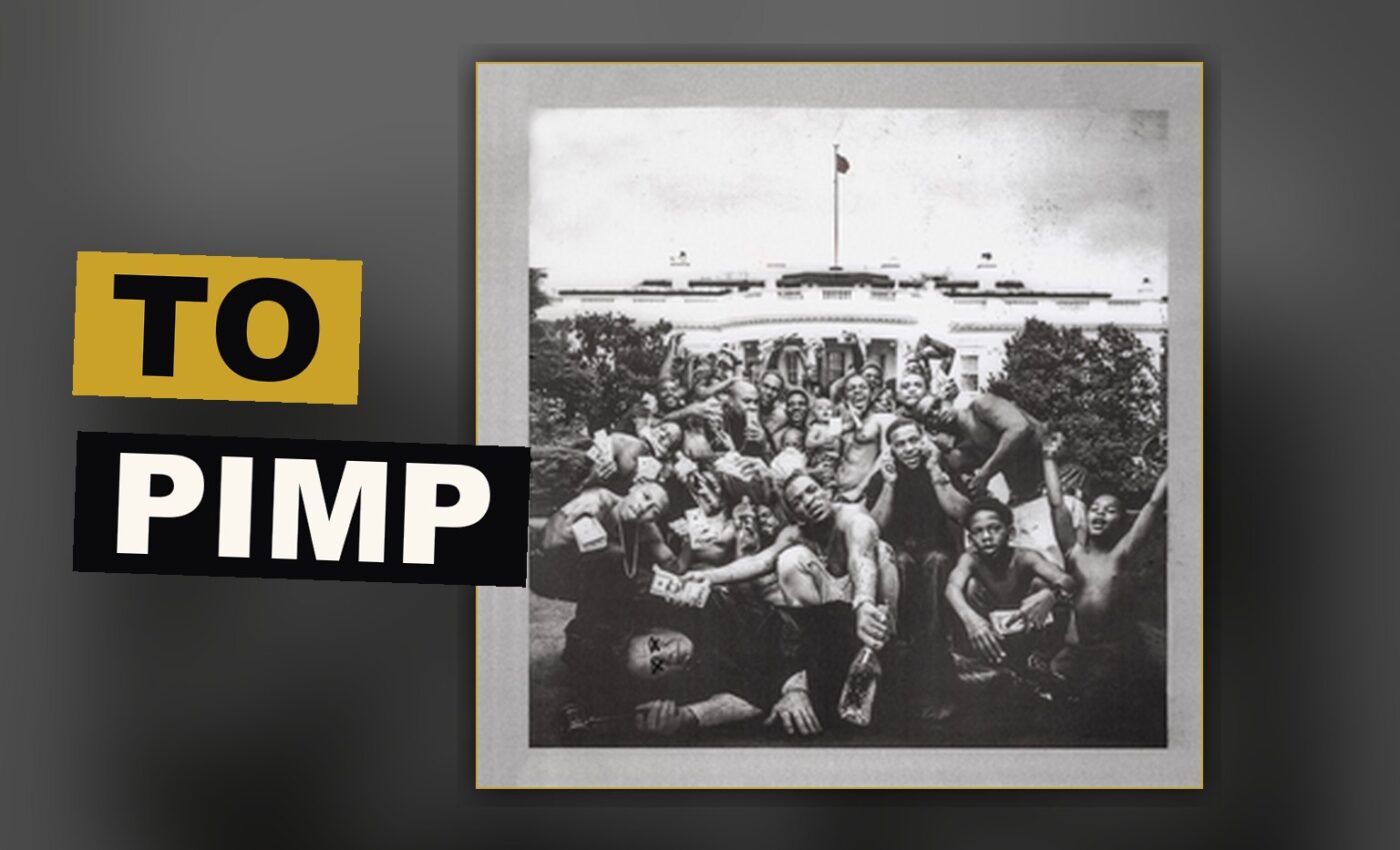
Kendrick Lamar’s third studio album arrived on March 15, 2015, through Top Dawg Entertainment, Aftermath Entertainment and Interscope Records. To Pimp a Butterfly runs on jazz, funk and soul as much as hip-hop, and it sold 324,000 copies in the United States in its first week. That was enough for a number one debut on the Billboard 200 — his first chart-topper in the UK, too.
Robben Island and the Turn Inward
The album’s political streak did not come from nowhere. Lamar took a tour of historic sites during a visit to South Africa, including Nelson Mandela’s jail cell on Robben Island. That trip shaped the record’s direction: African-American culture, racial inequality, depression, institutional discrimination.
Those are heavy subjects, and To Pimp a Butterfly does not treat them as decoration. The personal and the political sit in the same songs, which is rare. Most albums pick one lane. This one refuses.
Dr. Dre, Flying Lotus and a Deep Bench
The production credits read like a summit. Sounwave, Terrace Martin, Taz “Tisa” Arnold, Thundercat, Rahki, LoveDragon, Flying Lotus, Pharrell Williams, Boi-1da and Knxwledge all worked on the record, with Dr. Dre and Anthony “Top Dawg” Tiffith as executive producers. Sessions took place in studios across the United States.
The guest list is just as stacked: Thundercat, George Clinton, Bilal, Anna Wise, Snoop Dogg, James Fauntleroy, Ronald Isley and Rapsody.
That many cooks usually means a mess. Here it means range. Clinton and Isley carry decades of funk and soul into the room, and the younger names keep the thing from turning into a museum piece.
Jazz, Funk and Soul as Structure
To Pimp a Butterfly is primarily a hip-hop album, but the styles it pulls in span the history of African-American music. Jazz, funk and soul are not samples pasted over a beat. They are the frame.
The result is a record that moves. Songs shift under the rapper instead of sitting still, and the live-band feel gives the writing room to breathe. It is dense on first listen and rewards a second one, which is the opposite of how most major-label rap releases behave.
One Million Copies and a Platinum Plaque
The commercial case holds up alongside the artistic one. After the number one debut, the Recording Industry Association of America certified To Pimp a Butterfly platinum, and it sold over one million copies.
Those numbers matter for a reason beyond bragging. A dense, jazz-inflected, politically blunt album did this at a moment when the market rewarded the opposite. Lamar got the sales and the argument at the same time.
This thematic direction was inspired by Lamar’s tour of historic sites during his visit to South Africa, such as Nelson Mandela’s jail cell on Robben Island.
What Holds Up
The album’s biggest risk is its own ambition. A record this loaded with guest players and genre history could collapse into a tribute act. It does not, because Lamar is the constant. Every producer on the list serves the writing rather than the other way around.
The depression thread is the part that has aged best. It keeps the political material from becoming a lecture. A lesser album would have separated the two — one song for the protest, one for the pain. To Pimp a Butterfly braids them, and the braid is the point.
The South Africa trip is the detail worth holding onto. It is the reason the record has a center instead of a theme. Lamar went somewhere, saw something, and came back with an album that argues rather than announces.
The guest appearances are the noise here. George Clinton and Ronald Isley are welcome, but they are not why this record works. The production bench is the substance, and the writing is the spine.
Nothing about To Pimp a Butterfly is easy. It does not hand over a single. It does not smooth its edges for radio. It asks the listener to keep up across jazz changes, funk vamps and lyrics about institutional discrimination, and it assumes that listener is smart enough to follow.
That assumption is the boldest thing on the record. Major-label rap in 2015 rarely made it. Lamar made it, sold a million copies doing it, and earned a platinum certification for his trouble.
Get the Notebook.
The day's best stories and every fresh verdict, in plain English, in your inbox by seven. One email a day, no more.
- Wesley’s Theory4:47
- For Free? (interlude)2:11
- King Kunta3:55
- Institutionalized4:32
- These Walls5:01
- u4:28
- Alright3:39
- For Sale? (interlude)4:52
- Momma4:43
- Hood Politics4:53
- How Much a Dollar Cost4:22
- Complexion (A Zulu Love)4:23
- The Blacker the Berry5:29
- You Ain’t Gotta Lie (Momma Said)4:02
- i5:36
- Mortal Man12:07