MAS*H premiered on CBS in September 1972, and television comedy was never the same again. The series, created by Larry Gelbart and adapted from Robert Altman’s 1970 film, followed the staff of the 4077th Mobile Army Surgical Hospital during the Korean War. It ran for 11 seasons, outlasting the war it depicted by nearly a decade, and it changed what a sitcom could say about conflict, authority, and the people caught in between.
The show is a miracle of tone. It is a laugh track comedy about wounded soldiers, amputations, and the daily grind of death. That should not work. It works because Gelbart and his writers treated the horror as the backdrop, not the punchline. The jokes come from the characters’ refusal to break, their gallows humor, their petty feuds, and their desperate attempts to stay human in an inhuman place. The result is a series that can make you laugh at a chicken landing in a helicopter and then cut to a surgeon losing a patient, with no whiplash at all.
Trailer, via bigvalleylover2.
Hawkeye, Trapper, and the Original Cast
The original cast is the reason MAS*H endures. Alan Alda leads as Captain Benjamin Franklin “Hawkeye” Pierce, a surgeon whose wit is his armor. Wayne Rogers plays Captain John “Trapper” McIntyre, Hawkeye’s partner in mischief and medicine. McLean Stevenson is Lieutenant Colonel Henry Blake, the bumbling but decent commanding officer. Loretta Swit plays Major Margaret “Hot Lips” Houlihan, the head nurse who starts as a stickler for regulations and grows into something far more complex.
Gary Burghoff is Corporal Walter “Radar” O’Reilly, the company clerk with an uncanny ability to anticipate needs. Jamie Farr rounds out the early years as Corporal Max Klinger, who tries to get discharged by wearing women’s clothing. The chemistry is immediate. Hawkeye and Trapper are not heroes in the conventional sense. They drink, they chase nurses, they mock authority, and they operate with skill that borders on genius. The show never pretends they are noble. It shows them as talented men who cope with the absurdity of war by refusing to take it seriously.
That refusal is the point. The military is a machine that grinds people down, and Hawkeye and Trapper are the human grit that jams the gears.
McLean Stevenson’s Henry Blake is a particular triumph. He is not a martinet. He is a man out of his depth, a family physician who would rather be fishing. His authority is constantly undermined, but the show loves him for it. When Blake is written out in the third season, the episode “Abyssinia, Henry” delivers one of the most devastating moments in television history. The news arrives by radio, and the cast’s reaction is raw and unscripted. It is a moment that proves the show was never just a comedy.
From Laughs to Pain in the Later Seasons
MAS*H changed over its run. The early seasons are lighter, closer to the film’s anarchic spirit. The later seasons, after Gelbart departed in 1976, grew darker and more overtly political. Alda took greater control as a writer and director, and the show leaned into its anti-war message. Some fans prefer the early years. Others argue the later seasons are the show’s true achievement. Both are right, and both are wrong.
The middle seasons, with Harry Morgan as Colonel Sherman Potter and Mike Farrell as Captain B.J. Hunnicutt, found a balance. Potter is the father figure Henry Blake never was, a career soldier who loves the Army but hates the war. B.J. is a family man who misses his wife and daughter, a moral counterweight to Hawkeye’s chaos. David Ogden Stiers joined as Major Charles Emerson Winchester III, a wealthy, pompous surgeon from Boston who became the show’s most complex foil.
Winchester is not a villain. He is a man of refinement trapped in a swamp, and his occasional moments of humanity are among the series’ best scenes. The shift is visible in the laugh track. Early episodes are packed with audience laughter. Later episodes are quieter. Some episodes, like “The Interview,” barely use the track at all. The show was moving toward drama, and the audience followed. By the final season, MAS*H was less a sitcom and more a dramedy that happened to have a laugh track bolted on.
Milestones in the Show’s Evolution
- The pilot establishes the tone: fast, irreverent, and unafraid of blood.
- Season three’s “Abyssinia, Henry” breaks the sitcom mold with a genuine tragedy.
- Season four introduces Potter and B.J., shifting the ensemble’s dynamic.
- Season six adds Winchester, giving Hawkeye a worthy intellectual rival.
- The final season leans into serialized storytelling and moral weight.
- The series finale, “Goodbye, Farewell and Amen,” remains the most-watched television episode in U.S. history.
Writing That Carried the War
Gelbart’s writing staff was a rotating door of talent. Ken Levine, David Isaacs, Larry Balmagia, and others contributed scripts that balanced farce and grief. The show’s signature is its dialogue. Hawkeye’s monologues are legendary, often delivered mid-surgery or over a martini. They are not speeches. They are rants, complaints, and observations that cut to the bone of the war’s absurdity.
The show also pioneered the use of the PA system and the loudspeaker as a comedic device. Announcements about incoming wounded, supply shortages, and personnel changes punctuate every episode. The PA is a character in itself, a constant reminder that the war is never far away. The writers used it to undercut jokes and to deliver punches. A laugh about a stolen jeep can be cut short by a call for a surgeon to report to the operating room. The rhythm is masterful.
“War is war, and hell is hell. And of the two, war is a lot worse.”
That line, spoken by Hawkeye in the episode “The General’s Practitioner,” captures the show’s philosophy. It is not a joke. It is a thesis. The show’s humor is a defense against the horror, not a denial of it. The characters laugh because crying would stop them from working. The show laughs for the same reason.
The Vietnam Disguise and Its Limits
MAS*H is set in the Korean War, but it was written during Vietnam. That distance was deliberate. Gelbart has said the show was about Vietnam in disguise, a way to critique a current war by setting it in a past one. The strategy worked. The show’s anti-war message was clear to audiences in the 1970s, and it remains clear today. The show does not lecture. It shows. It shows soldiers dying, surgeons failing, and the system grinding on regardless.
The show’s treatment of women is a mixed legacy. Margaret Houlihan starts as a caricature, the “Hot Lips” who is mocked for her affair with Frank Burns. Over time, she becomes a competent, respected officer and a friend to Hawkeye. That arc is one of the show’s best. But the early seasons are full of jokes at her expense, and the show’s casual sexism can be hard to watch. It is a product of its time, and it shows.
The show’s treatment of the Korean people is also limited. They appear as patients, refugees, and occasionally as villains. The show does not give them much interiority. That is a flaw, but it is a flaw of the era. The show’s focus is the Americans, and it never pretends otherwise.
The Finale and Its Record Audience
MAS*H ended in 1983 after 11 seasons. The finale, “Goodbye, Farewell and Amen,” aired on February 28, 1983. It was a two-and-a-half-hour episode that resolved the war and the characters’ fates. It drew an audience of over 105 million viewers, a record that still stands. The episode is a showcase for the show’s strengths: Hawkeye’s breakdown, B.J.’s goodbye, and the final helicopter lifting off as the 4077th is decommissioned.
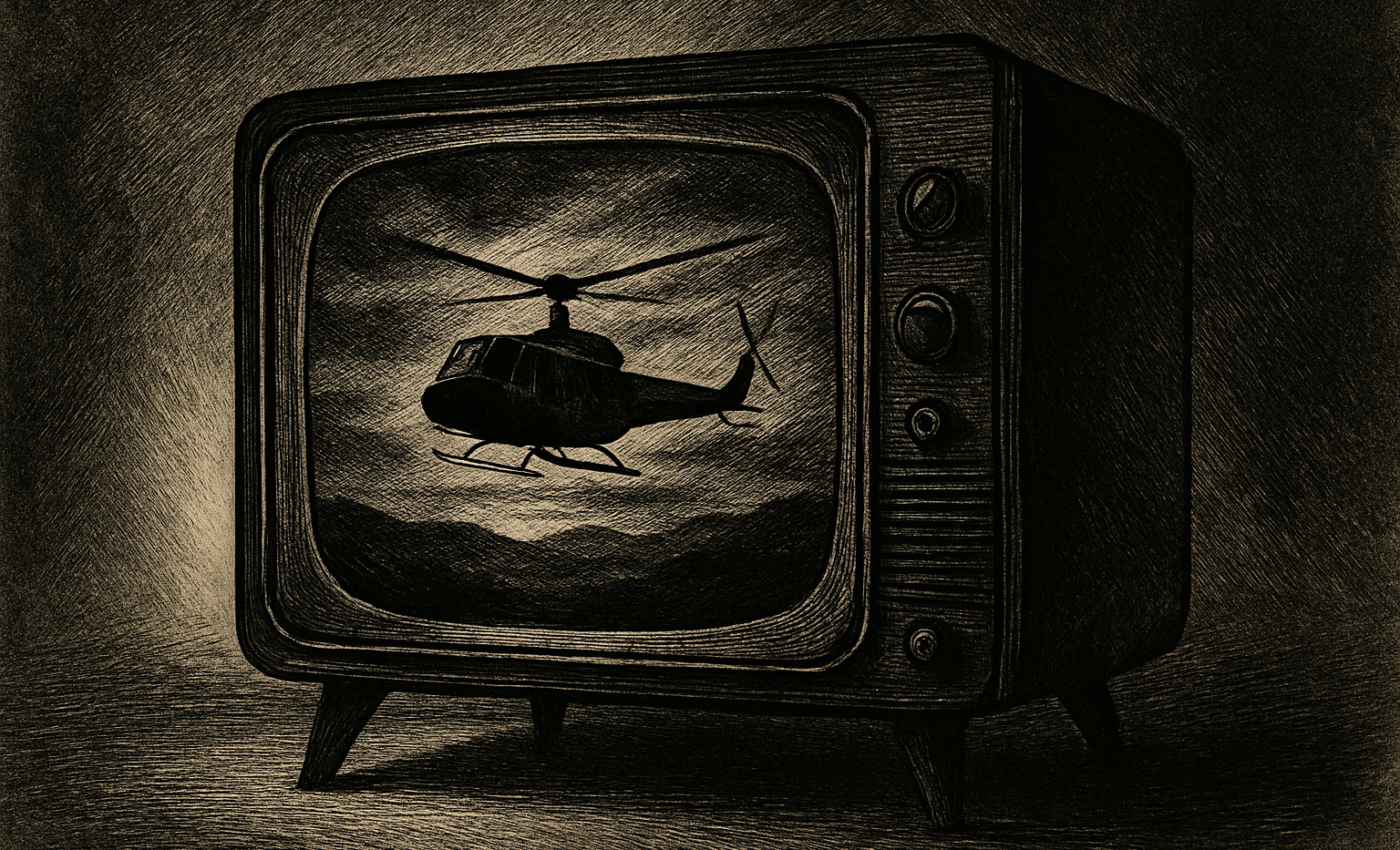
The finale is not perfect. It is overstuffed and sentimental. But it earns its emotion. The characters have been with the audience for 11 years, and the goodbye feels earned. The final shot, with the helicopter disappearing over the hills, is a perfect image of closure. The war ends, the people leave, and the camp goes quiet.
The show’s legacy is vast. It spawned a short-lived spin-off, “AfterMASH,” which followed Potter, Klinger, and Father Mulcahy after the war. It did not last. The show also influenced countless medical dramedies, from “Scrubs” to “ER.” The template of a workplace where life and death are routine, and humor is a survival tool, owes a debt to MAS*H.
Why It Still Matters
MAS*H is not a period piece. It is a show about people under pressure, and pressure never goes out of style. The characters are flawed, funny, and occasionally heroic. The jokes are sharp, and the drama is real. The show asks a simple question: how do you stay human when the world is trying to make you a cog? Its answer is to laugh, to love, and to fight the machine any way you can.
The show is also a document of its time. It reflects the Vietnam War, the counterculture, and the changing role of authority in American life. Hawkeye is a child of the 1960s, a man who distrusts institutions and trusts his instincts. His conflict with Frank Burns, the show’s resident hypocrite, is a proxy for a larger cultural war. Burns is a fool, but he is a dangerous fool, and the show never lets you forget it.
The show’s production values are dated. The sets are clearly soundstages, and the Korean landscape is a backlot in California. The laugh track is a relic of an older era of television. None of that matters. The writing and the performances transcend the trappings. The show is not realistic, but it is true.
Verdict on the 4077th
MAS*H is a great show with real flaws. It is too long, with some weak episodes in its later seasons. It is a product of a different era, with attitudes that have not aged well. But its strengths overwhelm its weaknesses. The performances are iconic, the writing is sharp, and the emotional range is unmatched. It is a comedy that makes you cry and a drama that makes you laugh. That is a rare combination, and it is why the show endures.
The show’s best episodes are as good as anything on television. “Sometimes You Hear the Bullet,” “The Chosen People,” and “The Party” are masterclasses in tone. They balance slapstick and tragedy with a precision that few shows have matched. The show’s worst episodes are still watchable, thanks to the cast’s charm.
It is also a show that knows when to stop. The finale ends the story cleanly, without dragging the characters through another season of diminishing returns. MAS*H ended at its peak, and it has never been forgotten.
Get the Notebook.
The day's best stories and every fresh verdict, in plain English, in your inbox by seven. One email a day, no more.