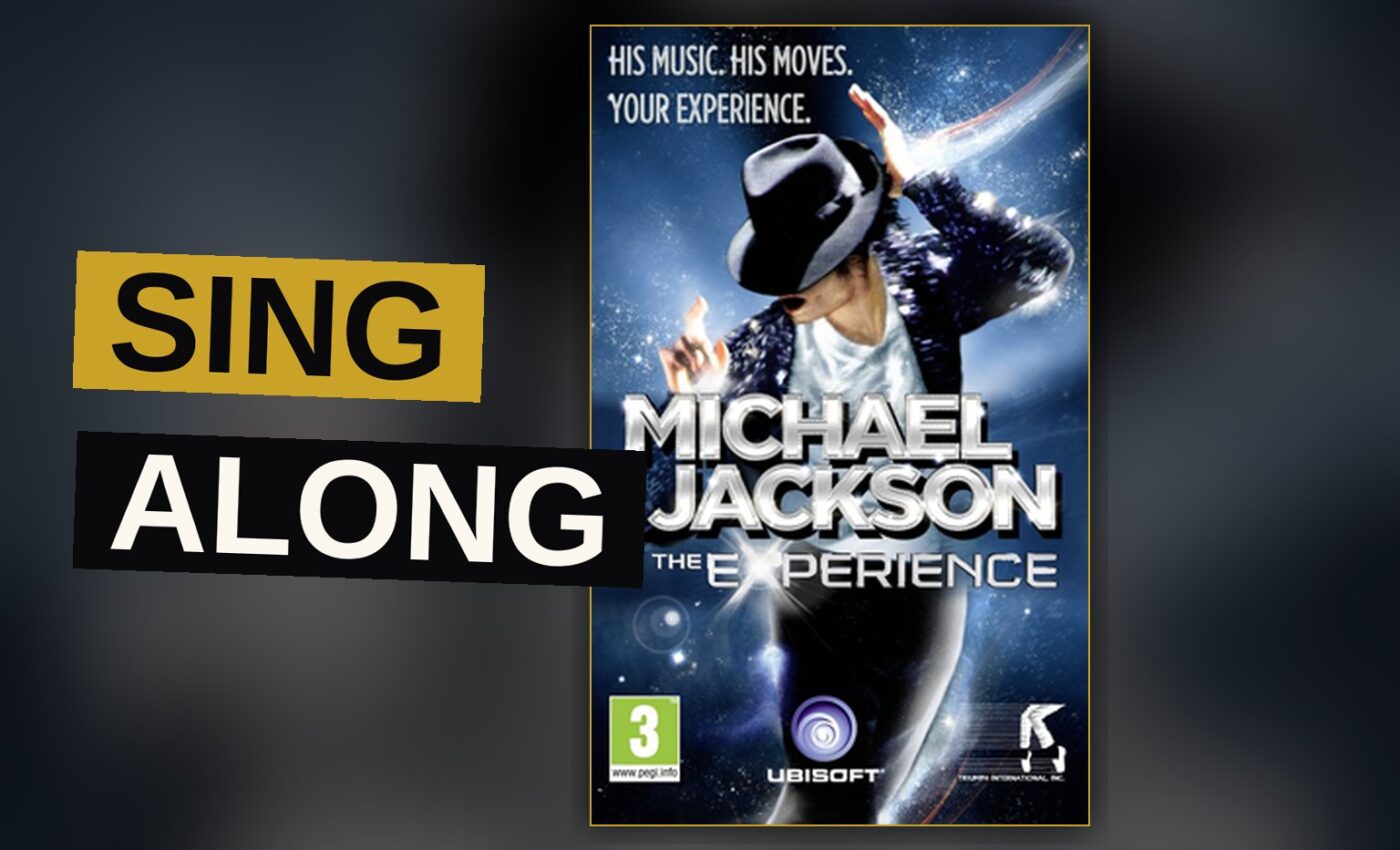
Michael Jackson: The Experience arrived in November 2010 with a sequined glove in the box and a promise to put players inside the King of Pop’s catalogue. Ubisoft built it across five studios — Montpellier, Milan, São Paulo, Paris and Shanghai — and shipped it on the Wii, PlayStation Portable and Nintendo DS first, then on PlayStation 3’s PlayStation Move and Xbox 360’s Kinect the following April. It is a party game about dancing badly in your living room to songs you already know by heart. It is also, at 6.6 out of 10, a game that gets the setlist right and the dancing wrong.
Trailer, via GameSpot.
“Beat It,” “Billie Jean,” and the Songs That Made the Cut
The track list is the strongest thing here. Ubisoft licensed a wide spread of Jackson’s hits, and the game leans on the ones you would pick yourself: “Bad,” “Thriller,” “Beat It,” “Billie Jean,” “Smooth Criminal,” “Black or White,” “The Way You Make Me Feel.”
Those songs are not a small thing. They are the reason anyone picks this up.
The gaps matter too. “Man in the Mirror” and “P.Y.T. (Pretty Young Thing)” are not in the game. Nothing from the Motown era is in the game either. For a title selling itself as a trip through decades of iconic tracks, the catalogue stops short of the decades that made Jackson a star in the first place.
What the game does with the songs is the problem. Ubisoft’s pitch was immersive: soulful environments drawn from Jackson’s music videos and stage performances, with players singing along and copying his signature moves. That reads well on a box. On a Wii remote or a Move controller, it means the game is asking you to reproduce choreography that Jackson spent a lifetime perfecting, using hardware that can track a wrist and little else.
A Glove in the Box and 2 Million Copies on Wii
Initial launches included a limited edition replica of Jackson’s sequined glove. It is the most honest thing the package contains: a piece of memorabilia for a game that is, at heart, memorabilia.
The Wii version sold 2 million copies in two months, not counting Japanese sales, making it one of the best-selling Wii titles. That number says something about the audience. It does not say the dancing worked.
The platforms tell their own story:
- Wii, Nintendo DS and PlayStation Portable, from 23 November 2010 in North America
- PlayStation 3 with PlayStation Move and Xbox 360 with Kinect, from 12 April 2011
- Nintendo 3DS, from 7 November 2011
- iPhone and iPad, from 7 December 2011
- PlayStation Vita, from 15 February 2012
Japan got its release on 8 December 2011, and only on PlayStation 3, Xbox 360 and Wii.
That is a lot of hardware for one idea. The Kinect and Move versions arrived five months after the first wave, which means the motion controls that were supposed to justify the whole thing were a second thought on the platforms that could actually do them.
The King of Pop Deserved a Better Controller
Here is the case against Michael Jackson: The Experience. It treats Jackson’s dancing as a button prompt. The routines in “Smooth Criminal” and “Thriller” are precise, strange, funny pieces of physical performance, and the game reduces them to matching a silhouette on a screen. You are not learning the move. You are guessing at it until the game agrees with you.
The singing half does not rescue it. A music game lives or dies on whether the input feels like the music, and this one never quite closes that gap. The environments are colorful and the videos are referenced, but a reference is not the same as a performance.
Relive the magic and rock your body to decades of iconic tracks.
That is the pitch. It is also the exact place where the game falls short — the magic is in the source material, and the game is a frame around it.
What 2 Million Sales Actually Tells Us
The Wii version moved 2 million copies in two months without Japanese sales. That is a real number and it deserves respect. It also proves less than it looks like. Wii owners in 2010 bought a lot of things. A Jackson game with a glove in the box was an easy gift, and the party mode — single player, multiplayer, split screen — made it an easy thing to put on at a gathering.
The problem is what happens after the gathering. There is no depth underneath the party. The catalogue has holes where the Motown years should be. The motion controls arrived late and worked best on the consoles that came last. The glove is the keepsake; the game is the wrapper.
Michael Jackson: The Experience is worth playing for the songs and worth owning for the glove. It is not worth defending as a dance game, because it never solves the one problem a dance game has to solve: making you feel like the movement is yours. Ubisoft got the licensing, the track list and the timing right, and the motion right only sometimes. The King of Pop’s catalogue carries this thing across the finish line. The game underneath it does not.
Get the Notebook.
The day's best stories and every fresh verdict, in plain English, in your inbox by seven. One email a day, no more.