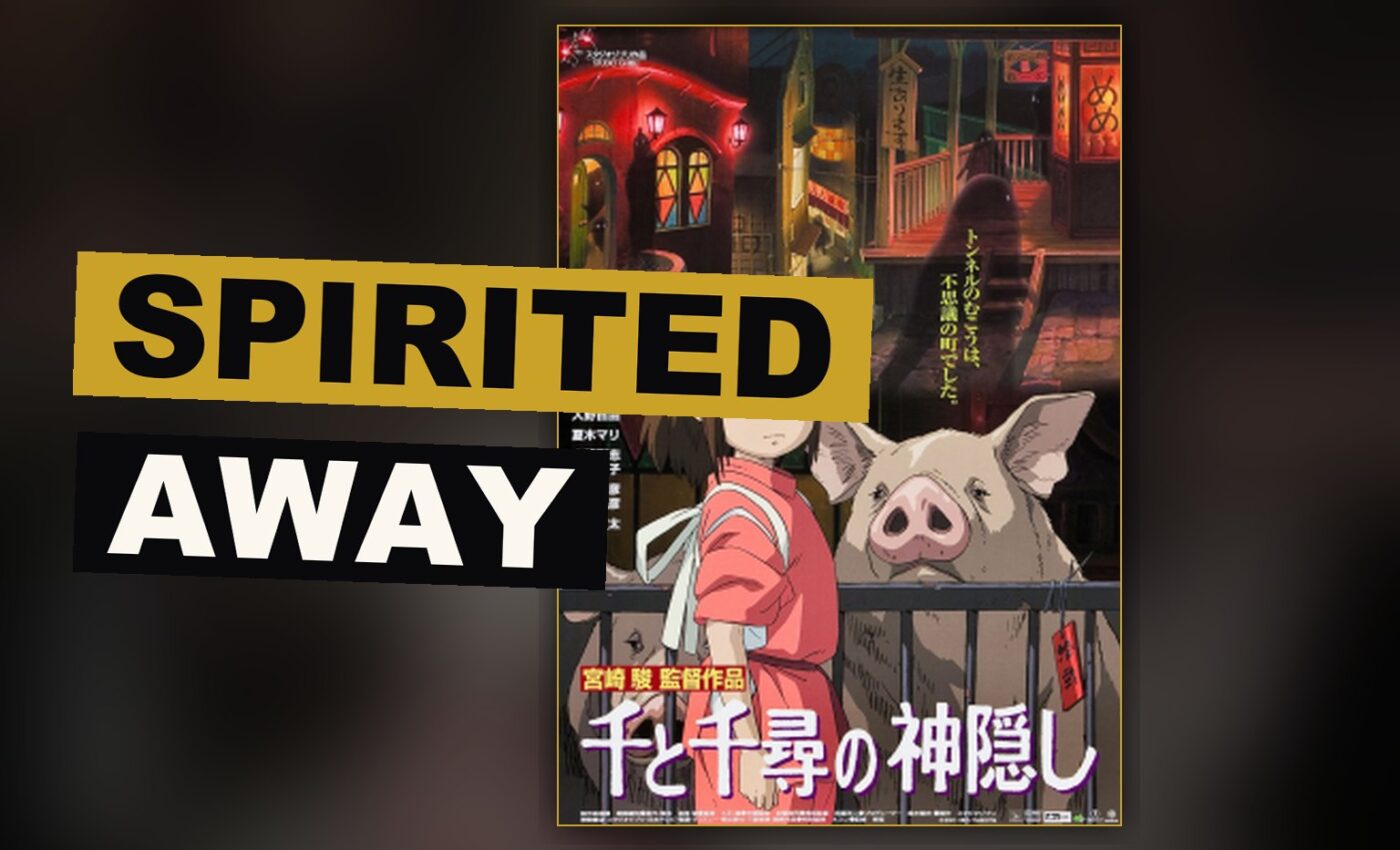
There are visions granted to the eye which the tongue labors afterward, in meek silence, to render — and Spirited Away is of this order: a sight so singular in its making that I rose from the beholding of it as one rises from a dream not wholly cast off, doubtful whether I had witnessed a work of paint and light or had wandered into a realm not meant for waking eyes.
Swine at the Empty Stand
The tale opens upon a family’s idle wandering into a deserted place, and here Miyazaki commits his first mark of quiet dread: the parents, feeding without measure at an empty stand, are turned into swine before the stricken eyes of their daughter. It is a scene of such economy and terror that a shudder attended my viewing of it.
Spirits Beneath One Roof
What follows is the girl’s long labor within a house of spirits ruled by a fearful old woman of great power — a dwelling filled with gods, ghosts, and creatures of no easy name, drawn with an invention so full that I have met with its equal in no other work of moving pictures. The small black creatures that toil below, the boy who is also a river spirit in another shape — each is rendered with such conviction that doubt finds no ground to stand upon.
The Hunger That Swallows Itself
Among these spirits, one pale wandering thing merits particular dread. He is hollow, a vessel for whatever hunger is poured into him, and his ruin by the excess of that house forms perhaps the gravest passage in the whole composition. Miyazaki does not preach. He simply shows us hunger swallowing itself, and lets the sight instruct where a sermon would only tire the spirit.
Forgetting a Name
The narrative’s quiet motion is memory — the girl’s struggle to keep her own name against the old woman’s theft of it, and her answering labor to restore to her companion the name he himself has lost. That a fable meant for children should turn upon so grave a matter, the peril of a self lost by forgetting, strikes me as proof of true genius rather than chance.
Where It Falls Short
It is not without blemish.
The closing passages move with a haste that the earlier portions do not quite earn, and one or two of the lesser spirits remain before us past their worth to the tale. Yet these are small marks upon a canvas otherwise extraordinary, a work that earned, and rightly, its Academy Award, and that continues to haunt the fancy of all who yield themselves to it.
I set upon Spirited Away a mark of 8.6 of 10 — 8 of 10, if the smaller number suits the reader’s counting better, but let it be understood that the true debt owed is nearer reverence than number.