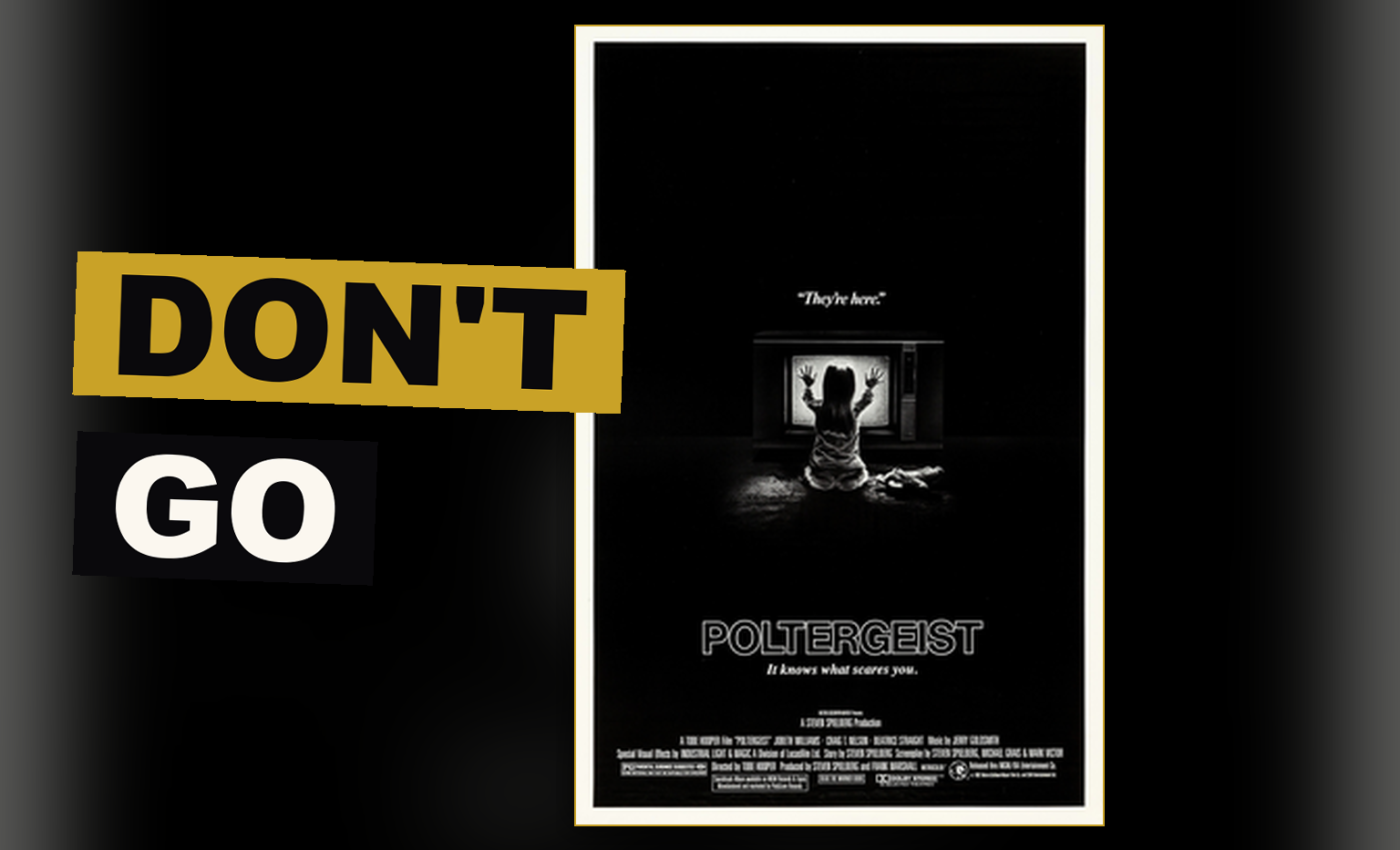
A suburban house swallows a family’s youngest daughter, and the result stands as one of the most enduring horror films of its decade. Poltergeist, directed by Tobe Hooper, turns a quiet California neighborhood into a place where the living and the dead fight for control. The film still works as powerful, disturbing viewing.
A Family Under Attack
The story follows a family whose home comes under attack from angry spirits. Their youngest daughter is drawn into a supernatural opening that appears inside her room, carried away through a passage that opens in the wall. The rest of the family fights to bring her back, helped by a team skilled in the unseen and a small medium who speaks with calm authority.
The cast makes the ordinary feel real before anything strange begins. That foundation matters. When trouble arrives, the audience already trusts these people as a family, not merely as figures placed in a story.
What the Effects Still Do
The special effects remain the film’s strongest quality. Skeletons rise from the ground behind the house. Chairs pile themselves in the kitchen. A tree takes hold of a child through a window. These moments still land, years later, because they rest on physical construction rather than any digital trick.
Hooper stages these moments with patience. He lets dread build before delivering the payoff, a choice that sets Poltergeist apart from similar films of the same period.
Waiting for the Worst
The film balances comfort and dread in a way that feels deliberate. Near the end, one family member calls out a warning meant to save a child from the light on the other side.
“Don’t go into the light.”
That line, delivered with urgency, shows how the film turns small moments into dread. Poltergeist likes to let its characters believe the worst has passed, then prove them wrong.
The film’s second half loses some of the discipline of its first. A late set piece pushes the special effects further than the story strictly needs, and the pace eases briefly before the finale.
Still, Poltergeist earns its standing. It offers a ghost story built on real skill, a strong human core, and effects work that continues to shape the genre. It is not without weakness, but it remains a standard for studio horror of its period.