
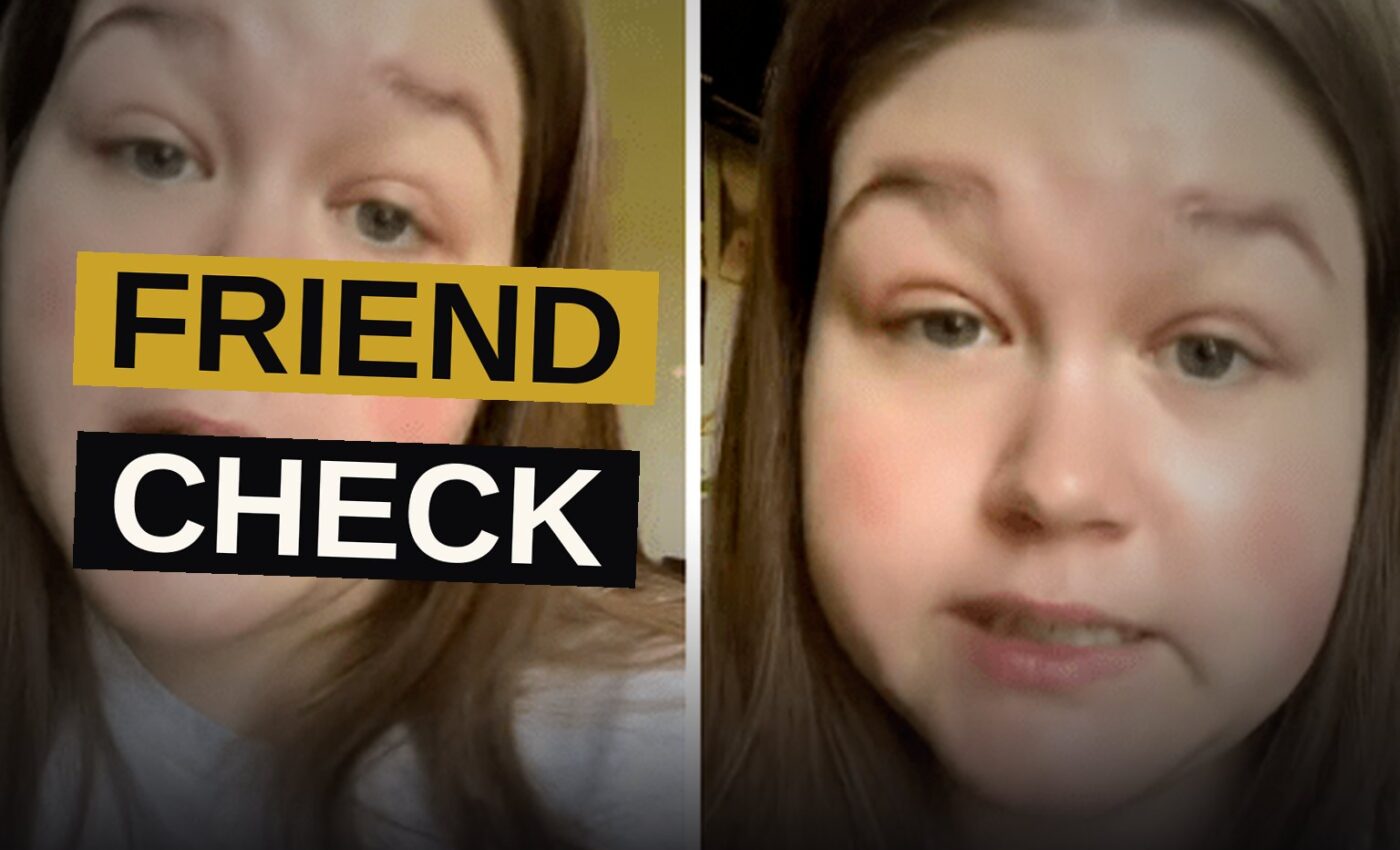
A psychology student’s TikTok video about friendship red flags has racked up more than 131,000 views, and the comments section has turned into a confessional.
Lexie, who posts as @spicycokezero, broke down three behaviors that often signal an unhealthy friendship. Her video struck a nerve: dozens of commenters shared their own stories, asked for advice, and admitted to spotting the same patterns in themselves.
The Daily Dot reports that the claims in the video could not be independently verified, and the details come solely from Lexie’s account. Here is what she says to look out for.
Punishing You for Other Friends
Lexie says the first red flag is when a friend punishes you for having other friends. The behaviors can include giving you the cold shoulder, guilt-tripping you, or becoming jealous when you spend time with people outside the friendship.
A healthy friendship, she argues, does not involve jealousy over other friends or viewing them as a threat. The implication is clear: your social life should not be a source of tension, and a friend who treats it that way is signaling something deeper.
One commenter wrote, “if only I saw this 2 years ago…”
Another user described dropping a long-term friend over exactly this kind of behavior. “All three of these are why I dropped a looooongterm friend. was hard, obviously, but worth it. still dealing with the repercussions of that friendship, too. I didnt realize how bad it was until quite a few other friends who are all pretty much the opposite of these red flags continued to point these behaviors out out of concern. you deserve good friends! glhf out there!” they wrote.
Constantly Managing Their Emotions
The second red flag is subtler. Lexie says you constantly feel like you have to manage your friend’s emotions.
That means constantly monitoring what you say and apologizing unnecessarily. It can also mean changing your behavior to avoid upsetting the friend, even when you have done nothing wrong.
This one is easy to miss because it looks like care. You might tell yourself you are being considerate, or that you are the one who needs to try harder. Lexie’s framing suggests the opposite: if you are walking on eggshells, the friendship itself is the problem.
Some commenters asked whether they had been the ones displaying these behaviors. One user wrote, “Lowkey I feel like I did the first one but instead of understanding they cut me off but if you go on without talking to your friend what are you supposed to think?”
The question remains open, but it points to a real difficulty. Red flags are not always one-directional, and recognizing your own role in a fractured friendship can be just as hard as spotting someone else’s fault.
Feeling Worse About Yourself
The third red flag is the one in the video’s title: you feel worse about yourself after spending time with them.
Lexie says frequent criticism, comparison, subtle competition, or invalidation can gradually affect your self-esteem and emotional well-being. She notes that these behaviors are difficult to recognize because they do not always involve direct insults.
Instead, they appear as a pattern over time. A comment here, a comparison there, a joke at your expense that lands a little too sharp. On their own, each moment is easy to dismiss. Together, they wear you down.
This is the red flag that resonates most with viewers who stayed in friendships too long.
People Share Their Own Stories
The video’s comment section became a space for people to process their own friendships. Some shared their experiences, while others asked for practical advice.
One commenter said ending the friendship was hard but worth it. They said they did not realize how bad it was until other friends pointed out the behaviors out of concern.
People Ask for Help and Advice
Another commenter admitted to struggling with jealousy toward their friends’ other friends. “I get jealous of my friends’ friends sometimes. It’s something I know is wrong. I never mention it. But does anyone have any tips on how to be less like this?” they asked.
The request is notable because it shows the red flags are not always about malicious intent. Jealousy can be a genuine feeling that a person knows is unreasonable. The question is what they do with it.
Lexie’s video does not offer a detailed answer to that question, and the comments do not appear to contain a fix either. But the admission itself is a step, and it is the kind of self-awareness that the video seems designed to encourage.
What the Comments Reveal
The volume of responses suggests the video tapped into something real. More than 131,000 views and dozens of comments is not a massive viral moment by TikTok standards, but the engagement is heavy on personal testimony.
People did not just watch the video. They used it to re-examine their own relationships.
The comments suggest the advice rings true for many people, but personal resonance is not the same as scientific proof. Viewers should take the red flags as a starting point for reflection, not as a diagnostic tool.
What Lexie offers is a framework, and the comment section shows that many people find it useful.
The Last Word From the Comment Section
The last word goes to the commenter who ended a long-term friendship over all three red flags. “You deserve good friends! glhf out there!”
The point of spotting red flags is not to become paranoid about everyone you know. It is to make room for friendships that make you feel better, not worse.
| Red Flag | Behavior |
|---|---|
| Punishing You for Other Friends | Giving the cold shoulder, guilt-tripping, jealousy over other friends |
| Constantly Managing Their Emotions | Monitoring what you say, apologizing unnecessarily, changing behavior to avoid upsetting the friend |
| Feeling Worse About Yourself | Frequent criticism, comparison, subtle competition, invalidation |
Source: dailydot.com
Get the Notebook.
The day's best stories and every fresh verdict, in plain English, in your inbox by seven. One email a day, no more.