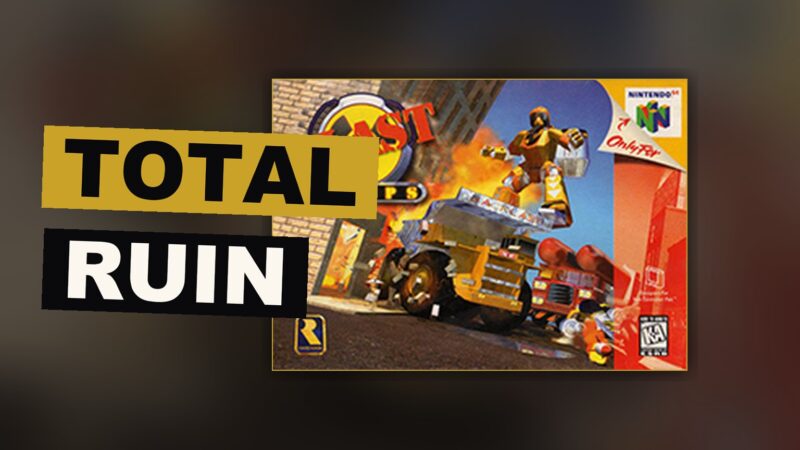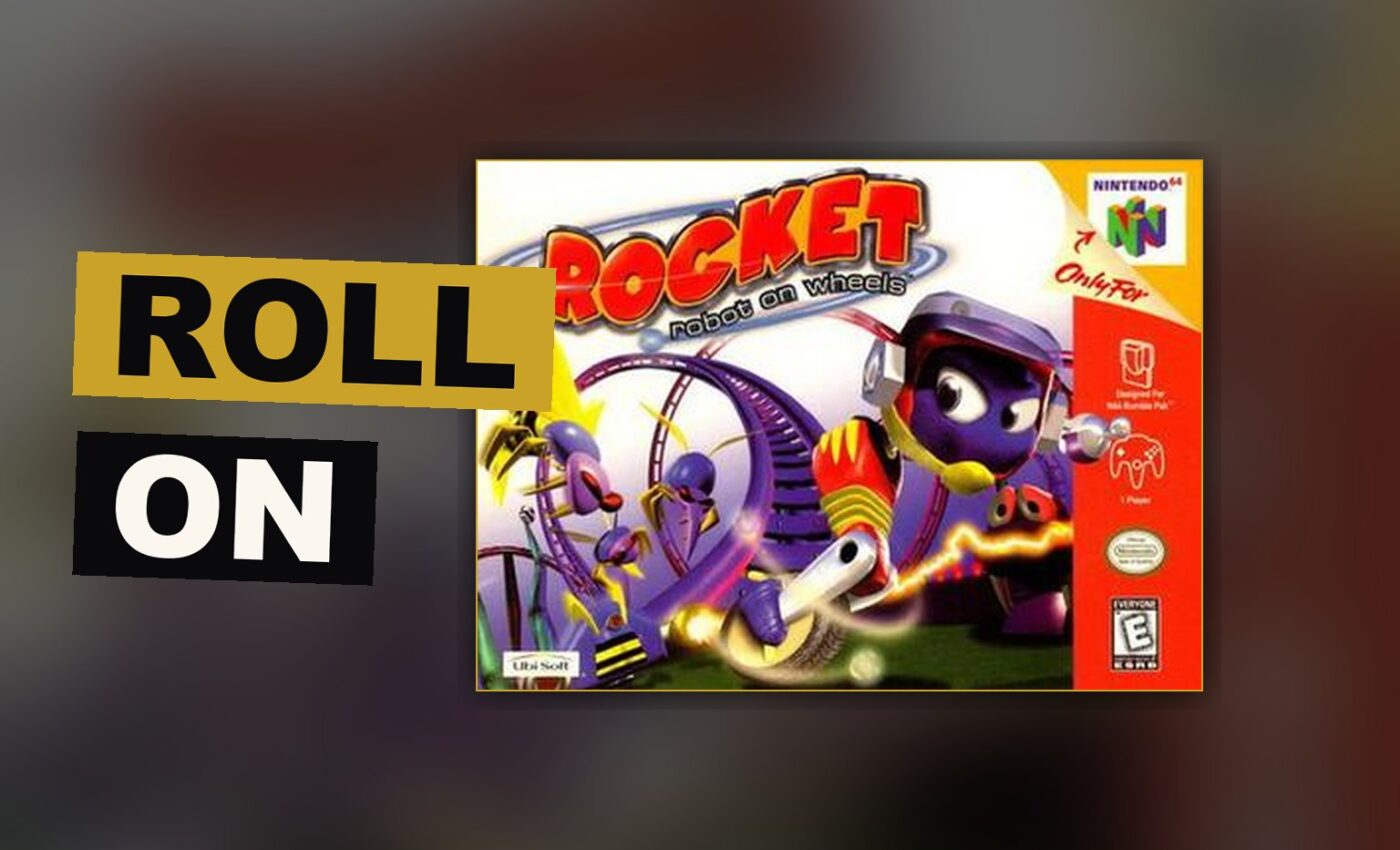
Rocket: Robot on Wheels puts players in control of a wheeled robot named Rocket, sent through a theme park to stop a villain from taking it over. It’s a 3D platformer for the Nintendo 64, and it does something few games of its time attempted: it lets you push, hold, and carry objects to solve problems, not just cross platforms.
The Design
The story is simple. A villain has taken over the park, and Rocket has to move through five worlds to set things right. Each world is full of items to find and machines to repair. None of it feels wasted. The goals connect to each other, so a search in one part of a world often leads directly into a problem to solve somewhere else.
The central idea is Rocket’s ability to hold objects and move them from place to place. Boxes, switches, and other items can be picked up, carried across openings in the ground, and set down exactly where needed. That one idea turns ordinary platform challenges into small thinking problems, and it stays fresh throughout the game.
The five worlds each look and play their own way. One centers on water, another on machines, another on strange, closed rooms. Each world uses Rocket’s carrying skill in its own way, so the water world relies on floating platforms while the machine world is built around switches and levers. That variety keeps the pace steady across a game that expects full completion of each world before moving forward.
Camera trouble was common in 3D platformers on the Nintendo 64, and Rocket: Robot on Wheels avoids most of it. Players can turn the view themselves, and the game rarely forces a bad position while a player moves through the air. It has faults, but it holds up better than most games from the same time.
Here is a simple look at how the five worlds are laid out, in the order most players complete them:
| World | Setting | Main Idea |
|---|---|---|
| 1 | Park grounds (starting point) | Carrying objects, simple motion |
| 2 | Track and platform course | Item gathering, moving platforms |
| 3 | Strange closed rooms | Object position puzzles |
| 4 | World built around water | Water hazards, timing challenges |
| 5 | Machine base | Switch and lever puzzles, final battle |
What Holds Up
Rocket’s controls are precise. Motion, holding objects, and throwing all act at once, which matters in a game built around handling objects with care. The music suits the setting well and stays pleasant through long play sessions.
A side task gives the game added value beyond the main path. Finding every concealed item leads to extra content, and searching for them pushes players to look through parts of each world they might otherwise miss.
Not every part works well.
A few later problems ask for more exact object position than the camera can fully support. Some spots take several tries to set an object down correctly, and that trouble stands out in a game that otherwise runs without trouble. These moments are few, but they are the main reason the game falls short of a perfect mark.
Lasting Value
Rocket: Robot on Wheels came out at a point when 3D platformers were still working out their simple rules — how to handle a camera, how to make players feel steady while moving through the air, how to give players a reason to look beyond plain gathering. Its answer, building the whole design around handling objects, stood apart from other games at the time. Traces of that idea can be seen in later work from the same development team, including the Sly Cooper games.
That influence, more than any single puzzle or world, is why Rocket: Robot on Wheels still draws notice from players who never owned a Nintendo 64 the first time around — and it earns an 8.8 out of 10.