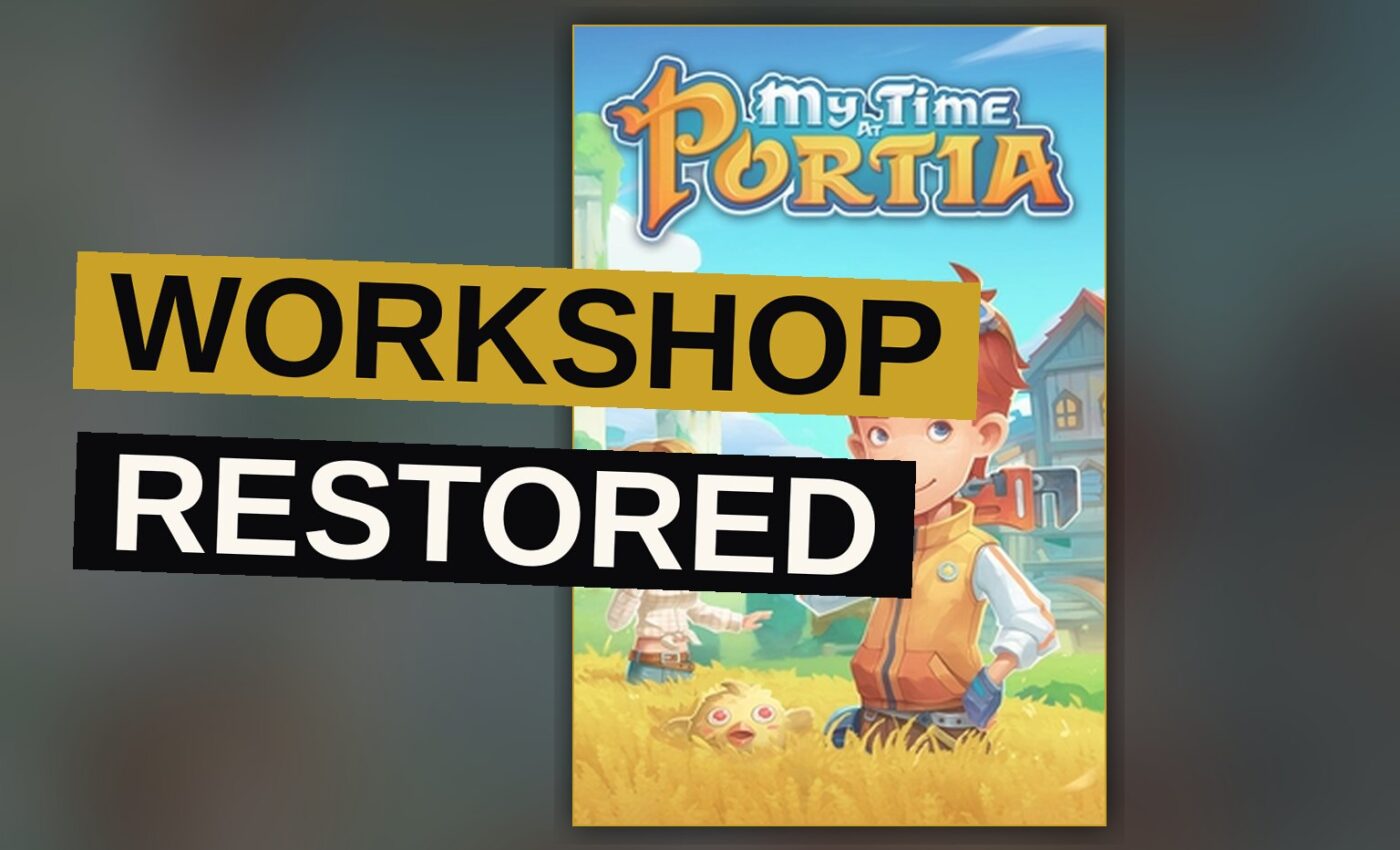
My Time at Portia puts you in a small town with a big clock and a smaller to-do list. It asks you to farm, craft, repair, and occasionally socialize with the townsfolk. It is a life-sim RPG built around building relationships and managing a daily routine, and it mostly works, even if it never quite reaches the heights of games like Stardew Valley or Animal Crossing.
The premise is simple. You inherit a workshop in the village of Portia after your father dies, and your task is to restore it to its former glory. That means fixing machines, growing crops, mining resources, and eventually winning over the townspeople through repeated visits and small gifts. The game is available on PS4, Android, PC, and iOS, and it plays much the same across all platforms, though some mobile controls feel clunkier than others.
Trailer, via XBOX.
The Daily Grind
Most of your time in Portia is spent doing chores. You check your plot for weeds, harvest vegetables, water flowers, and tend to your animals. There is a rhythm to it, and the game does a decent job of making even the simplest tasks feel rewarding. The animations are smooth, the sound effects are pleasant, and the world is bright enough to keep you engaged for hours.
The grind is where the game shows its cracks. Some days you will find yourself wandering back to the same fields, checking the same machines, and chatting with the same villagers who never change their minds or their schedules. The repetition can be soothing, but it can also be exhausting. There is no real way to speed up the clock, so you are stuck moving through each hour manually.
The crafting system is where My Time at Portia shines brightest. You collect materials from the wild, from other players online, or from vendors in town, and you use them to build tools, furniture, and decorative items. The recipes are varied, and the sense of progression is strong. Watching a machine you built yourself start working is genuinely satisfying. The game also includes a combat system, but it is optional and rarely necessary.
The People of Portia
The characters in Portia are the heart of the game. Each villager has a distinct personality, a history, and a set of likes and dislikes. You learn about them through conversations, gifts, and timed events. Some are friendly, some are standoffish, and some are just odd. The game encourages you to spend time with everyone, and the payoff is a sense of belonging that few other games manage.
“Portia is a town that rewards patience.”
The dialogue is often funny, touching, or both. One character might ask for a gift, while another will offer advice. A third might simply ignore you until you prove yourself. These small interactions add up over time, and they make the world feel lived-in. The game also includes a romance subplot, though it is not the main focus.
The Online Co-op
The online co-op mode is a standout feature. You can visit other players’ workshops, trade items, and help them complete quests. This is where My Time at Portia feels most alive, because you are interacting with real people, not scripted NPCs. The game supports up to four players at once, and there are plenty of servers to choose from.
The co-op mode is not perfect. There are times when the connection drops, and there are times when other players are busy or unresponsive. But when everything works, it is a joy. You can show off your garden, share tips, or just chat about the weather. The game also includes a competitive mode, but it is less developed and less popular.
| Feature | My Time at Portia | Stardew Valley |
|---|---|---|
| Setting | Small farming town | Small farming town |
| Focus | Workshop restoration | Farming and community |
| Combat | Optional | Optional |
| Co-op | Yes | Limited |
The Weak Points
Not everything about My Time at Portia works. The pacing is slow, and the game does not offer many ways to accelerate it. You will spend a lot of time waiting for the clock to move forward, and you will spend a lot of time walking between locations. The map is not large, and the areas outside the village are mostly empty.
The game also lacks a strong sense of direction. There is no clear goal beyond the workshop restoration, and the side quests are often repetitive. You will find yourself wandering around, looking for something to do, only to return to the same fields and machines. The game does not offer many incentives to explore, and it does not punish you for ignoring its content either.
The presentation is solid but unremarkable. The music is pleasant, the art is colorful, and the writing is competent. But none of it stands out. The game looks and sounds like a competent indie title, not a groundbreaking one. It is easy to forget once you put it down, and it is easy to lose interest in when you have nothing else to do.
The Verdict
My Time at Portia is a good game, not a great one. It succeeds at what it sets out to do, which is to create a relaxing, rewarding simulation of rural life. The crafting, the dialogue, and the co-op mode are all executed well. But the pacing, the lack of direction, and the repetitive grind hold it back from greatness.
If you enjoy farming sims, you will likely enjoy My Time at Portia. If you want a game with a clear objective, you might find it frustrating. The game is best played in short sessions, not marathon sittings. It is a game to dip into, not a game to dominate.
My Time at Portia is a solid entry in the genre, and it deserves credit for trying something different. Its co-op mode is a standout feature, and its crafting system is one of the best in the field. But its flaws are real, and they are hard to ignore. The game is worth playing, but it is not worth obsessing over.