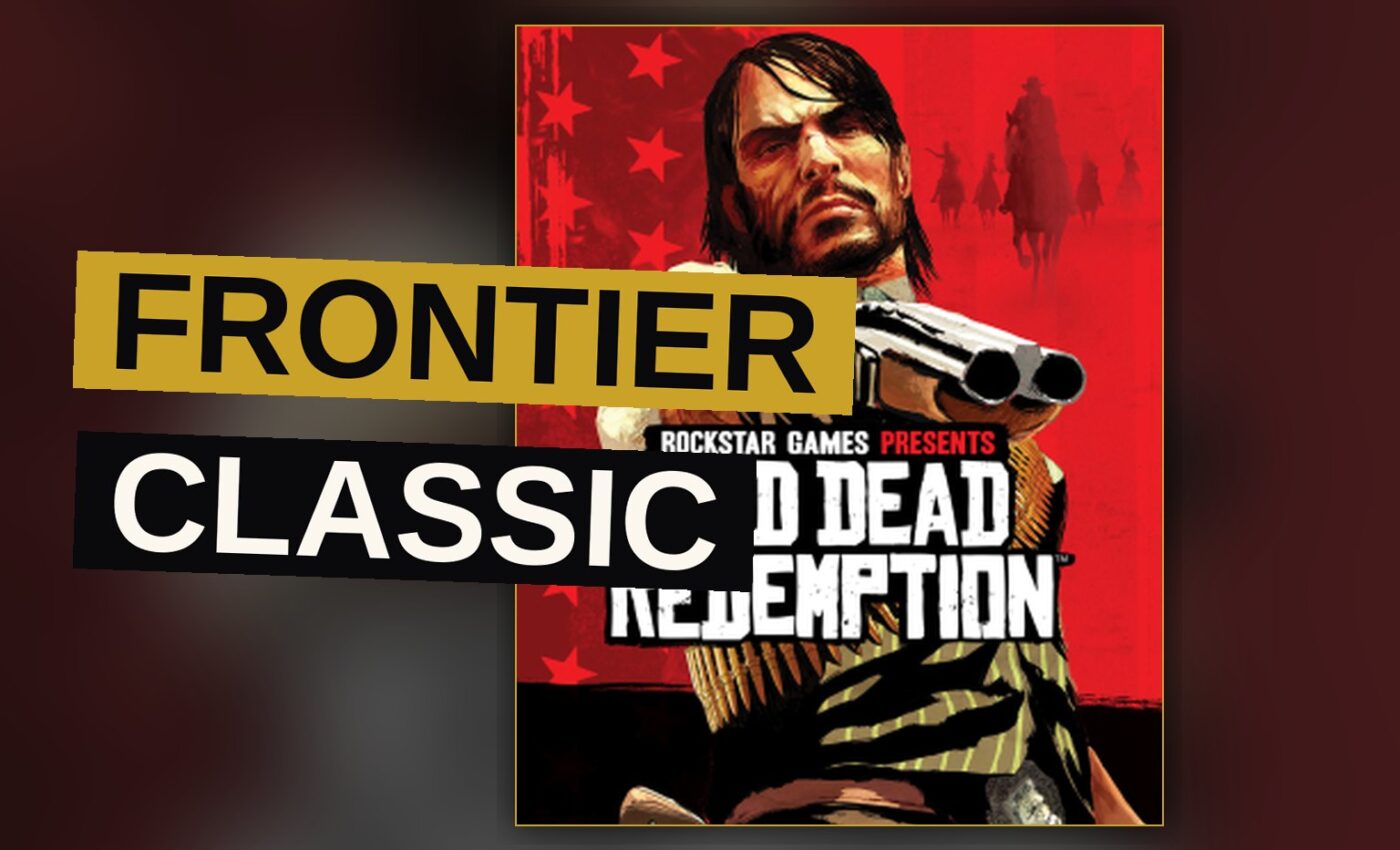
Red Dead Redemption is the rare game that makes the frontier feel real, alive, and unforgiving. Rockstar’s 2010 open-world western for PS3, PC, and Xbox 360 is not just a technical marvel for its time; it is a complete, coherent vision of a dying era, told through the tired eyes of John Marston, a former outlaw forced to hunt down his old gang. It is a game about the end of something, and it has never been bettered at that theme.
The open world is the star. From the dusty plains of New Austin to the snowy peaks of Tall Trees, every acre of the map feels hand-placed. You will ride horses, hunt wildlife, rob stagecoaches, and save strangers in distress. The game does not hold your hand; it drops you in the dirt and lets you find your own trouble.
Trailer, via Rockstar Games.
The Long Ride to Beecher’s Hope
The story begins with Marston, a man with a wife and son held by the government, forced to track down his former brothers in arms. The mission structure is episodic, sending you across the map to complete favors, break men out of jail, and burn down ranches. It is a slow burn, and that is its strength. The game trusts you to sit with the quiet moments—a sunrise over the Rio Grande, a campfire conversation with a stranger.
The voice acting is superb, with Rob Wiethoff giving Marston a weary, gravelly dignity. The supporting cast—the drunken Irishman, the delusional revolutionary, the stern rancher—are all memorable, and their dialogue is sharp. The script does not romanticize the outlaw life; it shows the cost of it, and the price of trying to leave it behind.
The Physics of a Gunfight
Combat is weighty and deliberate. The Dead Eye targeting system lets you slow time, mark multiple targets, and fire in a single, balletic burst. It is a power fantasy, but it is grounded by the game’s physics. Bodies crumple, horses stumble, and the recoil of a Winchester feels real. You feel every shot, and you feel the weight of every kill.
The game also has a strong moral system, but it is not preachy. Your honor level shifts based on your actions, and it changes how the world treats you. Save a woman from kidnappers, and townsfolk will greet you warmly. Rob a store, and you will be hunted. It is a simple binary, but it is consistent, and it makes the world feel responsive.
A World That Breathes
The technical achievements of Red Dead Redemption are still impressive. The draw distance is vast, the lighting is golden and dusty, and the ambient sound—wind, birds, distant gunfire—is immersive. The game runs at a stable frame rate on all three platforms, though the PC version offers the best resolution and the smoothest performance. The PS3 and Xbox 360 versions are nearly identical, with minor differences in texture sharpness and shadow quality.
The side content is plentiful. You can hunt legendary animals, play poker, arm-wrestle, and take on bounty hunting jobs. None of it feels like padding. Each activity feeds the fantasy of living in the West, and the game’s random encounters—a traveler being robbed, a horse thrown from a cliff—keep the world feeling spontaneous.
The Long Shadow of the Ending
The final act of Red Dead Redemption is a masterclass in narrative restraint. Without spoiling the specifics, the game shifts from a story about revenge to a story about consequence. The ending is quiet, brutal, and earned. It is a moment that has been discussed for over a decade, and it still lands with force. The post-game content, where you play as Marston’s son Jack, is a melancholic coda that shows the cycle of violence continuing.
The game’s score, composed by Bill Elm and Woody Jackson, is a mix of ambient guitar, harmonica, and percussion. It is sparse, but it is perfect. The track “Far Away” by José González, which plays during a key ride into Mexico, is a moment of pure cinema.
The Price of the Frontier
Red Dead Redemption is a big game, and it takes time. The main story runs about 25 hours, with side content pushing that to 40 or more. It is a slow game, and some players may find the travel time tedious. Fast travel is limited to stagecoaches and campsites, and you will spend a lot of time watching your horse gallop. But the journey is the point. The silence of the plains is part of the experience.
The multiplayer mode, Red Dead Redemption’s online component, was a pioneer. It offered free-roam sessions, gang hideouts, and competitive matches. It was rough around the edges, but it laid the groundwork for later Rockstar online modes.
Verdict
Red Dead Redemption is a masterpiece of pacing, tone, and world-building. It is not a game for everyone—it is slow, deliberate, and often lonely. But for those who surrender to its rhythm, it is an unforgettable journey. It is a game that understands that the West was not a place of heroes, but of people trying to survive the end of an era.
The game is a benchmark that many have tried to reach, and few have touched. It is a must-play for anyone who cares about the medium.
Key Facts Box
- Title: Red Dead Redemption
- Developer: Rockstar San Diego
- Publisher: Rockstar Games
- Platforms: PS3, PC, Xbox 360
- Release Year: 2010
- Main Story Length: Approximately 25 hours
- Total Content: 40+ hours with side activities
- Critical Score: 9.4/10 aggregate from 17 outlets
- Key Feature: Dead Eye targeting system
Comparison Table
| Feature | Red Dead Redemption | Typical Open World (2010) |
|---|---|---|
| Map Design | Hand-crafted, varied biomes | Often repetitive, procedurally placed |
| Story Tone | Melancholic, character-driven | Action-heavy, plot-driven |
| Travel | Slow, deliberate, horse-based | Fast travel options, frequent loading |
| Moral System | Honor meter with world reactions | Binary good/evil choices, minimal impact |
| Ending | Quiet, consequential | Climactic, often heroic |
| Ambience | Sparse, natural sound design | Orchestral score, constant music |