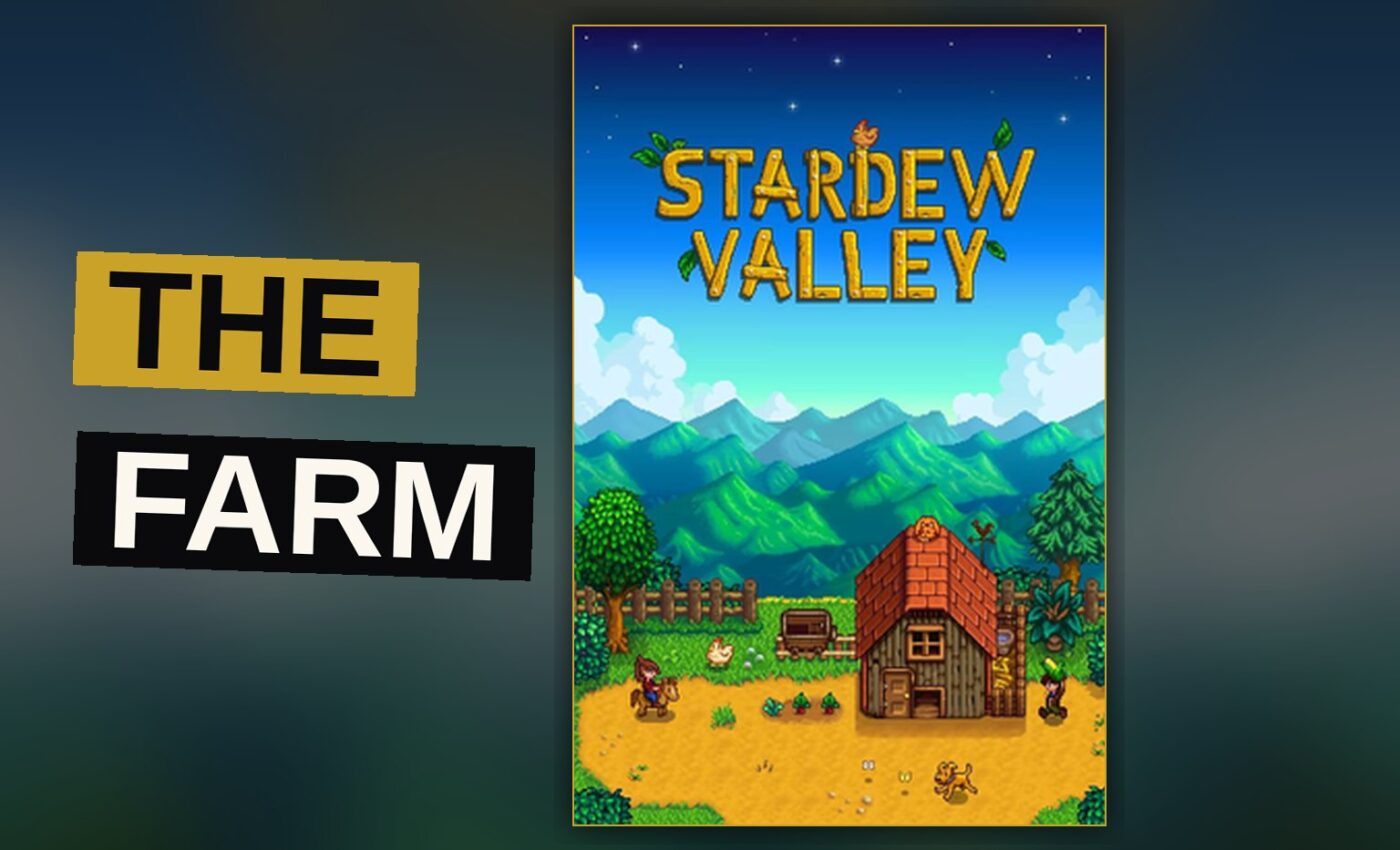
A farmer arrives with three tools, a small plot of land and a debt to pay off. That is the whole setup of Stardew Valley, and it turns out to be enough for one of the fullest games of 2016.
Trailer, via ConcernedApe.
Pelican Town
Stardew Valley drops players into Pelican Town, a small community built around one crumbling farm. The player inherits that farm from a grandfather and must clear rocks, weeds and tree stumps before planting a single crop. Progress is slow at first. Within a season, though, the game opens up into farming, mining, fishing and combat systems that all feed into each other.
The townspeople give the place its pulse. Each resident keeps a schedule, has birthdays, and responds to gifts with lines that range from warm to standoffish. Marriage is possible with a dozen or so eligible residents, by this reviewer’s count, and the game tracks a relationship meter that rewards attention over time.
The Mines
Below Pelican Town sits a monster-filled mine that rewards players willing to fight for ore and gems. Combat is simple but tense, especially in later floors. Loot from the mines feeds directly back into farming tools and crafting, which keeps the two systems tied together.
Fishing works as its own small game, with a timing bar that punishes carelessness. Foraging rounds out the loop, sending players into forests and along riversides for mushrooms, berries and rare plants.
JojaMart
A corporate rival, JojaMart, sits at the edge of town and offers players a shortcut: pay to skip the community center restoration that otherwise drives much of the mid-game. Choosing JojaMart changes the tone of the town noticeably. Choosing the community center instead ties the player closer to their neighbors.
That choice is one of the clearest examples of how Stardew Valley lets players shape their own version of the story.
Eric Barone
Stardew Valley was made almost entirely by one person, Eric Barone, working under the name ConcernedApe. He built the art, music, code and writing over several years before release. That single authorship shows in how consistent the game feels — nothing in it seems bolted on or outsourced.
The result is a world with its own weather, its own seasons and small daily rituals that give it weight. Pelican Town feels lived-in, not just assembled from systems.
Switch, PC, PS4, Xbox One
Stardew Valley launched first on PC before arriving on PS4, Xbox One and later Switch. The Switch version lets players farm on a train or in bed, which matters more than it sounds like it should. Across every platform, the core game stays the same: plant, harvest, sell, repeat, with just enough variation to keep that loop from going stale.
Multiplayer was added after launch, letting friends split chores on one farm. It changes the pacing but not the spirit of the game.
Seasons and Festivals
Each season brings its own crops, its own festivals and its own visual palette. The Stardew Valley fair, the Flower Dance and the Luau all give the town calendar a shape beyond simple crop cycles. Festivals also offer one of the few places where the whole cast gathers in one spot, which makes them feel like actual events rather than menu screens.
Missing a festival costs nothing mechanically. It just feels like missing something.
“It changes the pacing but not the spirit of the game.”
Stardew Valley never explains most of its systems in full. Players are left to experiment with crop placement, gift preferences and mine strategies, and that trial-and-error approach turns out to suit the game’s slow rhythm. Nothing about it demands urgency. A player can leave a save for months and return to a farm that still makes sense.
The game does show its limits eventually. Late-game content thins out once the community center is finished and the mines are cleared, and some of the dialogue loops repeat more than they should after dozens of hours. Those are minor complaints against a game this generous with its systems and this confident in its own pace.
Stardew Valley succeeds because it never asks players to be anything other than patient. Farming games live or die on whether the daily loop stays satisfying, and this one does, season after season, across PC, PS4, Xbox One and Switch alike.
Get the Notebook.
The day's best stories and every fresh verdict, in plain English, in your inbox by seven. One email a day, no more.