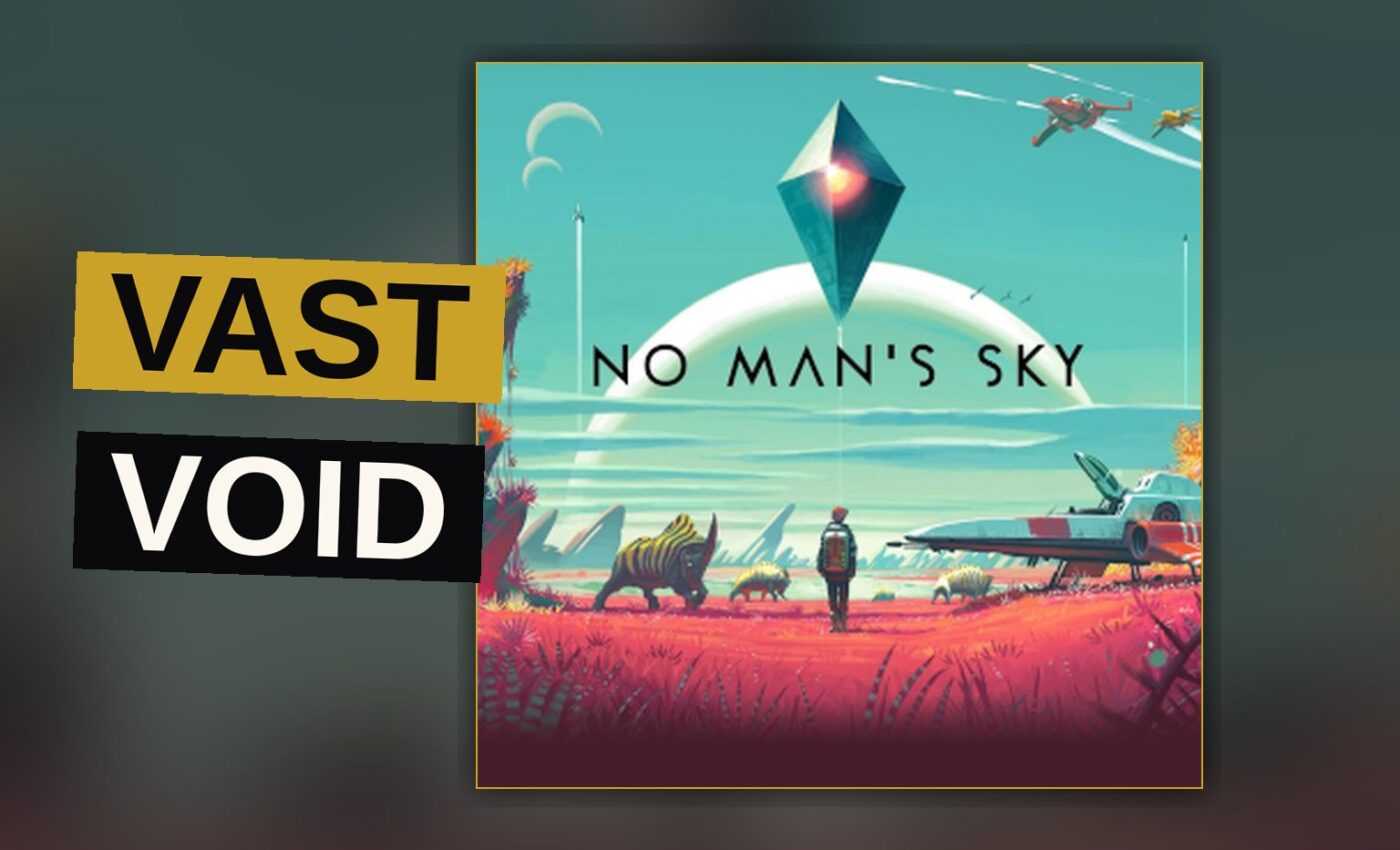
No Man’s Sky is a strange kind of game. It promises a universe so vast that you could spend a lifetime exploring it, and it mostly delivers on that promise. What it doesn’t deliver is the sense of wonder that comes with discovery. The game is a technical marvel and a creative letdown in equal measure.
Trailer, via IGDBcom.
Scale That Stuns
The numbers are staggering. There are billions of planets, each procedurally generated with its own weather, flora and fauna. You can land on a planet, walk across its surface, gather resources, craft tools and ships, and fly off to the next system. The scope is genuinely unprecedented for a single-player experience.
But the scale is also the problem. Because everything is generated on the fly, the game feels empty. Planets repeat their patterns endlessly. You’ll see the same rock formations, the same alien creatures, the same trees on countless worlds. The variety is there in theory, but in practice it’s thin.
The Procedural Problem
Procedural generation is a double-edged sword. It allows for endless content, but it also means that content is rarely memorable. A few hours in, you start to notice the sameness. The game tells you there are trillions of things to do, but it doesn’t make you care about any of them.
The lack of personality extends to the universe itself. There are no named landmarks, no historical events, no cultural touchstones. You’re left wandering through a cosmos that feels less like a living world and more like a database of shapes.
Combat And Crafting
Combat is simple and repetitive. You fight hostile creatures with a gun, and the encounters follow a familiar rhythm. The crafting system is similarly straightforward. You collect resources, combine them, and build better equipment. None of it is particularly deep.
The systems work, but they don’t engage. They’re functional, not fun. There’s no sense of progression beyond getting a slightly better ship or a slightly stronger suit. The game doesn’t reward you for doing things; it just lets you do them.
The Story
There is a story, buried beneath the mechanics. You play as a pilot who crash-lands on a desert planet, and your goal is to reach the center of the galaxy and unlock the secrets of the universe. It’s a thin premise, and the narrative barely scratches the surface.
The story is told through brief audio logs and occasional cutscenes. It’s serviceable, but it doesn’t give you a reason to care. The journey is meant to be personal, but the game never makes you feel attached to anything you find along the way.
VR In Headset Mode
The PSVR2 version is worth mentioning separately. The game was built with VR in mind, and it shows. The sense of scale is even more pronounced in headset mode. Flying through space, landing on a distant planet, and walking through its valleys feels genuinely immersive.
But the flaws are still present. The repetition is just as noticeable, and the emptiness is harder to ignore when you’re looking straight ahead. VR doesn’t fix the underlying design problems; it just puts you closer to them.
What Works
The game’s strengths are real. The procedural generation creates a universe that feels genuinely massive. The traversal systems are smooth. The graphics are beautiful. When you’re flying through a nebula or landing on a new planet, the game is at its best.
The problem is that those moments are rare. The game spends too much time asking you to do things that feel routine, and it never quite recaptures the magic of the first landing.
The Verdict
No Man’s Sky is a game that wants to be more than it is. It reaches for cosmic grandeur and settles for a series of similar tasks repeated across a vast void. The ambition is admirable, but the execution falls short.
The game is best enjoyed as a curiosity. It’s a technical achievement, a demonstration of what procedural generation can do, and a reminder of how much work there is left to do. As a full experience, it’s incomplete.
- The scale is impressive.
- The repetition is exhausting.
- The combat is forgettable.
- The story is thin.
- VR makes the flaws more visible.
No Man’s Sky is a game you’ll admire from a distance. It’s not one you’ll want to live in.
Get the Notebook.
The day's best stories and every fresh verdict, in plain English, in your inbox by seven. One email a day, no more.