
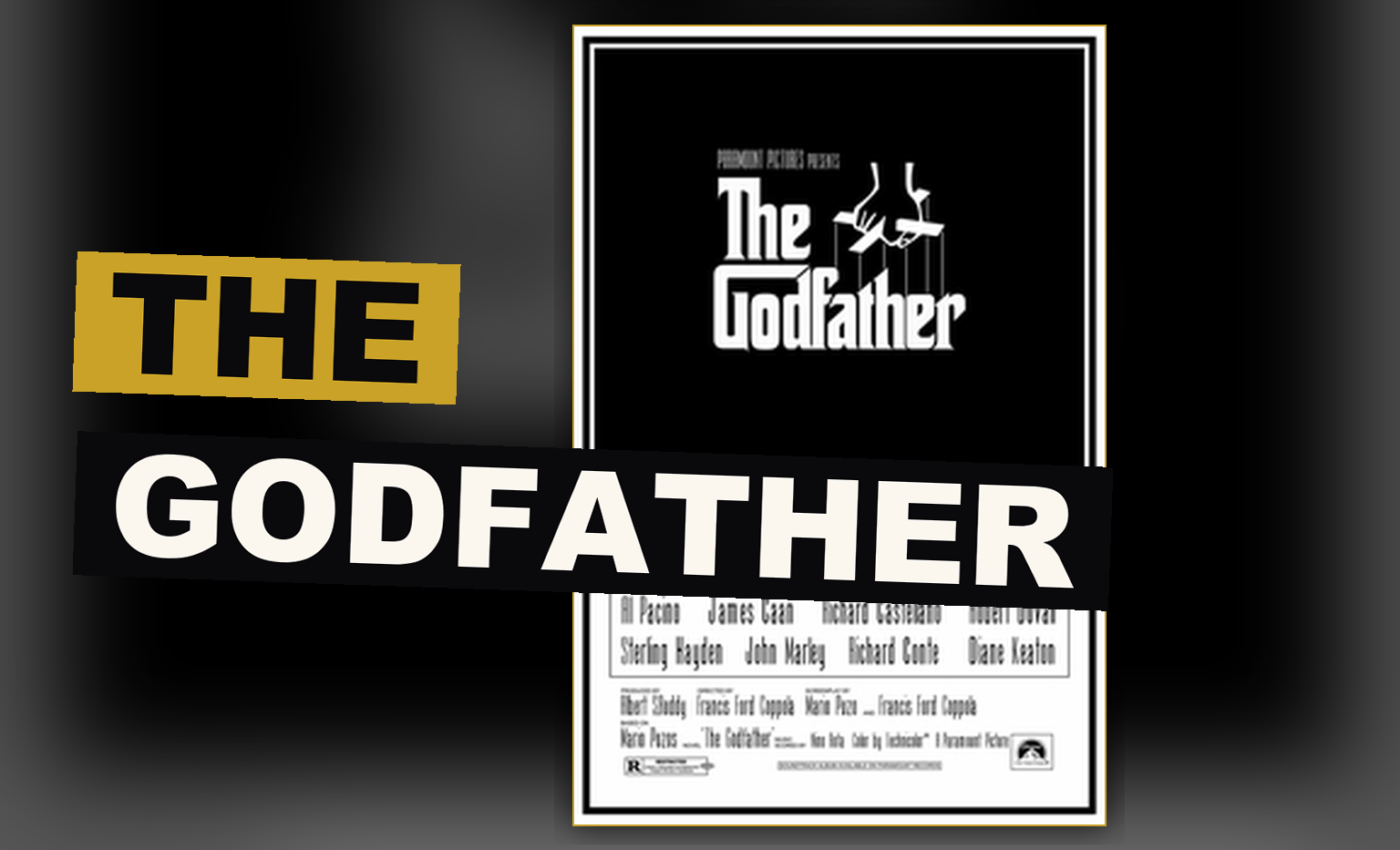
Paramount bought Mario Puzo’s novel for $80,000 before it became a bestseller. The studio then struggled to find a director, and fought its own director over who would play the lead. The Godfather survived all of it.
Marlon Brando and the Cotton Balls
Brando was not Paramount’s choice. Executives opposed him over recent flops and his temper. Puzo had written to him calling him the “only actor who can play the Godfather.” Coppola wanted Brando or Laurence Olivier; Olivier’s agent said he was sick, then Olivier starred in Sleuth that same year. Others considered: Carlo Ponti, Ernest Borgnine, Charles Bronson, George C. Scott, Richard Conte, Raf Vallone, Anthony Quinn and Orson Welles, who met Puzo to argue his own case.
Paramount president Stanley Jaffe demanded a screen test. Coppola, unwilling to offend Brando, claimed he needed to test equipment and shot it at Brando’s California home. Brando stuffed cotton balls in his cheeks, darkened his hair with shoe polish and rolled his collar. Coppola slipped the tape into the middle of the audition stack. The executives were impressed, and let him cast Brando if the actor took a lower salary and posted a bond against production delays.
A Wedding, a Horse, a War
The film runs from 1945 to 1955. Vito Corleone grants favors at his daughter Connie’s wedding to Carlo Rizzi, where Michael introduces his girlfriend Kay Adams. Vito refuses protection to drug baron Sollozzo, who has the Tattaglia family behind him. Luca Brasi is garroted. Vito is gunned down and survives. Sonny takes over. Hagen flies to LA to pressure Jack Woltz, who wakes to find the severed head of his $600,000 racehorse Khartoum in his bed, then relents.
What follows is the campaign of bloody revenge that Michael launches after the attempt on his father’s life.
Al Pacino, James Caan, Robert Duvall
The ensemble is the argument for the film’s length. Ranked by what each does for the whole:
- Al Pacino as Michael, the outsider who becomes the boss — the film’s spine.
- Marlon Brando as Vito, the patriarch whose shooting starts everything.
- Robert Duvall as Tom Hagen, the consigliere and the family’s calm center.
- James Caan as Sonny, hot-tempered and acting boss.
Supporting turns carry weight too:
- Richard S. Castellano as Clemenza
- Diane Keaton as Kay Adams
- Talia Shire as Connie Corleone Rizzi
- Sterling Hayden as Captain McCluskey
- John Marley as Jack Woltz
- Al Lettieri as Sollozzo
Nino Rota’s Score
Nino Rota composed the score, with additional pieces by Carmine Coppola. Filming took place around New York City and Sicily and finished ahead of schedule. The Godfather premiered at Loew’s State Theatre on March 14, 1972, and went wide in the United States on March 24. It was the highest-grossing film of 1972 and, for a time, the highest-grossing film ever made, earning between $250 and $291 million.
That figure is the least interesting thing here. The Godfather matters because Coppola won every fight that counted — over Brando, over the studio, over a runtime of 175 minutes — and the movie is what those fights bought. The casting war is not trivia. It is the reason the Corleones feel like a family instead of a premise.
Get the Notebook.
The day's best stories and every fresh verdict, in plain English, in your inbox by seven. One email a day, no more.