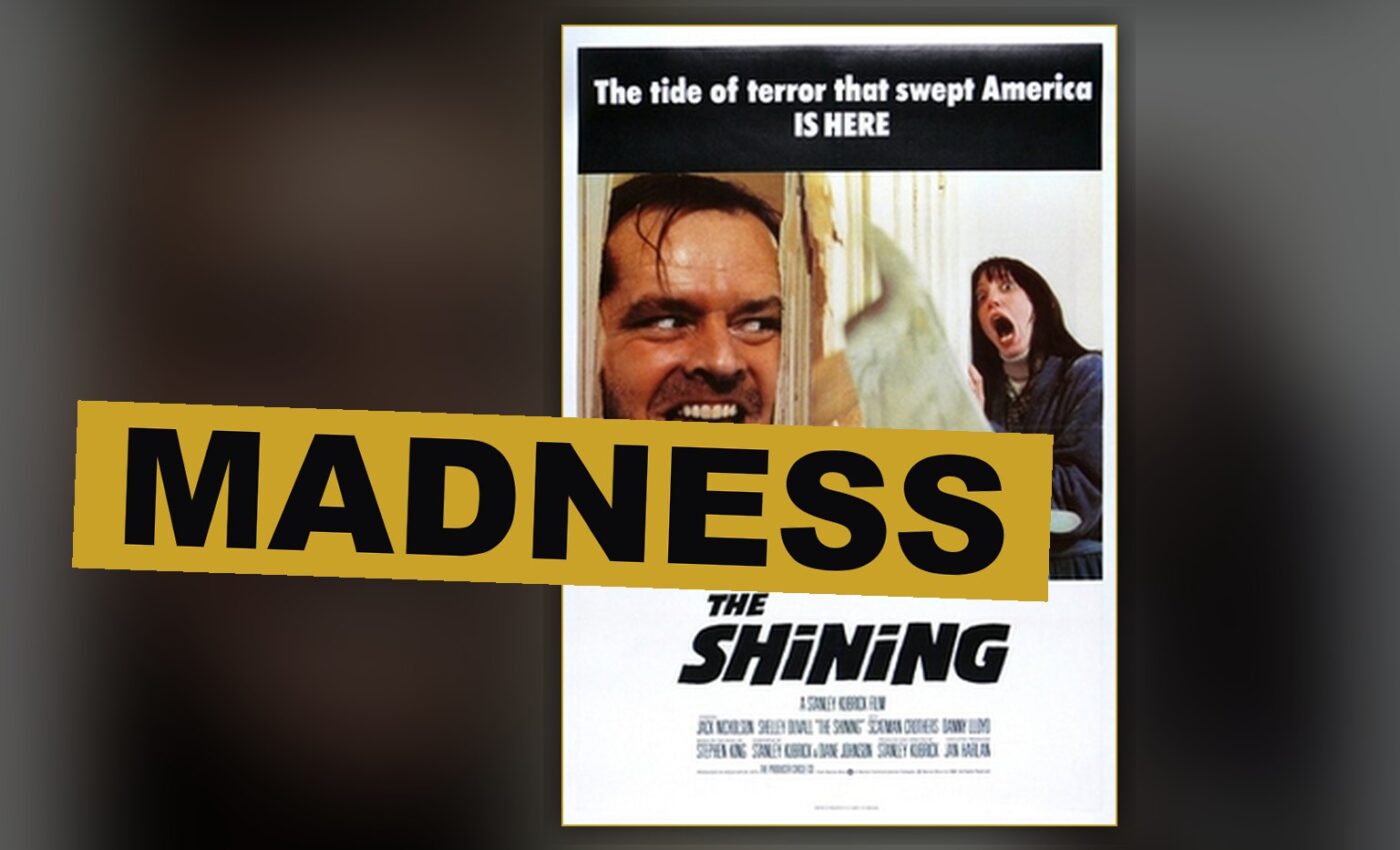
The Shining opened in 1980, directed by Stanley Kubrick and based on a novel about a family who moves into a large, empty hotel for the winter. The father takes a job watching over the building while it sits closed for the season. His wife and young son come with him, and the boy senses something wrong with the hotel before anyone else does.
Inside the Family
The actor playing the father carries the film. His change from a strained, careful man to someone plainly dangerous happens across many scenes, not in one sudden moment. Kubrick lets the camera hold on his face during long quiet portions, and that choice builds dread without a word spoken.
The mother carries the fear in a different way. She spends much of the film reacting to what she sees, and her tired look on screen feels real. Stories about a hard filming process have followed the film for years, but whatever the cost, the performance holds up.
The son may be the film’s quietest surprise. He moves through empty halls on a small wheeled toy, speaks to an unseen friend, and reacts to things no one else in the family notices. His quiet manner works against the loud fear building around him.
Behind the Hotel’s Walls
The building acts as a character on its own. Kubrick used a new camera support system that let the picture move through halls and follow the boy’s rides without a single cut breaking the motion.
The hotel’s floor plan does not always add up, and Kubrick left it that way. Rooms and passages do not match any real building plan, and that was said to be on purpose, meant to leave viewers uneasy in a way they cannot name.
A few moments from the film have become part of common film knowledge:
- A line shouted through a broken door, said to have been made up on set
- Two young girls standing together in a hall, an image often copied since
- Typed pages that repeat one sentence over and over
- Blood pouring from a set of elevator doors
- A chase near the end, shot largely outside on paths cut through thick bushes
Each of these has been copied, joked about, and studied since the film came out, which says something about how deeply the pictures have stayed with people.
The music, credited to two composers along with pieces by several classical writers, avoids the usual horror sound choices. Instead it hums and drones under scenes that look calm on the surface. That distance between quiet pictures and uneasy sound does more work than any sudden surprise could.
Kubrick’s pace will test viewers who expect a quicker horror film. The film takes its time. Long portions pass with little talk, just wide views of empty halls or the boy moving through them. That patience is either the film’s greatest strength or its biggest demand on an audience, depending on who is watching.
Here is how some of the film’s most discussed pieces compare:
| Element | What It Is | How It’s Remembered |
|---|---|---|
| The father’s performance | A steady build from strain to danger | Often named a high point of the genre |
| The moving camera shots | Long, continuous paths through the hotel | Studied in film classes for its method |
| The final chase | Ending scene changed from the book | Referenced in later horror films |
| The music | Unusual, uncommon horror sound | Discussed among composers and followers of the genre |
The author of the original novel has said publicly that he did not care for changes Kubrick made, especially around the father’s character and how the story ends. That difference between writer and director has followed the film for years, and it remains part of how people talk about it.
Looking Back Decades Later
The film’s standing has grown rather than faded. Early reviews were mixed, but its place among both critics and audiences has increased steadily since.
Documentaries, essays, and long studies have picked apart the film’s small details, its editing, and its hotel’s odd plan. Few horror films from that period get this kind of lasting attention.
The Shining is not without faults, and its calm, patient pace will not suit every viewer. But its skill, from the lead performance to Kubrick’s tight control of the picture, has earned it a lasting place in horror history. It is one of the rare horror films that rewards a second and third viewing, showing something new each time.