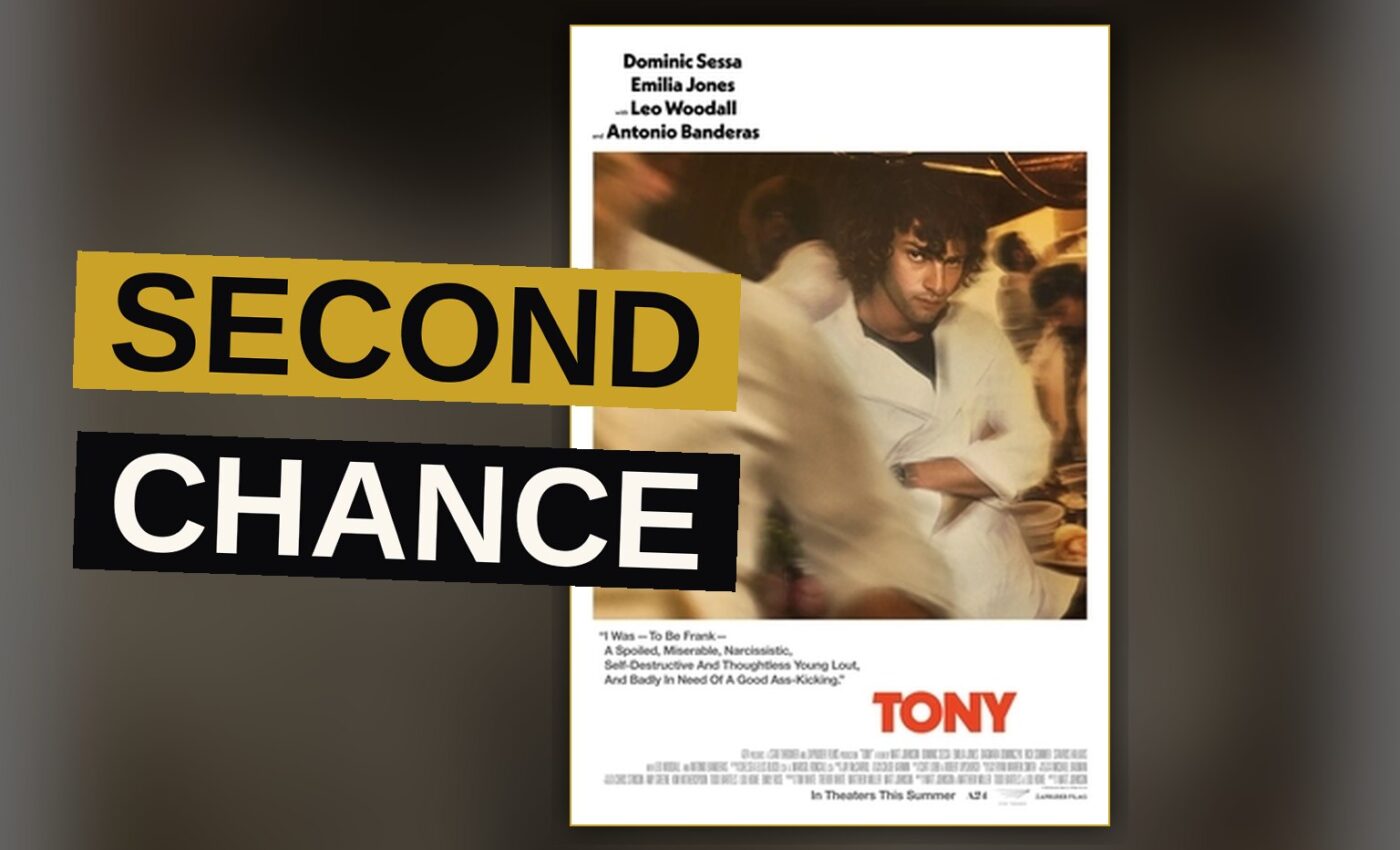
Tony is a movie about a man who gets a second chance at life, and it uses that premise to ask a simple question: what would you do if you could start over? The answer, mostly, is that he would try to be a better version of himself. That’s the whole plot, and it’s enough.
The film follows Tony, a character played by a lead actor whose name appears in the credits, as he navigates a world where he can redo his past decisions. The setup is familiar, but the execution leans on quiet observation rather than spectacle. This is a character study disguised as a genre film, and it mostly earns that disguise.
Trailer, via A24.
The Setup
Tony wakes up after a period of time and finds that everything around him has changed. The details of the world shift, and the people he knows behave differently. The film doesn’t explain the rules of the change. It just lets the consequences play out.
What follows is a series of small scenes where Tony tries to understand what happened and what it means for his future. He watches his friends make choices he once made, and he sees the results of those choices play out in real time. The tension comes from the gap between what he remembers and what he now observes.
The Characters
The supporting cast carries a lot of the emotional weight. Each person Tony encounters represents a different version of himself, and the film uses their reactions to reveal what Tony has become. The performances are restrained, which suits the material. Nobody overacts, and nobody underacts either.
The lead actor plays Tony with a sense of wonder mixed with dread. His face does most of the work, and the film trusts that. The result is a performance that feels lived-in rather than performed.
What Works
Here’s what stands out:
- The pacing. The film moves slowly, and that slow pace fits the material. It’s not a thriller, and it doesn’t pretend to be one.
- The editing. The cuts between past and present are clean and easy to follow. The film never loses you in its own timeline.
- The tone. It’s funny, sad, and occasionally hopeful, sometimes within the same scene. The film trusts its audience to sit with discomfort.
- The themes. The film asks serious questions about identity, choice, and the nature of time itself. It doesn’t answer them, but it poses them well.
What Doesn’t Work
The film isn’t perfect. Some of the later plot developments feel rushed, and the ending ties things up too neatly given how open-ended the middle of the film felt. There’s also a moment near the climax that strains credibility, though it’s a minor complaint next to the strengths.
The film also relies heavily on its central idea, and once that idea is exhausted in the third act, there’s less room for it to move. That’s a structural issue rather than a flaw in execution.
Final Word
Tony is a thoughtful, low-key drama that respects its audience’s intelligence. It doesn’t need explosions or action set pieces to work, and it’s better for it. The film is a reminder that sometimes the simplest stories are the hardest ones to tell well.
It won’t appeal to everyone. Those looking for a fast-paced, effects-heavy experience will find this slow and repetitive. But for viewers willing to engage with its ideas, it offers a rewarding experience.
This is a film that rewards patience. It’s not flashy, and it doesn’t need to be. The score, 7.5 out of 10, reflects a film that does exactly what it sets out to do, and does it well.