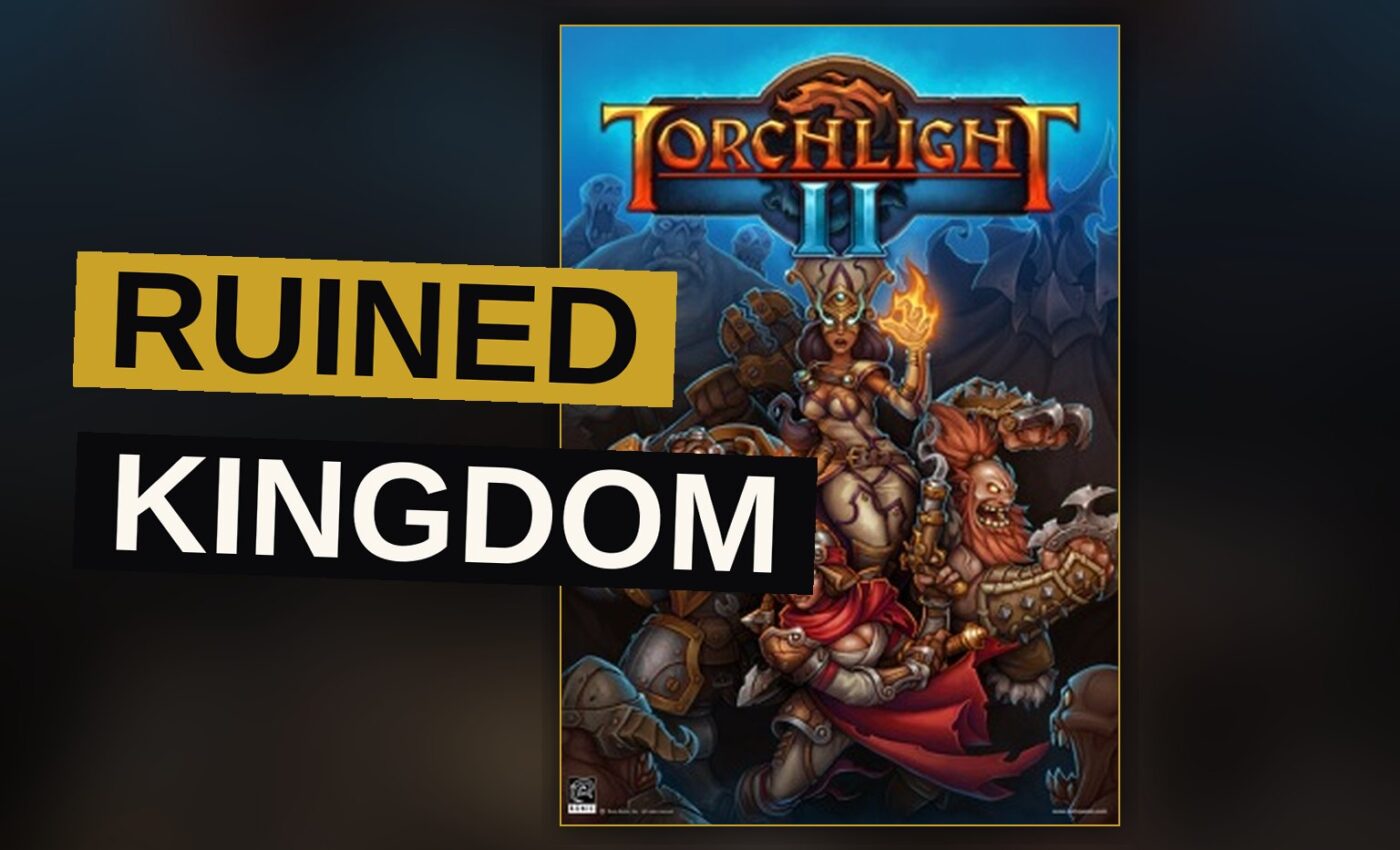
Torchlight II arrived on September 20, 2012, and it did not pretend to reinvent the dungeon crawler. Runic Games built a sequel to its own Torchlight, kept the clicking, the loot and the pets, then made everything around them bigger. The result is a game that knows exactly what it is and does that thing very well.
Trailer, via Runic Games.
The Alchemist Burns Torchlight
The plot picks up years after the first game. The Alchemist, one of the three playable characters from the original Torchlight, has been corrupted by the Ember Blight from the Heart of Ordrak. He destroys the town of Torchlight. The player follows the trail of destruction he leaves behind as he searches for a cure to the illness that has driven him insane. He is using Ordrak’s power to disturb the balance between the world’s six elements.
That chase carries the player across three acts and an epilogue. Act I, Wake of the Alchemist, is set in the mountainous Estherian Steppes. Act II moves to a desert called the Mana Wastes. Act III takes place in Grunnheim, a haunted forest holding the ruins of an ancient dwarven civilization. An Imperial Camp serves as the player’s town.
This is a cleaner structure than the original game offered. Torchlight II opens the map, adds hub towns and stretches the campaign longer. The three classes from the first game do not come back as playable characters. They appear in the world as NPCs instead, which is a smart way to honor them without pretending the old roster still fits.
Four Classes, Three Skill Trees Each
Torchlight II ships with four playable classes. Each one has three skill trees, and those trees are where the customization lives. You can build toward a class’s obvious strengths or chase something stranger. The game supports that. Weapons and armor are class-restricted here, unlike the first game where everything was open to everyone. That change matters. It forces a build to commit.
Character appearance is yours to set: sex, face, hair style and hair color. Pets return from the first game with expanded options and basic customization. Fishing returns too. The retirement system from the original was planned and then dropped, replaced by a New Game Plus mode.
The dungeons are randomly generated, and there are plenty of monsters to fight for experience and loot. Overland areas break up the corridors. Time of day cycles and weather effects are new, and the user interface was redesigned. None of these are headline features on their own. Together they make the world feel less like a set of rooms and more like a place.
Multiplayer Without the MMO
Torchlight II was originally going to be an MMORPG. Runic Games changed course and shipped the sequel with single-player and multi-player support instead, because the studio felt it could release this much faster than the planned MMO. That decision is the best thing that happened to the game. Peer-to-peer multiplayer support and extended modding capabilities came with it.
The modding support deserves attention. It extends the life of a game like this well past the credits, and Runic clearly understood that its audience would rather build than wait. The MMO would have been a different, slower product. What shipped instead is a game you can finish alone on a Tuesday and then break open with friends or mods on the weekend.
The combat holds up under all of it. With four classes, three skill trees apiece, and an almost unlimited spread of spells, gear and weapons, fights get intricate. You can stack gear that supports your class abilities or try tricky strategies to outplay your enemies. The exploration is wide, and the landscapes vary enough that the three acts do not blur together.
Ports, Platforms and a Sequel
Torchlight II launched for Microsoft Windows on September 20, 2012. The OS X version followed on February 2, 2015, and Linux on March 4, 2015. Ports for Nintendo Switch, PlayStation 4 and Xbox One arrived on September 3, 2019, developed by Panic Button. Runic Games developed the game and published it alongside Beijing Perfect World. A sequel, Torchlight III, was released in 2020.
The 2019 console ports are the version most players will meet now. The game’s isometric view and bird’s-eye perspective translate cleanly to a controller.
The critical reception was mostly positive. The aggregate score sits at 8.6 out of 10 across 13 outlets.
What Actually Matters Here
Torchlight II is not a game that took risks. It is a game that took the first Torchlight apart, found the parts that worked, and rebuilt them at a larger scale. That sounds like faint praise. It is not. The dungeon crawler is a genre where ambition often ruins the loop, and Runic resisted the urge to complicate it.
The class-restricted gear is the change that matters most. It turns a loose pile of loot into a set of decisions. The randomly generated dungeons keep the grind from going stale. The pets and fishing are the small, weird touches that give the game a personality most entries in this genre lack.
The MMO that never happened is the most interesting footnote. Runic traded a bigger, slower, riskier product for a finished one, and the trade paid off. Torchlight II is the rare sequel that understands its own limits. It does not try to be Diablo. It tries to be Torchlight, with more room to move.
That is enough. The campaign is longer, the world is wider, and the four classes give you a reason to come back. The New Game Plus mode gives you a reason to stay. The modding support gives you a reason to keep the install around for years.
If there is a complaint, it is that Torchlight II never quite surprises you. The acts are distinct, but the rhythm inside them is familiar from the first hour. The Alchemist is a serviceable villain, and his corruption is a serviceable hook. The story does its job without ever demanding your attention the way the loot does.
That is a fair trade for a game built to be played, not watched. Torchlight II knows what it is. It is a fast, generous, well-made action RPG that respects your time and then asks for a lot of it anyway. Fourteen years after release, it is still the version of this genre that is easiest to recommend without a caveat.
KEY FACTS
– Release date: September 20, 2012 (Microsoft Windows)
– Later releases: OS X, February 2, 2015; Linux, March 4, 2015; Nintendo Switch, PlayStation 4 and Xbox One, September 3, 2019
– Developer: Runic Games
– Publishers: Runic Games, Beijing Perfect World
– Console ports: Panic Button
– Classes: four, each with three skill trees
– Structure: three acts plus an epilogue
– Sequel: Torchlight III, 2020
– Critic aggregate: 8.6/10 across 13 outlets
Get the Notebook.
The day's best stories and every fresh verdict, in plain English, in your inbox by seven. One email a day, no more.