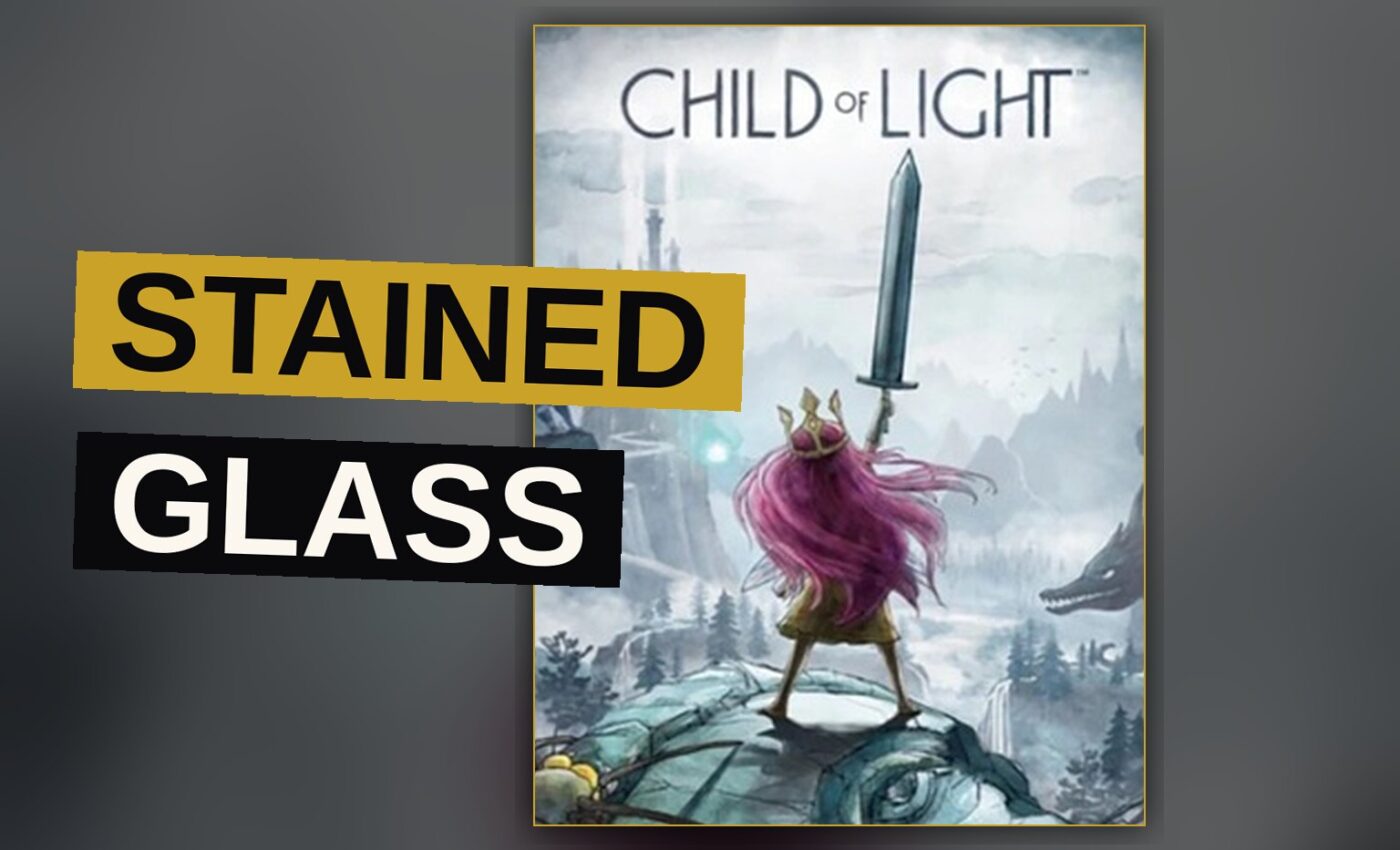
Child of Light asks players to walk through a kingdom painted in watercolor and oil, and it mostly delivers. The game, released in 2014 for PS3, PS4, PC and later Stadia, pairs a turn-based combat system with a world built from painted layers that shift and fade with each step. It is a small package by modern standards, but its ambition shows in almost every frame.
Trailer, via IGDBcom.
Aurora and the Lemuria
The story follows Princess Aurora, who falls ill while crossing a mountain pass and finds herself in the kingdom of Lemuria. She is guided by Igniculus, a tiny creature made of light, and together they seek out the nine Sylphs to restore her stolen light and return home. The setup is simple, but the game leans on Aurora’s illness as a constant presence, a ticking clock that gives the journey weight.
The writing stays quiet and gentle. Character moments carry more weight than grand speeches. Aurora’s interactions with Igniculus, her companion characters and the people she meets along the way feel genuine rather than forced.
Combat and the Sylphs
The battles use a turn-based system where players move a grid of allies across a battlefield, positioning them to attack enemies and avoid damage. Each character brings a different role, and the game rewards planning ahead. Attacks can target multiple foes, and elemental effects add depth to fights without overwhelming the player.
| System | Focus |
|---|---|
| Combat | Turn-based grid positioning |
| World | Painted, layered backgrounds |
| Story | Aurora’s journey through Lemuria |
| Music | Original orchestral score |
The Sylphs Aurora collects are tied to the game’s central mechanic. Finding and freeing them opens new paths through the kingdom, and the search itself becomes a reason to explore rather than a checklist. This design keeps the world feeling alive beyond its visual style.
The Painted Kingdom
The art direction is the game’s clearest strength. Environments are rendered with thick brushstrokes and soft lighting, giving the world a dreamlike quality. Snow, water and stone all look distinct, and the game uses layering to create depth without sacrificing clarity. Aurora’s movements, especially her jumps and falls, are smooth and expressive, fitting a princess who moves with grace despite her illness.
The music, composed by Sarah LeFranc, matches the visual tone. The score blends orchestral instruments with choral passages, creating a sound that feels both intimate and epic. It shifts with the mood of each scene, supporting the narrative without overpowering it.
Length and Pace
Child of Light is a short game. A player moving quickly through it can finish the main story in ten hours or less. That brevity is not necessarily a weakness, though it leaves little room for extended exploration. Side quests and optional encounters exist, but they do not expand the game’s scope significantly.
Some players may find the pace slow in the middle stretch, where the game spends time in familiar towns and dungeons before pushing toward its final act. The difficulty curve also eases off early, meaning battles rarely test a player’s patience once the basics are learned.
What Remains
The game’s strengths are easy to name, and they are consistent across its runtime. The combat system remains satisfying even after dozens of battles, and the art direction holds up across every region of Lemuria. Few games commit so fully to a single visual style and still manage to keep it fresh.
The weaknesses are smaller but real. The lack of extensive side content means there is little reason to linger in towns once the main quest is complete. The middle stretch drags slightly, and the difficulty dips make the final push feel less earned than the earlier parts.
Child of Light succeeds because it commits fully to its own vision. The painted art, the gentle story and the careful combat design all point in the same direction, and the game rarely lets that focus slip. It does not try to be everything; it tries to be one thing very well.
Child of Light earns an 8.8 out of 10.
Get the Notebook.
The day's best stories and every fresh verdict, in plain English, in your inbox by seven. One email a day, no more.