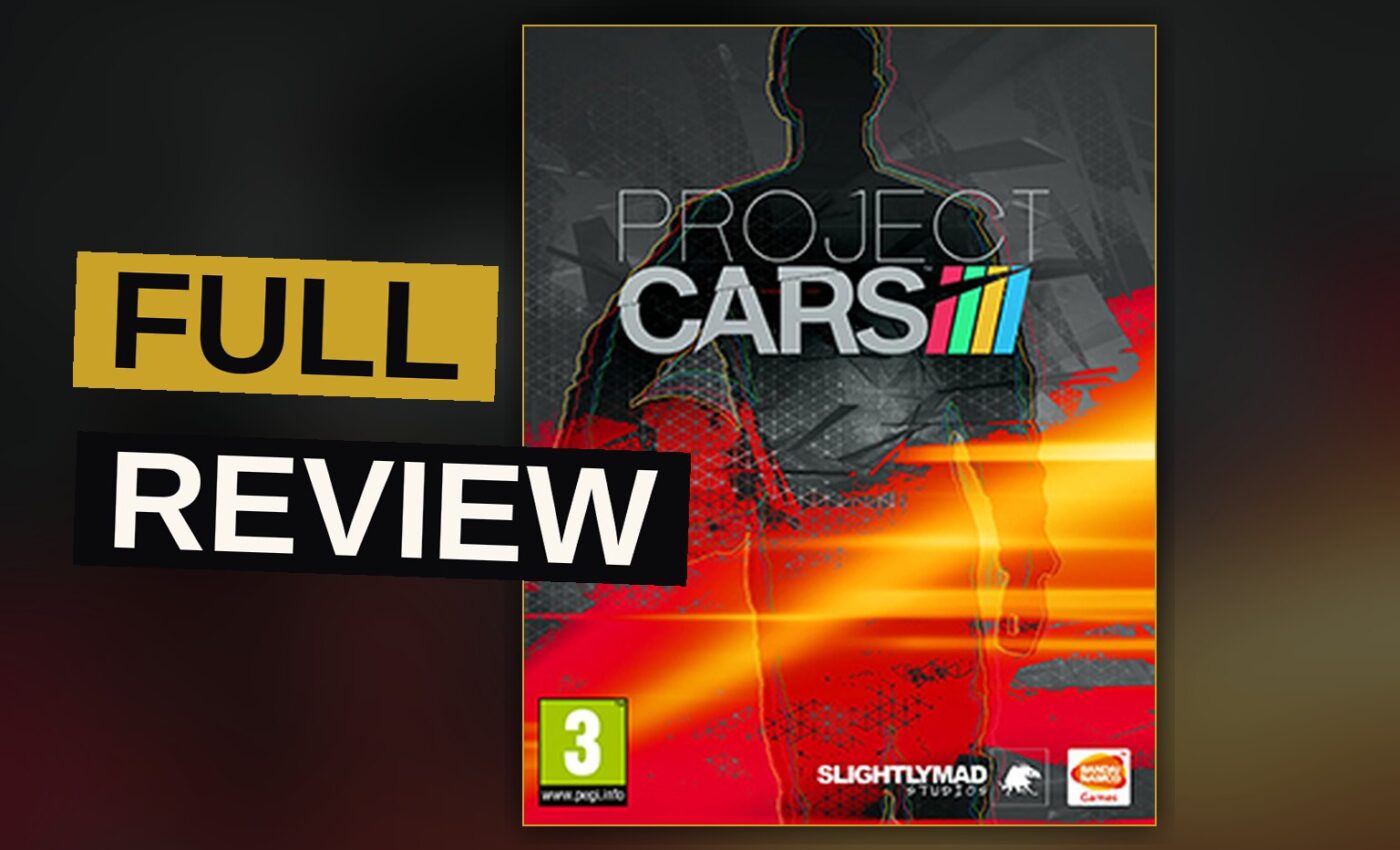
Project CARS arrives on PS4, Linux, PC and XONE with a mission statement that sounds simple and a scale that is anything but. The pitch is straightforward: build a racing game around physics, weather and driver skill, and let the cars and tracks do the talking. The execution is far more ambitious. This is a game built for sim racers who want the deepest possible experience, and for newcomers who might not know why they care yet.
The result is a package that rewards patience and punishes carelessness in equal measure. It is a game about mastering a car’s limits, and about learning what those limits mean before you hit them.
Trailer, via IGDBcom.
The Physics Model
The core of Project CARS is its physics engine, and it is the reason the game exists at all. Slightly Mad Studios built the game around a simulation model that treats every vehicle as a physical object with weight, inertia and friction. The engine calculates how a car moves through turns, how it reacts to road surface, and how it handles under braking and acceleration. That approach shows in nearly everything the game does.
The handling models are the star of the show. Each car feels distinct, and the differences between manufacturers and classes are easy to feel even without looking at telemetry data. A front-wheel-drive touring car understeers in a way that a rear-wheel-drive sports car does not, and Project CARS captures both behaviors without forcing either into a template. The result is a driving model that feels alive rather than mechanical.
Weather and track conditions complicate the picture further. Rain, ice and dust all change grip levels, and the game adjusts its physics model accordingly. A wet track can turn a corner into a slippery trap, while a dry track rewards confidence. The system is not perfect — some players will find it too forgiving early on and too harsh later — but the intention is clear: make the world matter as much as the machine.
Career Mode
Career mode is where Project CARS tries to hold the player’s attention across hundreds of hours. It is a ladder system that rewards consistency over raw speed, and it is structured around championships, manufacturer deals and personal best times. The goal is to climb the ranks by winning races, improving skills and unlocking new content, but the pacing is slow.
The career structure is solid, but the early hours can drag. Races are spaced out, and the progression feels less like a climb and more like a grind. The game asks for patience, and it delivers that patience back in small doses. For players who want a long-term project, the mode is rewarding. For players who want a weekend fix, it takes time to get started.
The game also includes a variety of disciplines beyond pure racing. Time trials, endurance events and rally stages break up the formula, though none of them are as deep as the main career. The variety is welcome, but it is not a substitute for a faster pace in the main mode.
Track Selection
The track selection is large and varied. Project CARS ships with dozens of locations, from city streets to desert ovals to mountain roads, and each one is rendered with a level of detail that rivals the best open-world games. The lighting is particular, the surfaces are rough, and the scenery is often breathtaking. The presentation is the strongest argument for spending time in the menu screens.
The track designs themselves are functional rather than memorable. Some layouts are tight and technical, while others are long and sweeping. None of them stand out as iconic, and the game leans on variety rather than individual identity. Players who want a track that feels special will need to look elsewhere.
The AI is competent but unremarkable. It drives well within its limits, but it does not push boundaries or create chaos the way some other racing games do. The computer drivers are reliable opponents, but they are not memorable ones.
The Car List
The car list is extensive, covering everything from touring cars to GT racers to rally machines. Each class has its own set of vehicles, and the selection is broad enough to satisfy almost any interest. The cars handle differently, perform differently and require different setups, which keeps the game fresh even after hundreds of hours.
The tuning options are deep. Project CARS lets players adjust suspension, aerodynamics, tire pressure and more, and the interface is accessible enough that even beginners can learn to use it. The depth is impressive, but it can also be overwhelming. Players who want to dive in quickly will find plenty to do, while players who want to master the setup process will find plenty to learn.
The visual design is strong. Each car is modeled with attention to detail, and the paint jobs, decals and liveries are all rendered accurately. The sound design is equally good, with engines roaring and tires screeching in a way that feels authentic. The presentation is professional, and it is one of the game’s strongest features.
Multiplayer
Multiplayer is where Project CARS shines brightest. The online racing is fast, competitive and demanding, and it rewards players who have spent time mastering the physics model. The matchmaking system works well, and the lobbies are populated with skilled players who are willing to race hard. The experience is a test of nerve and reflex, and it is one of the best reasons to keep playing.
The multiplayer modes include everything from standard races to time trials to endurance events. The modes are familiar, but the quality of play is high. The game supports a wide range of connections, and the performance is generally stable. There are occasional hitches, but they are rare.
The social features are basic. There is a chat system, a leaderboard and a friends list, but nothing more elaborate. The focus is clearly on the racing itself, and the multiplayer is a showcase for the game’s strengths rather than a destination in its own right.
Technical Issues
Project CARS is not without problems. The frame rate can drop during heavy scenes, and the load times are long. These issues are particularly noticeable on consoles, where the hardware constraints are tighter. On PC, the game is more forgiving, but even there the performance can suffer under strain.
The menus are functional but not elegant. They are easy to navigate, but they are not particularly engaging. The game is at its best when the player is in a car, and it is at its weakest when the player is waiting for a race to start.
The difficulty curve is steep. Newcomers will struggle to understand the physics model, and the game does not offer much guidance beyond the controls tutorial. The learning curve is real, and it is one of the biggest barriers to entry. Players who are used to arcade-style racing will find the experience frustrating at first.
The Bottom Line
Project CARS is a game that demands commitment. It is not a casual experience, and it is not a game that rewards quick play. It is a game about mastering a physics model, and it is a game about understanding the limits of a car. For players who are willing to put in the time, it is a rewarding experience. For players who are not, it is a difficult one.
The game is at its best when the player is in a car, and it is at its worst when the player is in a menu. The physics model is the star, and everything else is support. The career mode is slow, the tracks are ordinary, and the presentation is excellent. Taken together, the package is a mixed one, but it is a mixed one with a clear identity.
Here is a ranked list of the game’s strengths:
- Physics Model — the most distinctive feature, and the one that sets Project CARS apart from other racing games.
- Presentation — the visuals and sound are top-tier, even if the track designs themselves are ordinary.
- Multiplayer — the online racing is the best reason to play.
- Car List — the selection is huge and diverse, with tuning options that satisfy serious players.
- Career Mode — comprehensive, but slow to get started.
| Feature | Strength | Weakness |
|---|---|---|
| Physics Model | Deep, accurate | Steep learning curve |
| Career Mode | Comprehensive | Slow pacing |
| Track Design | Diverse | Ordinary |
| Multiplayer | Competitive | Basic social features |
| Presentation | Excellent | Long load times |
The score reflects this balance. Project CARS is a game that earns its reputation for realism, but it is a game that requires patience to enjoy. The physics model is the reason to play, and the rest of the package is the reason to stay.
Get the Notebook.
The day's best stories and every fresh verdict, in plain English, in your inbox by seven. One email a day, no more.