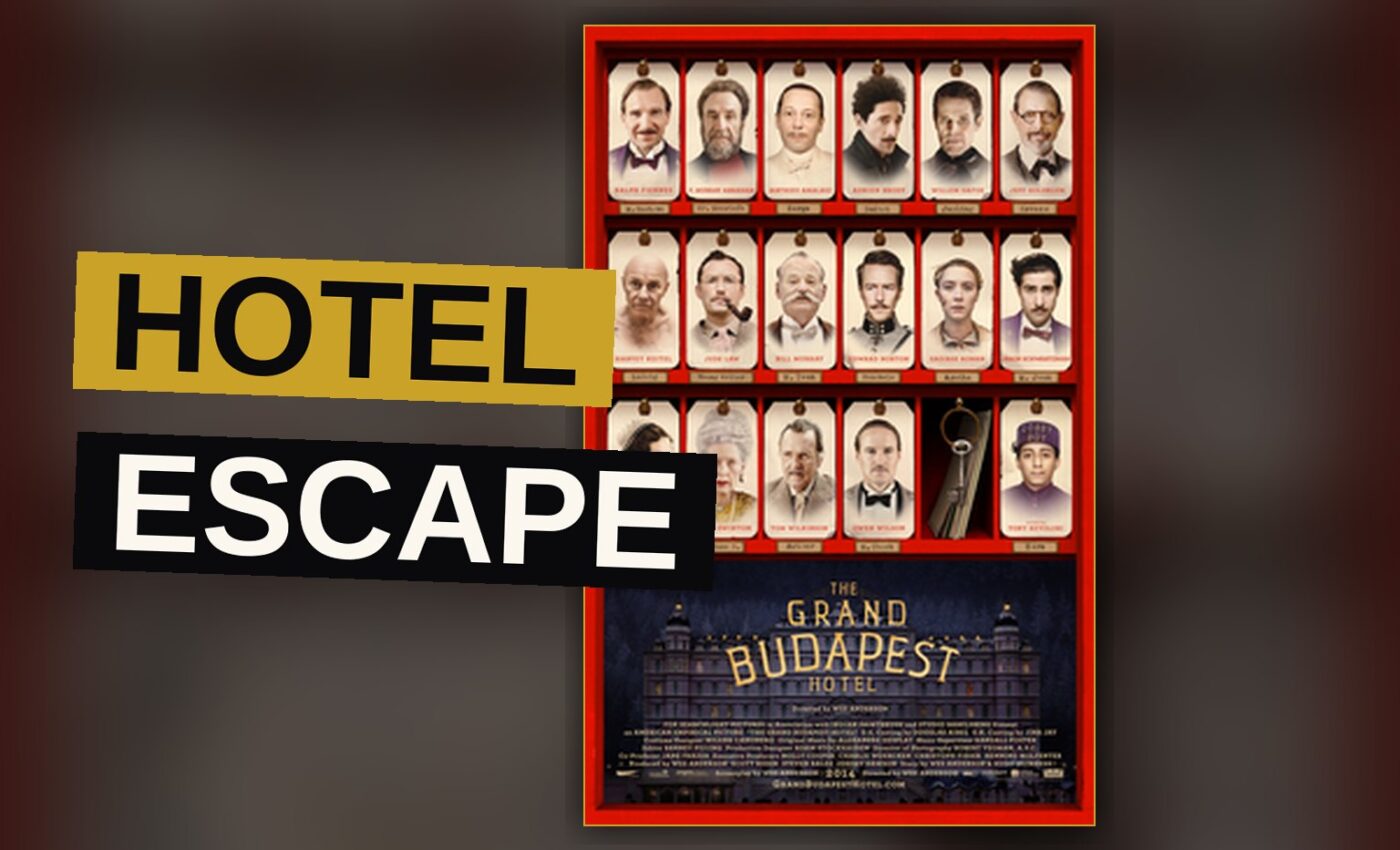
Wes Anderson builds The Grand Budapest Hotel like a dollhouse, and that precision is the point. Set in the fictional European nation of Zubrowka, the film follows the adventures of Monsieur Gustave H., a concierge who steals a priceless painting from a wealthy widow, and his young lobby boy, Zero Moustafa. What follows is a chase across borders, a snowy mountain escape, and a final standoff in a prison courtyard.
Anderson’s signature style is on full display: the symmetrical compositions, the deliberate camera pans, the color-coded sets, and the deadpan performances. This is a comedy of manners dressed in period costume, but it carries a genuine sadness underneath the whimsy.
Trailer, via SearchlightPictures.
Gustave H. and Zero Moustafa
Ralph Fiennes plays Gustave H. with a theatrical flair that makes him the perfect Anderson protagonist. He is suave, charming, and utterly corrupt — he sleeps with the widow’s elderly daughter, and he steals her painting. But he also shows loyalty to his friends and a sense of honor that makes him sympathetic despite his flaws.
Tony Revolori plays Zero Moustafa as a wide-eyed innocent, the kind of character who watches the world spin around him. His performance grounds the film’s elaborate set pieces, and his relationship with Gustave forms the emotional core of the story.
The film jumps back and forth between three timelines, and it takes a moment to orient yourself. The present-day narration, told by a now-aged Zero, frames the story as a memory. Inside that frame, the events of 1932 are shown, and then a second flashback takes us to 1914. Anderson trusts his audience to follow, and the payoff is a story that feels bigger than its small hotel setting.
The Hotel and Its Staff
The Grand Budapest Hotel itself is a character. Designed to look like a cross between a Central European spa town and a grand hotel, it is painted in pastel colors and filled with ornate details. The staff, led by Gustave, are a tight-knit family, and their loyalty to each other drives much of the plot.
The hotel scenes are the film’s strongest moments. The theft of the painting, the escape through a ventilation shaft, and the chase through the halls are all executed with a visual precision that feels both staged and alive. The action sequences are choreographed with the care of a dance routine, and the result is genuinely funny.
Tilda Swinton and Saoirse Ronan
Tilda Swinton appears twice, playing both the elderly widow and her younger self. Her dual performance is a highlight, showing range from a grande dame to a passionate lover. Saoirse Ronan plays Agatha, the widow’s daughter, with a quiet intensity that anchors the middle timeline.
F. Murray Abraham, Willem Dafoe, Jeff Goldblum, and Mathieu Amalric round out the cast, each delivering a distinctive performance in a supporting role. Every actor seems to be having fun, and that joy is contagious.
The Prison Escape
The film’s climax is a prison escape and a courtroom scene that tests the viewer’s patience. Anderson stretches out the tension with slow-motion shots and lingering close-ups, and some viewers may find this pacing indulgent. But the payoff is a resolution that ties the three timelines together, and it lands with real weight.
The film’s ending is bittersweet. Gustave dies, and Zero inherits the hotel. The final shot of the hotel’s sign, weathered and empty, marks the end of an era.
A Look Back
| Timeline | Year | Key Event |
|---|---|---|
| Present day | Now | Zero tells the story |
| 1932 | 1932 | Gustave and Zero’s escape |
| 1914 | 1914 | The theft of the painting |
The Grand Budapest Hotel is a film about memory, loyalty, and the way we tell stories. It is also a love letter to cinema itself, filled with references to classic films and a reverence for physical storytelling.
Some viewers may find the film’s stylization overwhelming, and the middle section drags slightly. But the film’s commitment to its vision is admirable, and the final act delivers a powerful emotional punch.
The film’s score, composed by Alexandre Desplat, is a mix of waltzes and melancholic piano pieces. It complements the visuals without overpowering them, and it adds to the film’s sense of nostalgia.
Anderson’s films often feel like museum exhibits, and The Grand Budapest Hotel is no exception. But this one has heart. The characters are flawed, the situations are absurd, and the ending is sad. That combination is rare in modern filmmaking, and it is why this film endures.
It is a film about the things we hold dear, and the ways those things slip away. It is a film about friendship, and the lengths to which we will go for each other. And it is a film about a hotel, and the ghosts that haunt its halls.
The Grand Budapest Hotel is a masterpiece of style and substance. It is a film that rewards repeated viewings, and it is a film that stays with you long after the credits roll.