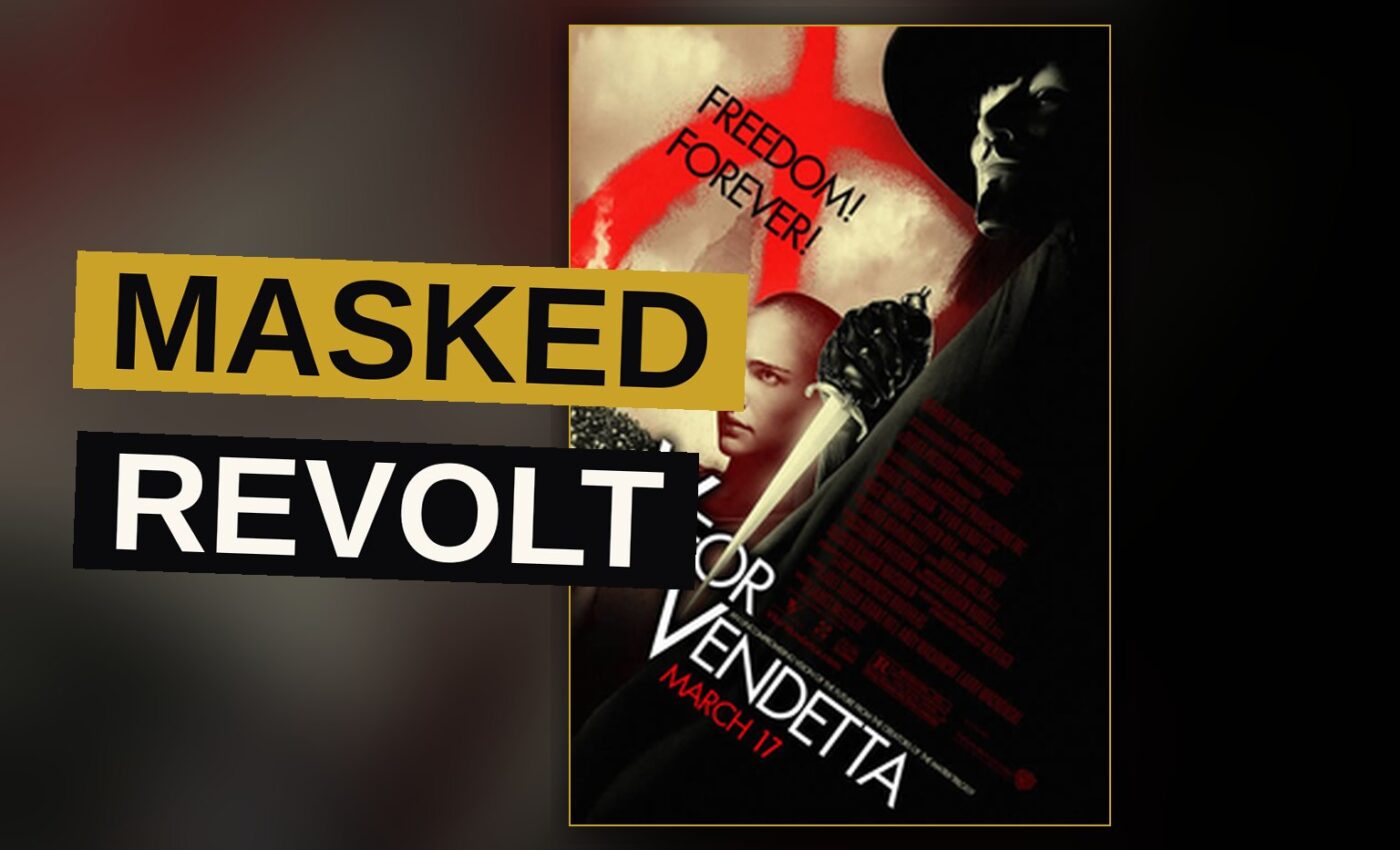
V for Vendetta arrives on screen as a loud, stylish argument for anarchy dressed up as a thriller. It wants to be a warning about fascism and a call to arms against oppression. Mostly it succeeds at being entertaining, even when the message gets buried under explosions.
Trailer, via DC.
The Setup
The film follows V, a masked vigilante played by Hugo Weaving, who blows up Parliament and frees Evey Hammond, played by Natalie Portman, from her abusive home. He trains her in resistance while plotting a revolution against a fascist Britain run by a corrupt government. The setup is simple and effective, giving the story room to build.
Weaving’s Performance
Weaving carries the film with a theatrical presence that matches the character’s theatrical methods. His performance is over-the-top, but it fits a story built on spectacle. Portman’s Evey is less successful. She spends most of the runtime reacting to events rather than driving them, which weakens the emotional center of the film.
The Mask
The mask itself becomes a character of sorts, a symbol of rebellion that inspires others to join the fight. It is a clever trick, and the film leans on it heavily.
The Weak Points
The script strains under the weight of its own ambitions. The revolution plot feels rushed, and the final act resolves too easily after a buildup that promised something darker. The film also leans on action set pieces that are thrilling but hollow, substituting spectacle for substance.
The Running Order
| Scene | Time |
|---|---|
| V destroys Parliament | Opening sequence |
| Evey is freed | Early scenes |
| The mask becomes a symbol | Middle scenes |
| Revolution begins | Late scenes |
| Final confrontation | Closing scenes |
What Works
- The mask as a visual symbol
- Weaving’s commanding performance
- The early scenes establishing V’s methods
- The score, which builds tension effectively
What Falls Short
- Evey’s underwritten character arc
- The rushed resolution of the revolution
- Too much style over substance in the final act
V for Vendetta is a flawed but ambitious film. It captures a moment of political unease and channels it into a story about individual action against a corrupt state. It fails to deliver a truly satisfying ending, but its ambition is worth noting. For a film about masks and revolution, it wears its politics on its sleeve and never quite pulls the trigger.