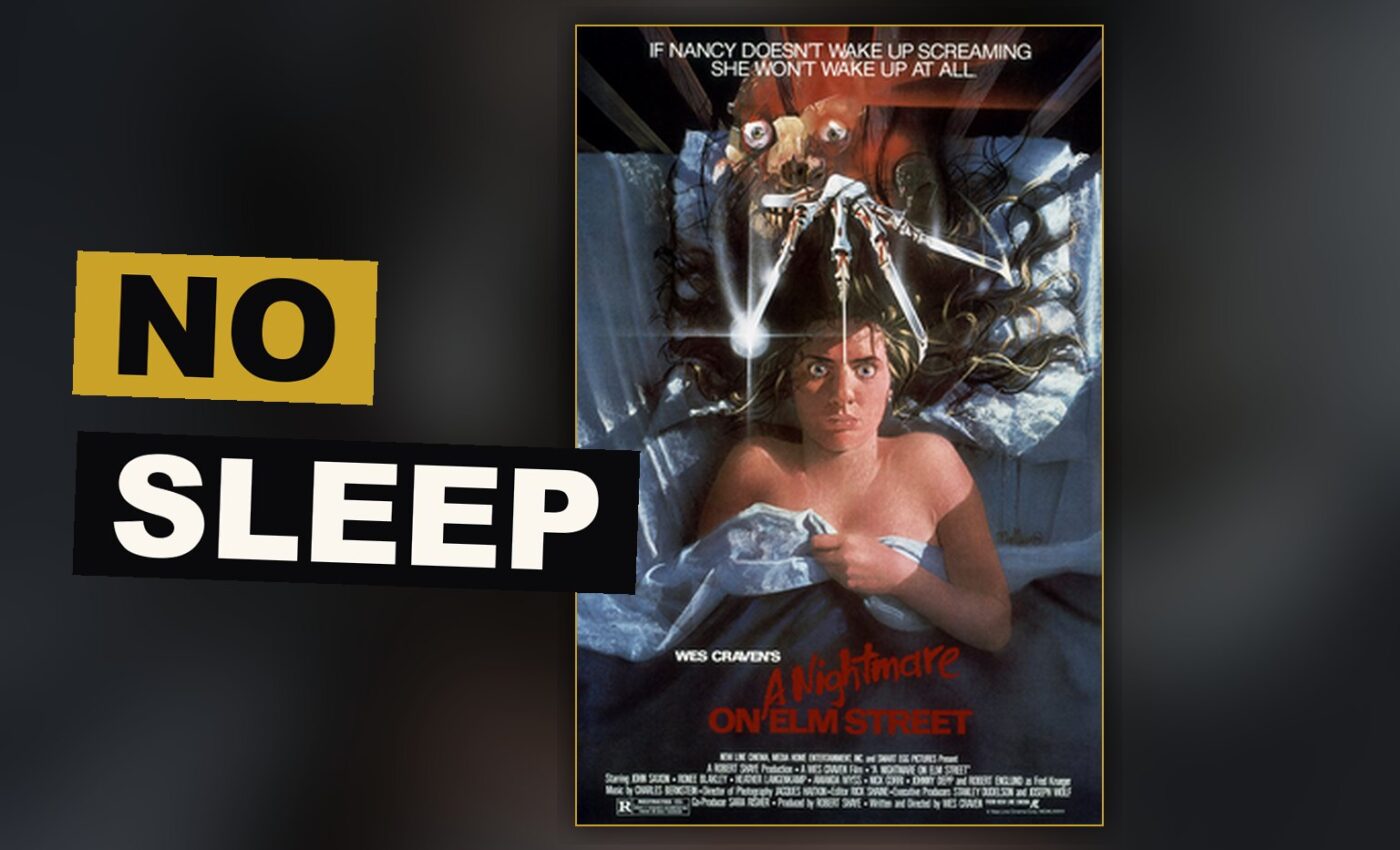
A Nightmare on Elm Street turns sleep into a threat, and that idea alone earns the film its reputation. The movie came out in 1984, and in this critic’s view, it changed what horror could do by making dreams the place of danger rather than the escape from it. Audiences kept coming back for decades after.
The Premise
A group of teenagers in a quiet suburb starts dying in their sleep, killed by a burned figure with blades fitted to his hand who hunts them in dreams. One girl works out the cause and refuses to close her eyes. The film builds its dread from a simple rule: stay awake, stay alive.
That rule gives A Nightmare on Elm Street its shape and its dread. Once the audience understands the stakes, every moment of rest on screen becomes a small crisis.
What Works, and What Fails
The dream logic lets A Nightmare on Elm Street bend physical rules without breaking trust with the audience. A floor turns to tar beneath a sleeping girl’s feet. A wall gives way to no place at all. These images stick because they came from a mind clearly interested in what dreams actually feel like, not just what looks terrible on a poster.
The villain’s look helped too. A burned face and blades fitted to his hand became known at once and has stayed that way. Practical effects handle the blood well for a film made on a small budget, and the work holds up decades later.
The lead performance carries the back half of the film. As the killings mount, her character turns from scared teenager to active planner, setting devices around her house and refusing to let want of sleep win. That arc gives the film a satisfying shape most horror films of the time lacked.
Some of the supporting performances feel thin, and a few scenes move slowly while side characters explain what the audience has already grasped. The parents in the story are meant to frustrate, but the script sometimes leaves them dull rather than pointed. The final part also changes tone in a way some viewers found jarring, trading dread for something closer to action.
Still, these are minor complaints against a film that changed what a horror movie could do with its own rules.
Pacing and Shape
The film opens with a dream sequence that introduces the killer, then moves quickly to a first death that establishes the stakes. The middle part follows the lead character as she searches for the cause, while a second and third death raise the pressure. By the film’s later part, she stops sleeping and starts fighting back, building toward a final struggle and a closing twist.
A Nightmare on Elm Street holds up because its central fear never gets old. Sleep is not a choice. Everybody does it, which means everybody in the audience carries the idea home with them. That’s a rare thing for a horror film to manage, and few horror films from the same time do it.
The film is not perfect, but its imagination and its lead performance carry it past its rough parts. It remains an important work in its genre, and the reasons are plain in nearly every scene.