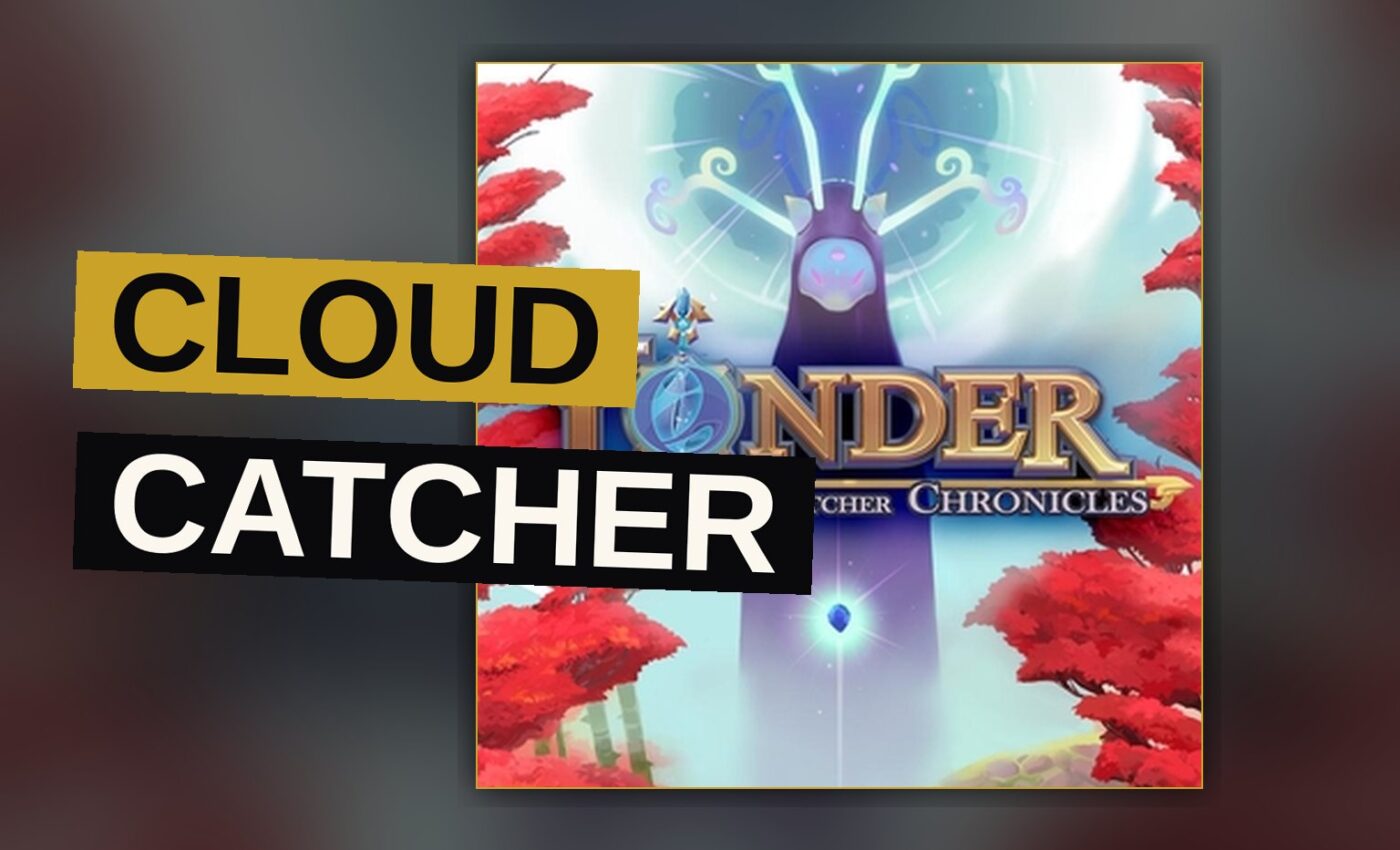
Yonder: The Cloud Catcher Chronicles wants nothing from you. That is the pitch, and it is also the problem. Prideful Sloth’s open-world adventure asks players to farm, fish and craft across the island of Gemea while hunting sprites to clear a dark fog called the Murk. It came out on 18 July 2017 for PlayStation 4 and Windows. It is pleasant. It is also thin in the places where a game like this has to be thick.
Trailer, via Prideful Sloth.
Shipwrecked on Gemea
You wash up on a magical island. Your character is shipwrecked, and the island is in trouble. A mysterious fog called the Murk is polluting the environment and causing distress to the people who live there. Your job is to find sprites — magical creatures scattered across the map — and use them to dispel the Murk.
That is the spine of the game, and it is a good one. It gives you a reason to walk every corner of Gemea without ever handing you a sword. The Murk is a problem you solve by collecting.
The player character is customisable. The game plays from a third-person perspective. It is a single-player experience from start to finish, with no mode that pulls in anyone else.
Eight Biomes and a Calendar
Gemea is a natural island paradise with eight distinct environments, running from tropical beaches to snow-capped summits. The game’s own description calls it a world to lose yourself in, filled with the wonder of discovery and the spirit of adventure. That is marketing copy, but it is not wrong about the structure.
The island changes as you play. Seasons turn. Weather shifts. Day gives way to night. That much the game states plainly, and it is the most interesting thing Yonder does.
It is also the thing most players will never notice.
Farming, Fishing and Crafting
The activities are the usual set. You farm. You fish. You craft. You explore. You can take part in all of it at whatever pace you like, and nothing in the game punishes you for ignoring any of it.
Farming is the anchor. You plant, you wait, you harvest. Fishing is the quietest of the three and the one that best fits the game’s mood — a rod, a river, and nothing chasing you. Crafting turns what you gather into what you need, which mostly means tools and goods to trade.
The loop holds together because nothing in it is urgent. That is the design. It is also where the game starts to feel like less than the sum of its parts.
The Sprites and the Murk
The sprites are the game’s one real objective. You seek them out, you collect them, and you use them to banish the Murk. The Murk itself is a dark fog that pollutes the environment and troubles the island’s inhabitants.
Here is the trouble. The Murk is a great idea for a threat in a game that never asks you to fight, because it is a problem you cannot punch. But Yonder never makes the Murk feel like a threat. It sits on the map. It does not press. You clear it at your own pace, and because nothing pushes back, clearing it never lands the way it should.
The sprites have the same issue from the other direction. They are charming, and finding them is genuinely satisfying, but they are collectibles first and characters second. The game gives you a reason to hunt them and very little reason to care about them.
A World Without Teeth
Yonder is often described as relaxing, and that is accurate. It is also the most damning thing you can say about it. Relaxing is a mood, not a design. When a game removes combat, it has to replace the tension with something — a schedule, an economy, a relationship, a risk. Yonder replaces it with nothing.
The result is a game you can play for hours without ever being asked a question. There is no wrong way to spend a day in Gemea, which sounds like freedom and plays like drift. You farm because farming is there. You fish because fishing is there. You collect sprites because the Murk is there.
The seasons and the weather and the day-night cycle are the game’s best systems, and they are also the ones the game uses least. A calendar that changes nothing but the color of the grass is a calendar you stop reading.
Where the Island Ranks
Ranked by how much they actually change the way you play, here is what Yonder’s systems deliver:
- Seasons and weather — the best idea in the game, and the one it leans on least.
- Farming — a real rhythm, a real reason to return to a plot of land.
- Sprite hunting — satisfying to do, weightless once it is done.
- Fishing — quiet, pleasant, entirely optional.
- Crafting — functional, forgettable, a menu with a view.
- The Murk — the premise the whole game rests on, and the flattest thing in it.
The Platforms and the Ports
Yonder has had a long life on storefronts, and the release schedule explains why it keeps finding new players.
| Date | Platform | Notes |
|---|---|---|
| 18 July 2017 | PlayStation 4, Windows | Original release |
| 17 May 2018 | Nintendo Switch | Digital release on the Nintendo eShop |
| 12 June 2018 | Nintendo Switch | Physical version, published by Merge Games |
| 27 July 2021 | PlayStation 5 | Port |
| 5 August 2021 | Xbox Series X and Series S | Port |
The game was developed and published by Prideful Sloth, with Merge Games and Nippon Ichi Software also attached as publishers across its various releases. It is listed for Xbox Series X|S, PlayStation 4, PC (Microsoft Windows), Xbox One and Nintendo Switch.
That is a wide net for a small game. Yonder is the kind of thing a player can pick up on one platform, set down, and meet again years later on another.
What Yonder Gets Right
The art direction carries a lot of weight. Eight biomes is a real number, and the game makes each one read at a glance — beaches, mountains, and everything between. The island is pleasant to look at and pleasant to walk across, which matters more here than it would in a game with a plot to push.
The customisable player character is a small thing that pays off. Yonder hands you the look of your character and lets you keep it.
And the absence of combat is a genuine choice, not a gap. Prideful Sloth built a game about collecting rather than killing, and the game is better for its nerve.
The Score
Yonder: The Cloud Catcher Chronicles is a good game with a hole in the middle of it. The sprites-and-Murk structure gives you a goal, the farming and fishing give you a rhythm, and the seasons and weather give you a world that moves. What it never gives you is a reason to care whether any of it works out.
The published critical score sits at 6.8 out of 10 across 10 outlets, and that lands about right. This is not a game with a fatal flaw. It is a game with a missing one. Everything around the center is well made, and the center is empty.
If you want a game to unwind in, Yonder will do that. It will not do more. The Murk is supposed to be the thing you spend the whole game working against. By the end, it is the thing you have forgotten was ever there.
Get the Notebook.
The day's best stories and every fresh verdict, in plain English, in your inbox by seven. One email a day, no more.