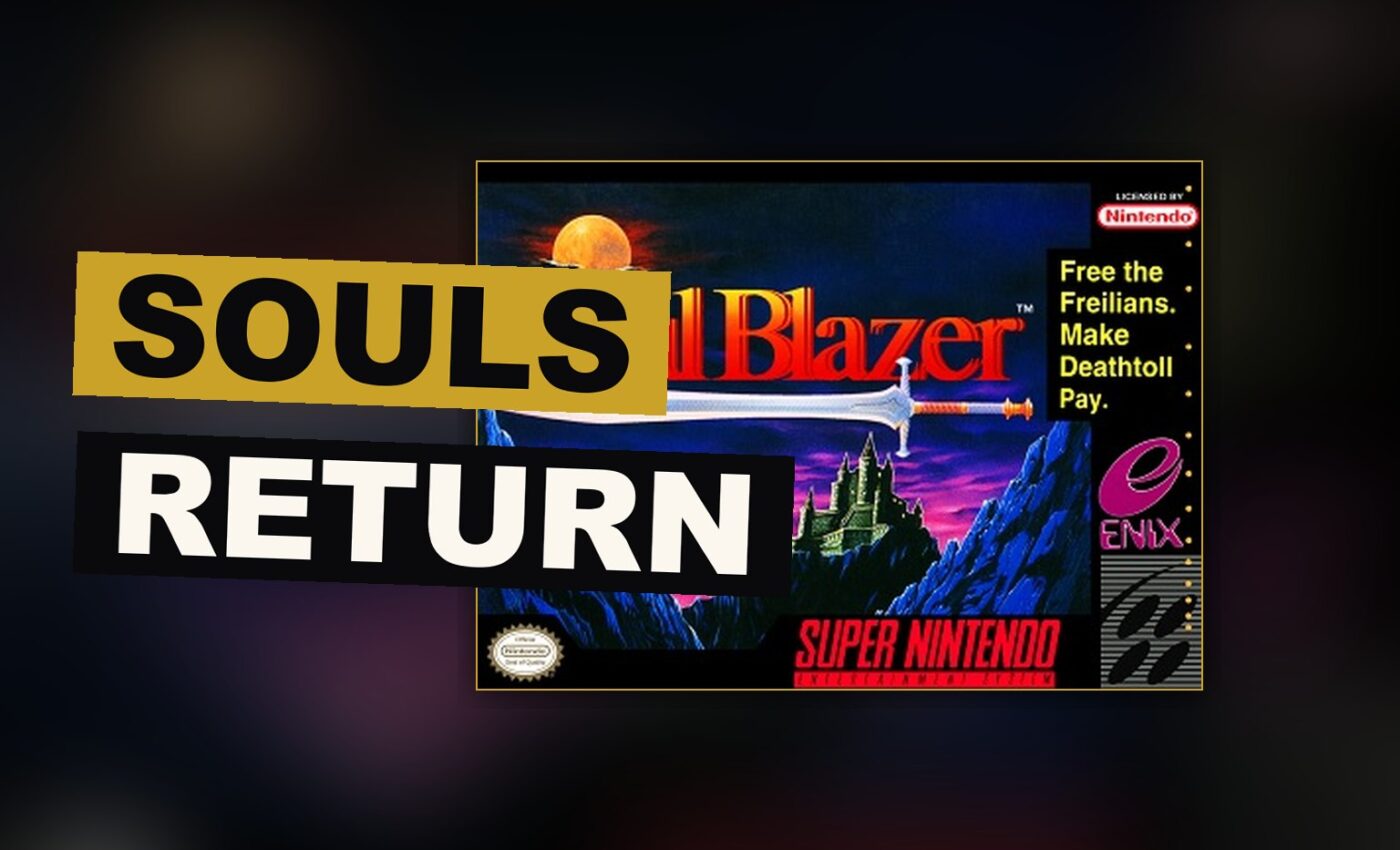
Soul Blazer does not waste your time. Quintet’s 1992 action role-playing game sends one divine servant into an empty world and makes you fill it back up, one freed soul at a time. Enix published it for the Super Nintendo Entertainment System, and it arrived in Japan on January 31, 1992, in North America on November 27, 1992, and in Europe on January 27, 1994. It never came out in the United Kingdom.
The hook is simple and it holds. Deathtoll has destroyed the villages of the Freil Empire and locked the souls of every living creature inside his monster lairs. The Master sends a warrior to break those lairs open. Every kill matters, because every lair holds a person.
The Lair System That Built a Genre
Here is the mechanic that makes Soul Blazer worth playing three decades on. The player fights through dungeon-crawl battles in the traditional style, but destroying a monster lair does not just clear a room. It frees a soul, and that soul reincarnates. The town rebuilds itself around the people you rescue.
That reincarnation is not always a human. A freed soul could belong to anything from a dolphin to a talking tulip. Quintet committed to the bit. The new occupants hand over advice and items, so the loop rewards you twice: once in combat, once in a town that grows because you swung a sword.
Six villages stand between the warrior and the finale. Free all six and the World of Evil opens, where Deathtoll waits. The structure is clean. You always know what you are doing and roughly why.
Six Stones, Three Artifacts, One Phoenix
Soul Blazer layers its progression without burying the player. Six regions, six magic stones, each a different color. Collect them and the path to Deathtoll opens. Three sacred artifacts let the warrior call on the power of the phoenix for the final fight. That is the whole checklist, and it never feels like busywork, because the world keeps handing you new faces as you go.
The warrior fights with a sword and carries one strange gift: he can speak with any living thing and be understood. That ability is the game’s quiet thesis. A world where nothing lives is a world where nothing answers. Restoring speech restores the place.
Yukihide Takekawa scored the game. His work gives the rebuilt towns a warmth the dungeons do not have, and the contrast is the point. You hear the world coming back.
Dr. Leo and the Price of a Soul
The plot does not settle for good versus evil, and this is where Soul Blazer earns its reputation. King Magridd imprisoned Dr. Leo, a brilliant inventor, and forced him to build a machine to contact Deathtoll. When the summoning worked, Deathtoll offered the king one gold piece for each soul in his kingdom. Magridd agreed, on the counsel of his wife. He was eventually imprisoned himself.
That is a bargain story, not a monster story. The devastation of the Freil Empire was a transaction. Deathtoll did not conquer the kingdom so much as buy it, soul by soul, from a king who thought he was getting rich.
The warrior falls in love with Lisa, Dr. Leo’s daughter, on the way. He frees Leo from the prison in Magridd Castle, but Leo stays behind. He sacrifices his life to kill the queen, who still wanted to bargain with Deathtoll. A father who built the machine that emptied the world dies closing the deal his king opened. That is a harder ending than most 1992 action games attempted, and Quintet lands it.
After the warrior defeats Deathtoll in the World of Evil, he is returned to Heaven. One year later, the Master realizes the warrior misses his life below.
A Divine Servant With a Name
The protagonist is a divine angel, deity or lesser-deity, or avatar, sent by The Master to restore the world’s creatures to life. He battles Deathtoll’s hordes with the help of his Soul helpers. The player can name him. In Illusion of Gaia, a later Quintet game, he is called Blazer.
That naming detail tells you what Quintet thought it was doing. The hero is not a fixed character so much as a role the player steps into. It is a small thing, but it is the difference between a mascot and a servant.
The game runs single player, viewed from a bird’s-eye or isometric perspective, and it sits across the role-playing, adventure, action, fantasy and open-world categories. The rebuilt towns do open up as you free them, and the constant switching between restored areas and corrupted zones keeps the map alive rather than static.
What Soul Blazer Gets Right, and What It Doesn’t
Soul Blazer’s best idea is that destruction and creation are the same button. You kill to build. Every lair you break is a house you raise, a dolphin you return to the water, a talking tulip you put back in the ground. Few games from that era tied combat to consequence so tightly, and fewer still made the consequence visible on screen.
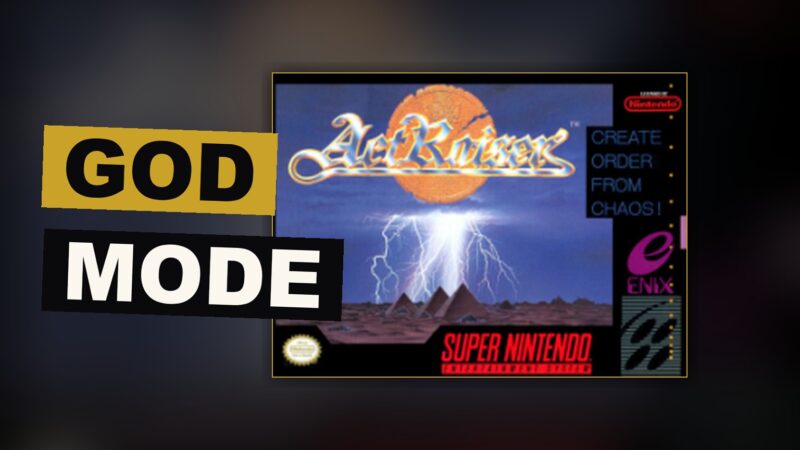
Its weakness is repetition. Six regions of dungeon crawling with the same swing of the sword can wear thin, and the game leans on the lair loop to carry more weight than one mechanic should bear. ActRaiser, Quintet’s earlier game, split its time between action and simulation. Soul Blazer picks one lane and stays in it, which sharpens the focus but narrows the range.
The story compensates. Magridd’s bargain, Leo’s sacrifice, the warrior sent home to Heaven while the world he saved goes on without him — that is a full arc, and it arrives without cutscene bloat. The game trusts the player to feel the loss of an empty kingdom before handing back the tools to fill it.
The verdict is straightforward. Soul Blazer is one of the sharpest action RPGs on the Super Nintendo Entertainment System, and its central loop still reads as design rather than nostalgia. It is not flawless, and the dungeon crawl does repeat itself. But the game understands something most of its peers did not: that the reward for saving a world should be watching it come back.
The Numbers
- Title: Soul Blazer (Japan: Soul Blader)
- Developer: Quintet
- Publisher: Enix (now Square Enix)
- Platform: Super Nintendo Entertainment System, Super Famicom, Satellaview
- Japan release: January 31, 1992
- North America release: November 27, 1992
- Europe release: January 27, 1994
- United Kingdom release: none
- Composer: Yukihide Takekawa
- Modes: Single player
- Published critical score: 8.6/10 (GameRankings)
What lingers is not the sword or the six stones. It is the moment the Master looks down a year after the victory and sees a servant who would rather be back among the dolphins and the talking tulips. Quintet built a game about restoring a world, then admitted the restorer does not get to stay in it. That is a strange, sad note to end a 1992 action game on, and it is the reason Soul Blazer still has something to say.
Get the Notebook.
The day's best stories and every fresh verdict, in plain English, in your inbox by seven. One email a day, no more.