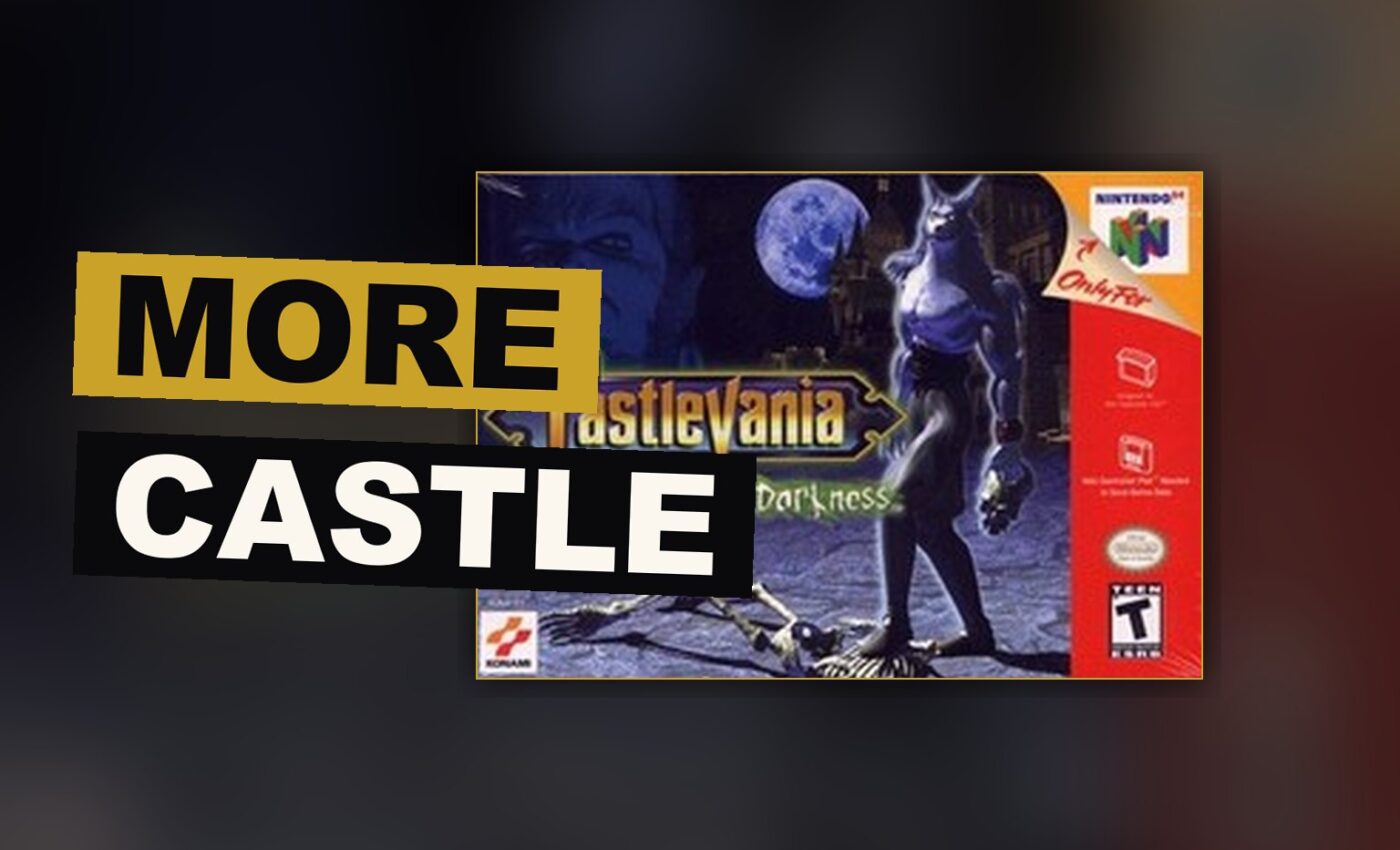
Castlevania: Legacy of Darkness lands on Nintendo 64 as a fuller version of the studio’s earlier attempt at bringing the series into a fuller form. It offers more content than that first try, more people to control, and a longer path through the castle. It also carries forward some of the same problems that made the change to a fuller form difficult for this series in the first place.
What’s New in the Box
Castlevania: Legacy of Darkness adds extra stages, new enemies, and additional heroes beyond the original lead. Players can now take on the castle with a new hunter, whose style of fighting differs from the first, or return to familiar ground with a third hero layered on top. The extra content gives the game a claim to being the fuller telling of the story first offered in its earlier game on this console.
Here’s how the main paths through the game break down:
- The new hunter’s story, the main addition to this version
- The original hero’s story, carried over and made longer
- The third hero’s story, offering another way through the same castle
- Added stages not found in the earlier Castlevania game on Nintendo 64
The Camera Problem
The camera stays the single biggest trouble in Castlevania: Legacy of Darkness. Tight halls and narrow platforms turn ordinary fights into a struggle against the view as much as against the monsters on screen. What should be simple bounds of the body become chance when the camera will not work with the player.
This is not a small trouble. It shapes almost every fight in the game, from small enemy meetings to boss fights that need care the controls and camera struggle to deliver together.
Fighting and Mood
The fighting itself holds up better than the camera does. The tools each hero carries give fights some variety, and the core fighting system that marks the series stays in place. Enemy design draws on classic Castlevania monsters, and the castle setting still gives off the dark, heavy mood the series is known for.
Sound and the game’s music stay a strength. The castle’s mood, built through lighting, halls, and score, gives Castlevania: Legacy of Darkness a feeling that outdoes its fighting system.
Two Games in One
Because Castlevania: Legacy of Darkness brings in added heroes and stages, it works almost like two games sharing one castle. That’s a lot of content for one cartridge. Whether that extra volume smooths over the camera and control troubles is a separate question, and the answer varies by player and by stage.
Below is a rough sense of how the paths compare against each other in length and shape.
| Path | Hero | Relative Length |
|---|---|---|
| Original Story | First hero | Full trip through the castle |
| New Story | New hero | Full trip through the castle, new stages |
| Third Path | Third hero | Shorter, shared stages |
| Extra Content | Various | Added stages not in the earlier game |
Where It Lands
Castlevania: Legacy of Darkness does not fix the core troubles that came with the series’ move into a fuller form on Nintendo 64. The camera still fights the player. Careful steps still suffer for it. But the added heroes, added stages, and the heavy mood the series built its name on give this version more to offer than what came before it on this console.
It is a game marked by that split: a rich, dark world let down by a camera that will not stay out of its own way.
Followers of the series looking for more Castlevania on Nintendo 64 will find plenty here, but the trouble at the heart of the controls and camera keeps Castlevania: Legacy of Darkness from reaching the heights of the series’ best games. It is a fuller package than what came before, built on the same weak ground.