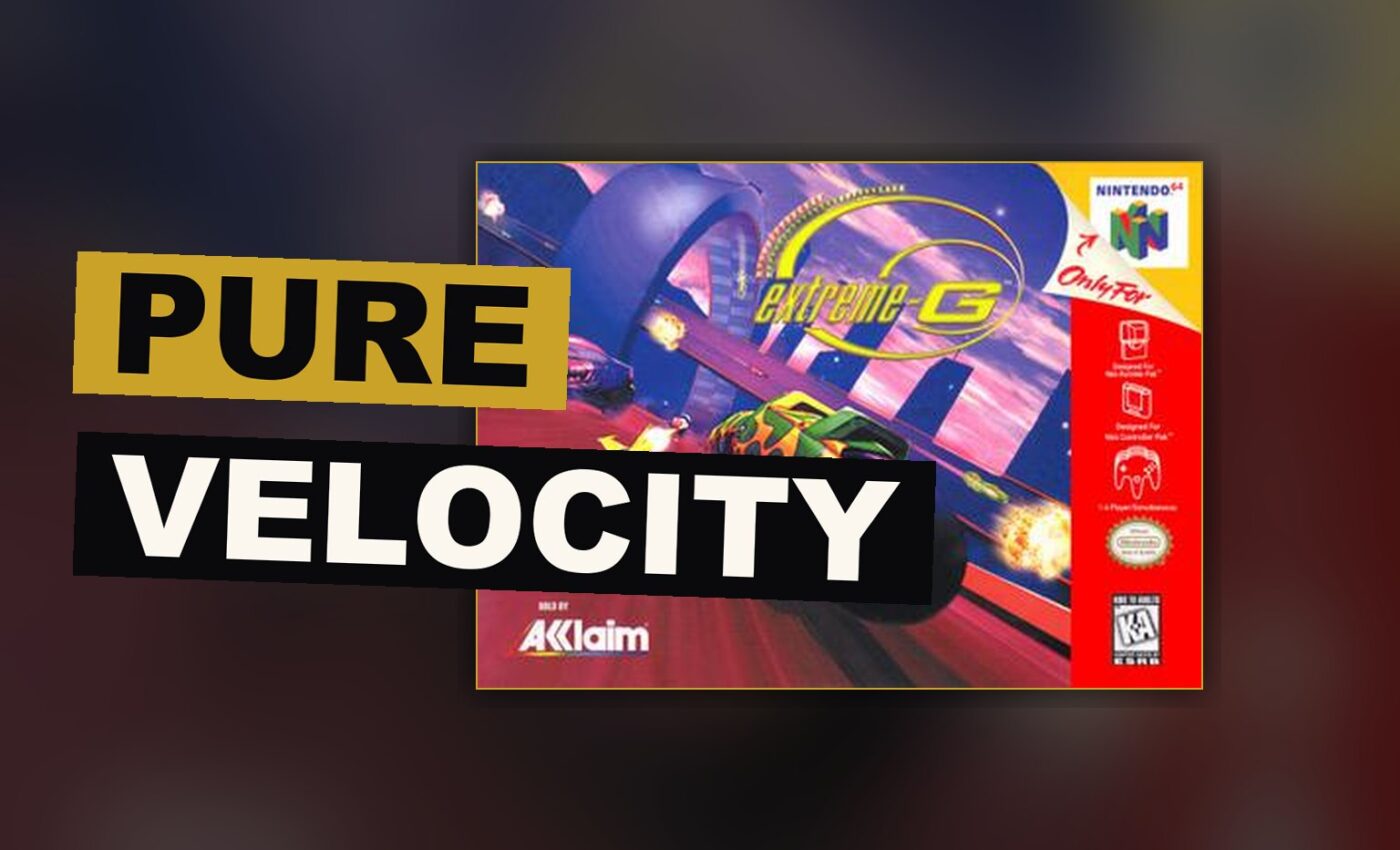
Extreme-G landed on the Nintendo 64 in 1997, built by Probe Entertainment and published by Acclaim Entertainment, and it asked a simple question: how fast can a bike go before the track stops mattering? Past 750 km/h, according to the game’s own fiction. Extreme-G is a futuristic racer with an emphasis on speed, weapons, and an energy shield that regenerates in the F-Zero mold. It is also, decades on, still one of the cleaner arguments for the console’s racing library.
Plasma Bikes and the Wasteland Below
The setup is grim and barely explained, which suits it. Earth is a wasteland. Human colonists watch from a new-found planet as remote controlled bikes tear through the ancient cities, racing to determine who qualifies. That is the whole frame: a distant future, a dead homeworld, and a Grand Prix run for the sake of it.
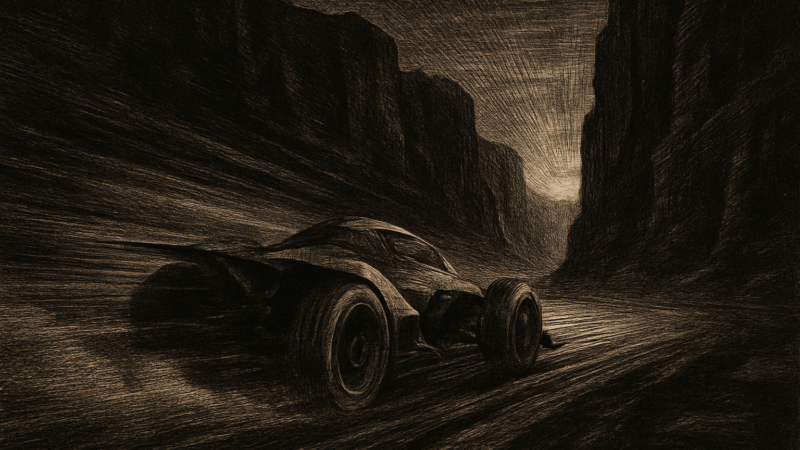
What matters is the ride. Players control futuristic racing pilots on plasma-powered bikes in an intergalactic Grand Prix. Tracks loop like roller coasters, and the design leans into that — speed first, innovative layouts second, nothing else competing for attention.
Falling off a cliff does not kill you. In Extreme-G, a bike that leaves the track is teleported back and must rebuild speed from a complete standstill. You lose time, not lives. It is the right call. It keeps a fast game fast instead of punishing every mistake with a restart.
Missiles, Mines, and the Wally-Warp
Weapons sit on the track waiting to be collected. The standard set covers defensive and offensive needs: multi-homing and reverse missiles, magnetic and laser mines, shield-boosting power-ups. Special weapons go further — invisibility, phosphorus flash, and the Wally-Warp.
The Wally-Warp is the one people remember. If you fail to avoid it, it instantly transports your bike to the back of the pack. No warning, and no counterplay beyond not getting hit. It is the single most cruel item in the game and the most effective argument for staying clean through a corner.
Each round opens with three nitro power-ups. They give a temporary speed boost and cannot be replenished. Three, then never again. That scarcity is the game’s quiet genius: it turns every use into a decision rather than a reflex.
Atomic, Critical Mass, Meltdown
The main mode is Extreme Contest, and it runs three championships. Atomic is four tracks. Critical Mass is eight. Meltdown is the full set of 12 standard tracks. Take first place in a championship to move on. Nothing else advances you.
Three difficulty settings frame the whole thing: Novice, Intermediate, Extreme. Winning championships across those levels unlocks hidden bikes, levels, and cheats, which then carry into additional single-player and multiplayer modes. Multiplayer itself covers competitive racing, flag capture, and battle mode, with split screen support.
A trance soundtrack runs underneath all of it — an original score, and a genuine one. It holds the pace when the tracks start repeating.
What the Re-Release Changes
Extreme-G did well enough to spawn a franchise. Extreme-G 2 followed in 1998, then Extreme-G 3 in 2001, then XGRA: Extreme-G Racing Association in 2003. Throwback Entertainment picked up the rights in 2006, and in 2024 the game returned through the Nintendo Classics service.
That re-release is the most interesting thing about Extreme-G’s current life. The racing field in 1997 was crowded, and Extreme-G still posted moderately positive reviews and commercial success on its own terms. It did not need nostalgia to earn a sequel. It earned three.
The Japan release landed May 29, 1998, well after the 1997 debut.
Key facts
- Release: 1997, Nintendo 64
- Japan release: May 29, 1998
- Developer: Probe Entertainment
- Publisher: Acclaim Entertainment, Gradiente
- Top speed: over 750 km/h
- Nitro per round: 3, non-replenishable
- Championships: Atomic (4 tracks), Critical Mass (8), Meltdown (12)
- Difficulty: Novice, Intermediate, Extreme
- Modes: single player, multiplayer, split screen
- Metacritic score: 8.2/10
- Re-release: Nintendo Classics, 2024, via Throwback Entertainment
Running order
| Mode | Tracks | Requirement |
|---|---|---|
| Atomic | 4 | First place to advance |
| Critical Mass | 8 | First place to advance |
| Meltdown | 12 | First place to advance |
| Multiplayer | — | Racing, flag capture, battle |
| Difficulty | — | Novice, Intermediate, Extreme |
The Wally-Warp is the detail that dates Extreme-G worst and defines it best. Modern racers have sanded down that kind of randomness; a single item that can dump the leader to last place reads as hostile design now. In 1997 it read as comedy, and it still plays that way if you are not the one holding first.
Where Extreme-G actually holds up is in the fall. Teleporting a bike back to the track instead of ending a life was the design decision that let Probe push speed past 750 km/h without the game collapsing into frustration. Every other choice — the roller-coaster loops, the three nitro, the regenerating shield — serves that one idea.
The trance score deserves more credit than it usually gets. It is original, it is relentless, and it matches a game that never asks you to slow down.
The weaknesses are real. The fiction is thin, the wasteland frame is set dressing, and the track list thins out fast if you are not chasing unlocks. Meltdown’s 12 tracks are the game at full strength; the four-track Atomic championship is a warmup you will clear quickly.
None of that undoes the core. Extreme-G is fast, strange, and confident about what it is. The 2024 re-release through Nintendo Classics is the right way to meet it now, and the 1997 original still earns its place.
8.2 of 10.
Get the Notebook.
The day's best stories and every fresh verdict, in plain English, in your inbox by seven. One email a day, no more.