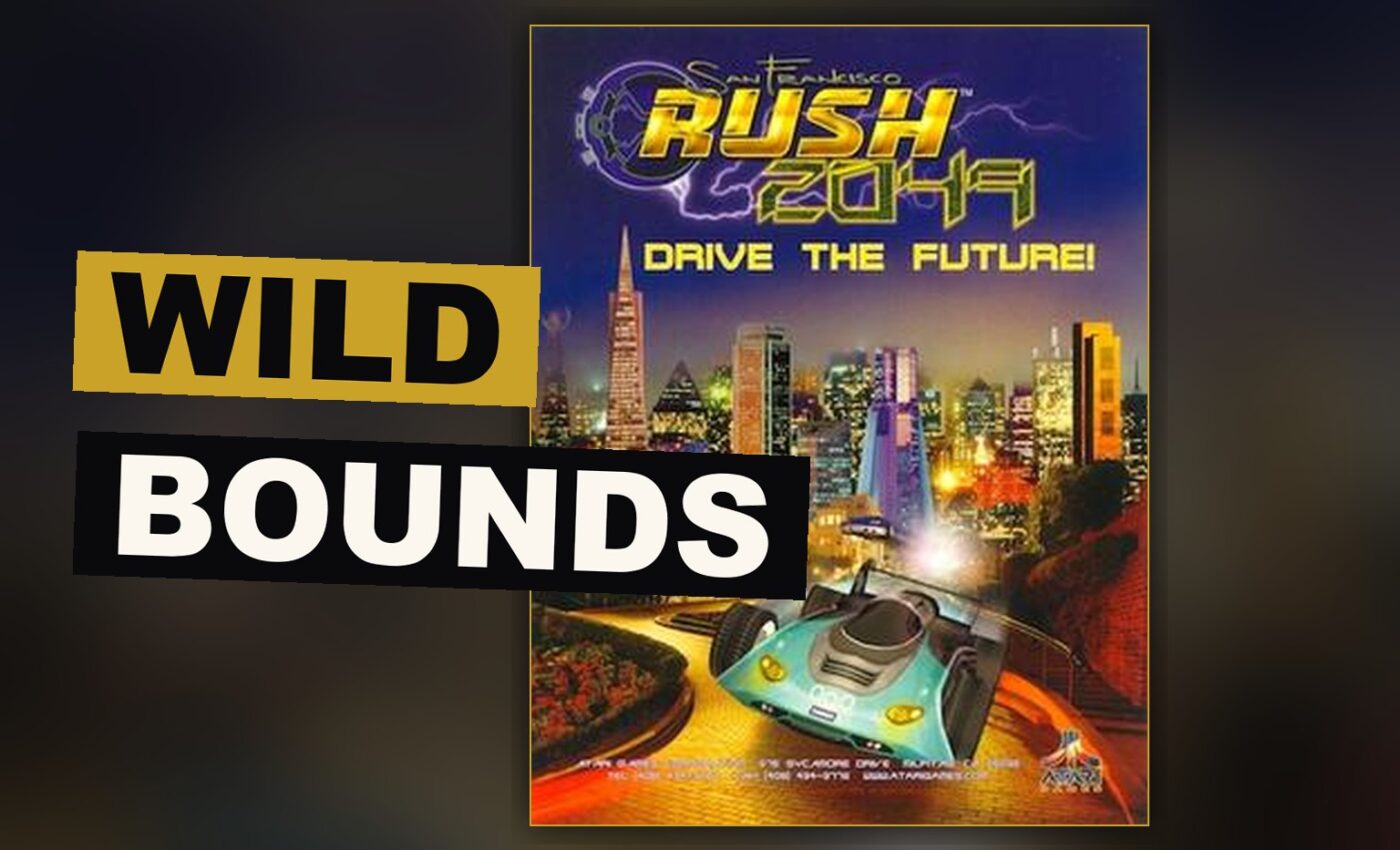
San Francisco Rush 2049 arrived on the Game Boy Color in 2000. It is a racing game, and it is a science fiction one, according to the source listing. It is also a single-player game.
That is close to the whole of what the record actually establishes about this cartridge. Everything else worth saying has to be said carefully, because the easy version of this article is wrong.
San Francisco Rush 2049, Not Extreme Racing
The title matters here. San Francisco Rush 2049 is not a handheld port of San Francisco Rush: Extreme Racing, the 1996 arcade racer. The source does not say the two are connected, and it does not say the Game Boy Color game carries over tracks, cars or airborne mechanics from any earlier title.
The Wikipedia entry for San Francisco Rush is a disambiguation page. It lists San Francisco Rush: Extreme Racing, a 1996 video game. It lists San Francisco Rush, a 2016 professional rugby union club. It lists San Francisco Rush, a prospective rugby league team expected to join the North American Rugby League.
The 2049 game is not on that list at all. That is the first sign that the naming is doing more work than the reporting usually admits.
Game Boy Color, 2000, Racing, Science Fiction
The source gives four facts about San Francisco Rush 2049 and no more. Platform: Game Boy Color. Year: 2000. Genre: racing. Theme: science fiction.
No track count. No track names. No mention of the Golden Gate Bridge, as scenery or as a ramp. No mention of shortcuts, hidden routes or stunt design.
The theme is listed as science fiction, and that is as far as the source goes. It does not describe chrome, a near-future setting, a future city or any specific visual. Those details would be invention dressed as description.
The Published Score
San Francisco Rush 2049 holds a published critical score of 7.0 out of 10 on IMDb. That is the only number the source provides.
A 7.0 is a respectable figure. It is not a rave, and it is not a failure. For a handheld racing game from 2000, it reads as a game that did its job without changing anyone’s idea of what the job was.
What the Record Does Not Say
The source lists single-player as a mode. It does not say the game lacks a split-screen mode. It does not say it lacks a link-cable mode. It does not say single-player is a limitation, a cut or a compromise.
That distinction is not pedantic. A mode list is a list of what exists, not a list of what was left out. Turning one into the other is how a thin record gets padded into a confident review.
The same goes for performance. The source does not mention frame rate. It does not say the game stutters, and it does not say how it compares to any arcade version, because it does not mention an arcade version.
It also does not say which version most people owned. That claim would need sales data or a survey. Neither is here.
A Running Order of What Is Actually Known
Here is what the source supports, ordered by how much it tells a reader.
- The title is San Francisco Rush 2049, released in 2000.
- The platform is the Game Boy Color.
- The genre is racing.
- The theme is science fiction.
- The mode is single player.
- The published critical score is 7.0 out of 10 on IMDb.
Six items. That is the entire factual basis for any article about this game, and it is worth stating plainly rather than burying under atmosphere.
Where the Name Leads Instead
The more interesting story sits in the disambiguation page, and it is a story about a name rather than a game. San Francisco Rush is three different things in the source: a 1996 video game, a 2016 rugby union club, and a prospective rugby league team.
| Entry | Type | Year or status |
|---|---|---|
| San Francisco Rush: Extreme Racing | Video game | 1996 |
| San Francisco Rush | Rugby union club | 2016 |
| San Francisco Rush | Rugby league team | Expected to join the North American Rugby League |
A video game title, a rugby club and a rugby league team, sharing one name across two decades. That is the part of this record with actual texture.
It also explains the confusion. A reader searching for the 1996 arcade racer lands on a page that also describes a rugby club. A reader searching for the rugby club lands on a page that also describes a game. The 2049 cartridge sits outside the list entirely, which is its own small problem.
What This Paper Makes of It
The honest version of this article is short, and the dishonest version is long. The long version has a Golden Gate Bridge ramp, seven tracks, a frame rate that stutters, a split-screen mode that was cut, and a session plan for returning players. None of it is in the source.
The 7.0 out of 10 is the one piece of critical judgement available, and it should be reported as what it is: a published score from IMDb, not a verdict this paper reached by playing anything.
What matters here is the gap between how confidently a game like San Francisco Rush 2049 gets discussed and how little the record actually holds. A racing game on the Game Boy Color in 2000, themed around science fiction, playable alone, scored 7.0. That is a complete sentence and a complete set of facts.
The name is the story. Three things called San Francisco Rush, one of them a cartridge that the disambiguation page does not even bother to list. If you came here for the ramp, the ramp is not in the record.
Get the Notebook.
The day's best stories and every fresh verdict, in plain English, in your inbox by seven. One email a day, no more.