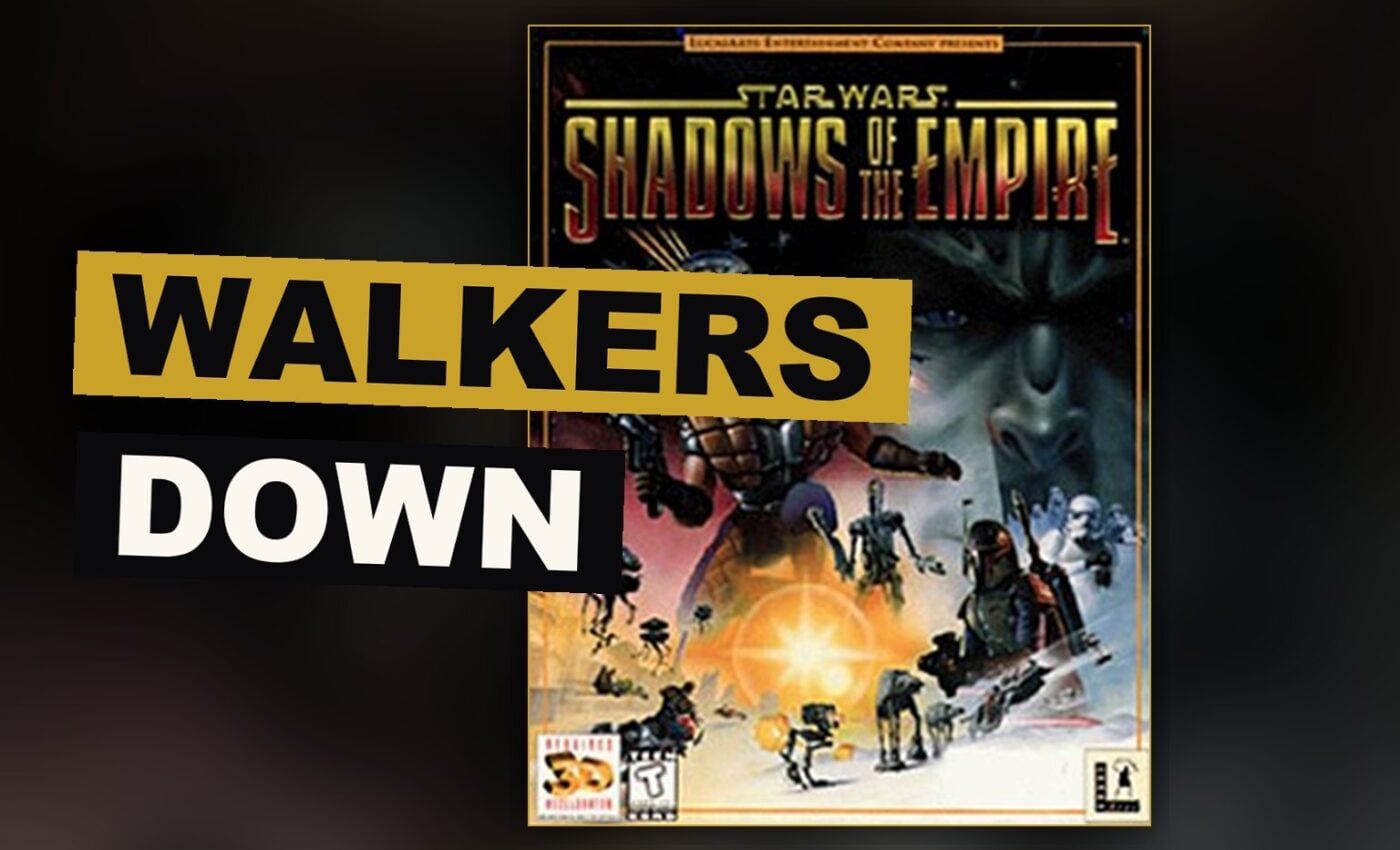
Shadows of the Empire places players in control of a hired gun working to protect a princess from the films, set during the period between the second and third movies in the Star Wars series. The Nintendo 64 title mixes on-the-ground shooting with vehicle stages, and its scope is large for a game put out early in the console’s run.
The Opening Vehicle Stage
The game begins on a frozen field, with players flying a small vehicle against towering enemy walkers. The stage echoes a scene from the films, and on the Nintendo 64 it moves at a steady pace, giving players room to guide around each walker before bringing it down.
It sets a high bar. Later stages do not always match it.
Ground Missions and the Trouble They Bring
Once players leave the vehicles behind, Shadows of the Empire moves into stages where the main character walks through passages, streets, and enemy bases while fighting soldiers. Control during these stages feels awkward. Aiming is loose, and the camera often works against the player during close fighting.
The game asks players to move through narrow spaces while watching for threats from several directions, and the Nintendo 64 hardware struggles to keep up. The frame rate drops during busy fights, especially in stages packed with enemies.
Vehicle Missions, Sound, and Story
The strongest material in Shadows of the Empire comes when players sit inside a vehicle. Three missions stand out:
- The opening stage, which sets players in a vehicle against towering walkers.
- A chase stage, which puts players on a vehicle moving quickly across rough ground.
- The closing stage, which mixes flight and ground vehicle fighting to end the game.
Each of these missions uses the console’s ability to show wide open spaces and many moving objects on screen at once. They give Shadows of the Empire its identity, apart from other shooters sold for the Nintendo 64 at the time. The music, written using themes from the film series, plays a large part in holding these stages together.
Voice work appears throughout the game, which was unusual for a title stored on a cartridge at that point in the console’s life. Sound effects for guns, engines, and sudden loud noise match what players know from the films. The music covers for some of the weaker moments on screen, though it does not fix the control trouble in the ground stages.
The main character here is not one drawn from the films themselves. Shadows of the Empire was built alongside a novel and a comic line, and the character was made for that wider story, placed in the space between the second and third films. His job — protecting the princess from enemy forces, including a hunter well known from the films — gives the game a story tied to the larger setting without simply repeating scenes already shown on screen. Familiar faces do turn up across the missions, giving the story ties to material players already knew well.
Where the Game Falls Short
The difference in quality between the vehicle stages and the ground stages is the clearest weak point in Shadows of the Empire. Players moving from a vehicle chase into a stage full of soldiers on foot often notice the drop right away. The conduct of enemies in ground stages can be plain, with soldiers standing out in the open rather than taking cover. Waiting between stages also breaks up the flow of play. None of these problems break the game, but they keep it from matching the high points set by its vehicle stages.
Taken as a whole, Shadows of the Empire is a game marked by contrast: strong inside a vehicle, weaker on foot, and held together by music and sound work that keep its mood steady throughout.