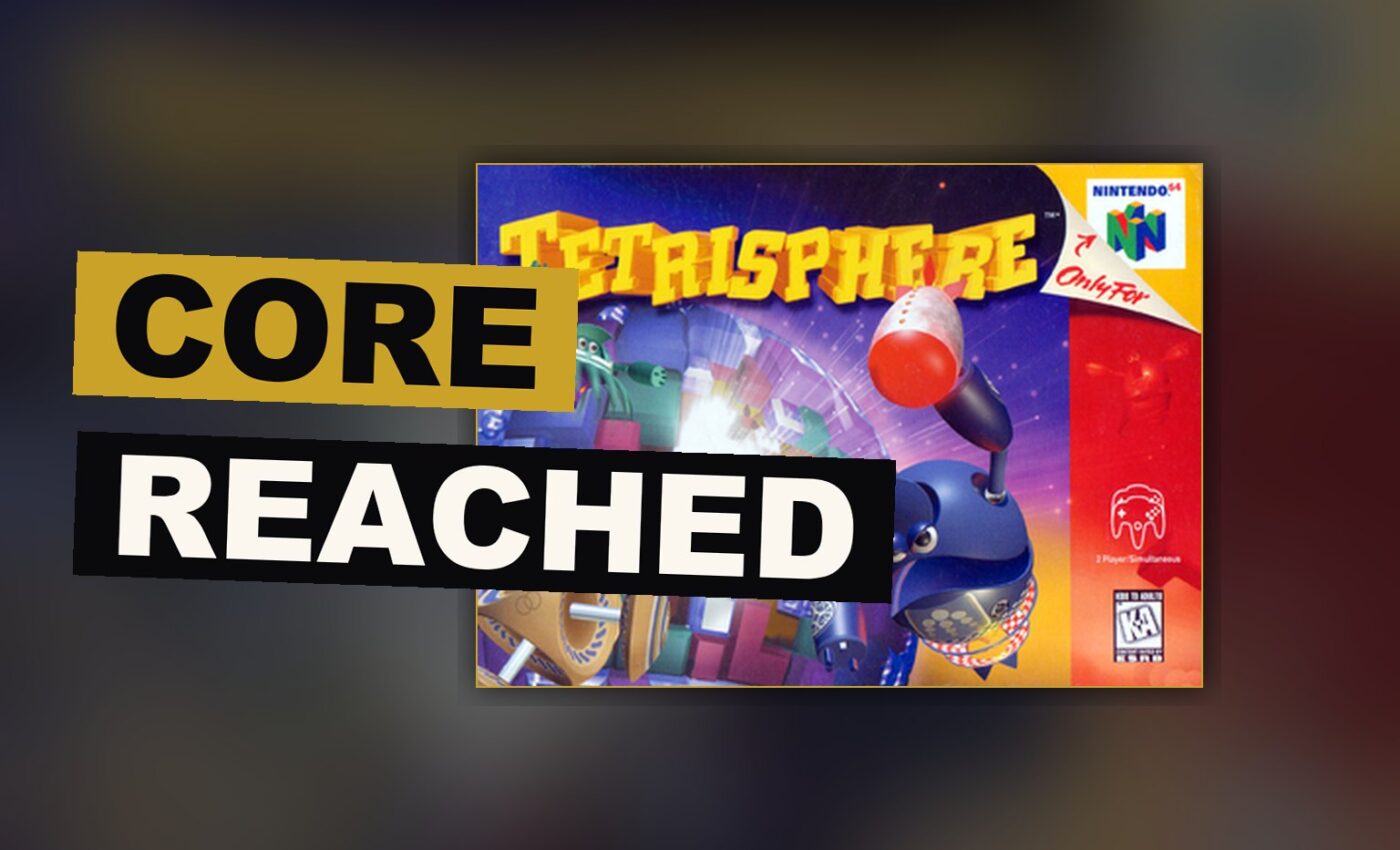
Nintendo published Tetrisphere for the Nintendo 64 on August 11, 1997, in North America, with PAL regions following in February 1998. It arrived with almost no domestic advertising behind it. The game still sold moderately well and drew mostly favorable reviews, and the reason is simple: it does something with Tetris that no other licensed variant has matched.
Phear Was Built for the Atari Jaguar First
Tetrisphere did not begin as a Tetris game. H2O Entertainment developed it under the title Phear, and it was headed for the Atari Jaguar in early 1995. That version never came out. Nintendo, a licensee for The Tetris Company, picked up the publishing rights and the project was reworked into a Tetris title for the N64.
That history explains a lot about how the game feels. This is not a Tetris built from the falling-block template with a new coat of paint. It is a puzzle game that had its own identity first, then got a familiar name attached.
The Playing Field Is a Wrapped Sphere
The playing field is a wrapped three-dimensional grid that resembles a sphere. Players shift various shapes across that surface and destroy them. In most Tetris titles, score comes from completing lines, where a row of brick pieces without gaps is removed, points go up, and space opens for more pieces.
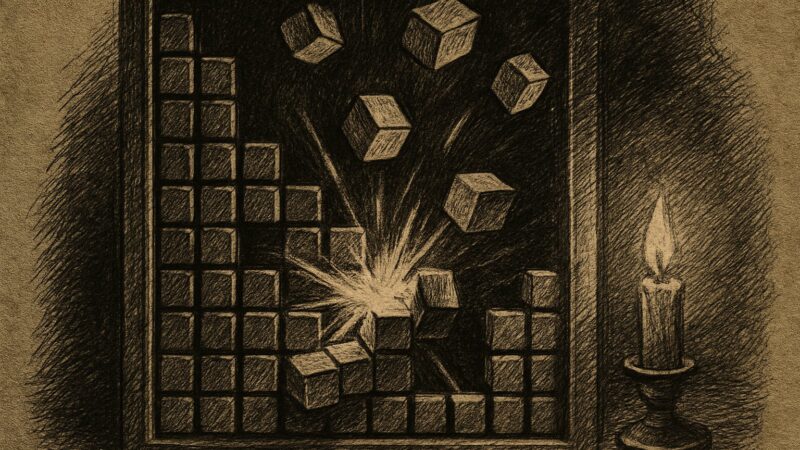
Tetrisphere throws that out. Here the goal is to remove bricks by making three pieces of the same type touch as the result of a drop. A drop happens when any brick falls, either because the player releases the piece they are holding or because the supporting brick beneath it is removed by some other means.
When three matching bricks touch, a combo triggers. The three bricks glow brightly and implode, taking themselves off the field. Anything else of the same shape touching that combo goes too, in a chain reaction. Drop a Z piece onto a nested Z and the piece below implodes, which pulls every identical piece touching it, and so on outward.
The Touching Rules Split by Shape
The chain reaction is not loose. Pieces only count as touching under specific rules, and those rules vary by shape. Two matching pieces stacked on each other must sit exactly on top of each other to be removed. Laterally, each piece follows its own logic.
O pieces, a 2×2 square colored blue, and I pieces, a 3×1 or 1×3 rectangle colored green or yellow, must hold full contact on one side with a complete side of another piece of the same shape. Every other piece counts as touching if any part of it makes contact with another of the same shape.
That asymmetry is where the game lives. You are not managing a flat well and waiting for the right piece. You are reading a curved surface, tracking which shapes sit where, and setting up drops that will cascade.
Neil Voss Composed the Score Reviewers Kept Praising
Reviewers praised two things above all: the originality and the musical score composed by Neil Voss. The music is the part of Tetrisphere that has aged best. It is also the part that gets discussed most often when people bring the game up now, which is unusual for a puzzle title on the N64.
The originality is real but it cuts both ways. Tetrisphere asks players to unlearn line-clearing, and the wrapped sphere takes time to read. The camera and the curved surface make it harder to see what is touching what than a flat grid ever would.
Single Player, Multiplayer, and the Core
Tetrisphere ships with single player and multiplayer, including split screen. The objective changes depending on the mode, but generally it comes down to removing layers of shapes to reach the core of the playing field.
That core-reaching structure gives the game a shape that plain Tetris does not have. There is a destination. You are digging toward something, not surviving an endless fall. The multiplayer split screen is where the design gets its best use, since two players working the same rules on the same sphere turns the chain reaction into a race.
A Thin N64 Puzzle Lineup Did It Favors
The Nintendo 64 library was thin on puzzle games, and Tetrisphere landed in a year when the console was still building out. It had no domestic advertising push worth mentioning. It sold anyway.
Part of that is the Tetris name doing work on the box. Part of it is that the people who did find it told other people. A puzzle game with a genuinely new mechanic and a strong soundtrack is the kind of thing that spreads by word of mouth long after the marketing budget is spent.
What Six Out of Ten Means Here
This is a good game with a high floor and a real ceiling. The combo system is elegant: three matching pieces touch, they implode, and the chain runs. The touching rules for O and I pieces versus everything else add a layer of planning that rewards attention. Neil Voss’s score is the strongest single element in the package and would be worth the price on its own.
The ceiling is legibility. A wrapped three-dimensional grid is harder to parse than a flat field, and Tetrisphere does not do enough to help you see the board. Early sessions are spent fighting the surface instead of playing the puzzle. The lack of domestic advertising did not help either. This is a game that needed someone to explain it, and nobody was paid to.
Six out of ten is the right score. Tetrisphere is not a failed experiment; it is an experiment that mostly worked and got buried. The originality reviewers praised is genuine, and the music holds up better than most of what shipped on the console that year. But the curve is a barrier, and the game never quite solves the problem of showing you what it wants you to see. Worth playing, worth hearing, and worth the patience it demands.
Tetrisphere — 6.0/10
Hard Numbers
- Developer: H2O Entertainment
- Publisher: Nintendo
- Platform: Nintendo 64
- North America release: August 11, 1997
- PAL release: February 1998
- Original title: Phear
- Original intended platform: Atari Jaguar, early 1995
- Genre: Puzzle
- Modes: Single player, multiplayer, split screen
- Perspective: Bird view / Isometric
- Composer: Neil Voss
- Published critical score: 6.0/10
- Clay Tribune score: 6.0/10
Get the Notebook.
The day's best stories and every fresh verdict, in plain English, in your inbox by seven. One email a day, no more.