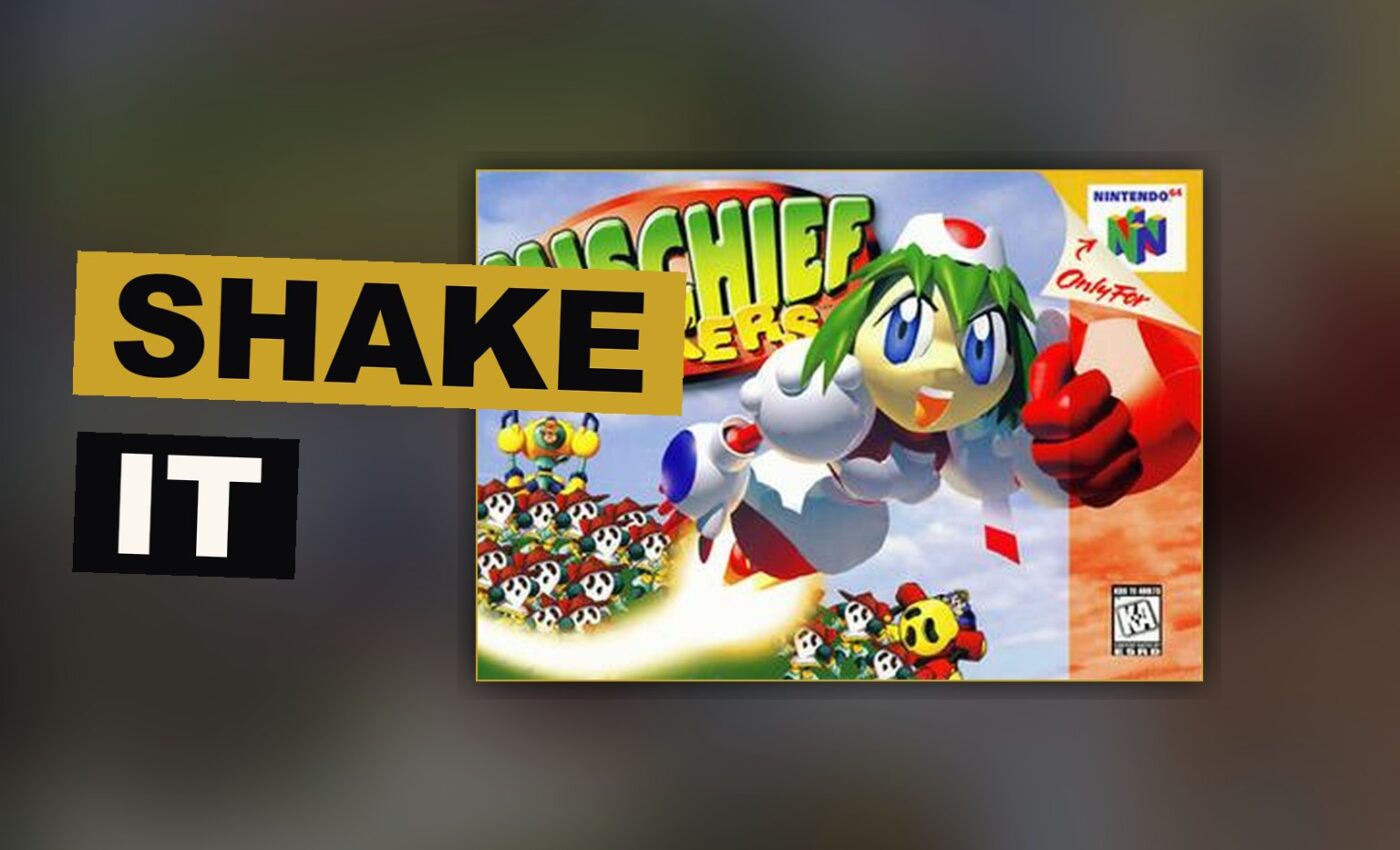
Mischief Makers arrives on Nintendo 64 as a game viewed from the side, in a console period built for three full sides, and that choice alone makes it stand out. Treasure built the game, and Treasure’s history with fast, tight action design shows in every stage. The hook is simple: take hold, shake, and throw. That single set of moves carries the whole adventure.
The Shake System
The player controls a robot who can take hold of nearly anything on screen, shake it, and throw it at enemies or obstacles that stand in the way. The shake move is used to open items, stop enemies, and solve small puzzles placed throughout each level. It sounds limited on paper. In practice, Treasure builds an entire game out of it, adding new uses for the same system stage after stage.
Boss fights are where the system earns its keep. Each fight demands a different use of the same tools, and the puzzle of working out what to grasp, and when, gives these fights real weight. The bosses are seen by many as the high point of Mischief Makers, built with the kind of over-the-top design Treasure is known for.
Pace and Length
Mischief Makers moves fast. Levels are short, and the game does not wait around. That quick pace works in its favor for much of the play time, but the game is also short in total, and some players finish it in a single sitting. A timed mode and secret goals set aside give reasons to play stages again, though these extras are not required to reach the end.
The single view keeps the action clear even when the screen fills with enemies and objects flying at the player. There is no wandering view to fight, no depth to misjudge. Everything happens on one line, and Treasure uses that simplicity to pile on quick motion and disorder without losing clear sight.
The look of the game is bright and full of life, closer in spirit to a Saturday morning cartoon than to the darker, more serious look many other Nintendo 64 titles favored. The drawn art is detailed, and enemy and boss designs carry real character. The tone stays light and comic throughout, even as the difficulty rises in later stages.
Some parts of the presentation feel dated. The story, told through long written scenes, does not always land, and parts of the words spoken are seen as awkward.
Here’s one reading of how the stages build, as the game feels to play through:
| Stage | Focus |
|---|---|
| Early Levels | Introduce the shake system |
| Mid Levels | Join the system with motion and puzzles |
| Boss Fights | Fights built on repeated moves players must learn |
| Late Levels | Harder challenge, more demand placed on the player |
Difficulty
Mischief Makers is not an easy game. The difficulty rises fast in later stages, and some parts demand exact timing with the shake system that earlier levels don’t fully prepare players for. This can make certain parts feel more tiring than rewarding, especially for players used to the gentler rise found in a lot of other games of that kind from the same time.
Treasure once again proves it knows how to make a boss fight.
That’s the plain read on where the game is strongest, in this writer’s view. The regular stages are solid, but it’s the boss fights that stand out again and again as proof of the studio’s skill.
Where It Stands
Mischief Makers has never been a well-known name, and it remains a smaller, quiet title in the Nintendo 64 library rather than a reason on its own to own the console. That’s a pity, because the ideas here feel more original than the game’s quiet standing would suggest. Treasure took a single move and built an entire game logic around it, and the result holds up as a clear, original take on a game viewed from the side, at a moment when most of the industry had moved to three full sides.
The game’s short length and changing difficulty keep it from ranking among the console’s very best, but neither weakness takes away what’s truly clever about the design. Admirers of Treasure’s other work, or anyone curious about a game viewed from the side that found a real reason to exist on hardware built for three full sides, will find plenty to like in Mischief Makers.
Mischief Makers earns a 7.1 out of 10 — a game defined by one great idea, carried out with real skill, wrapped in a shorter and rougher package than it deserved.