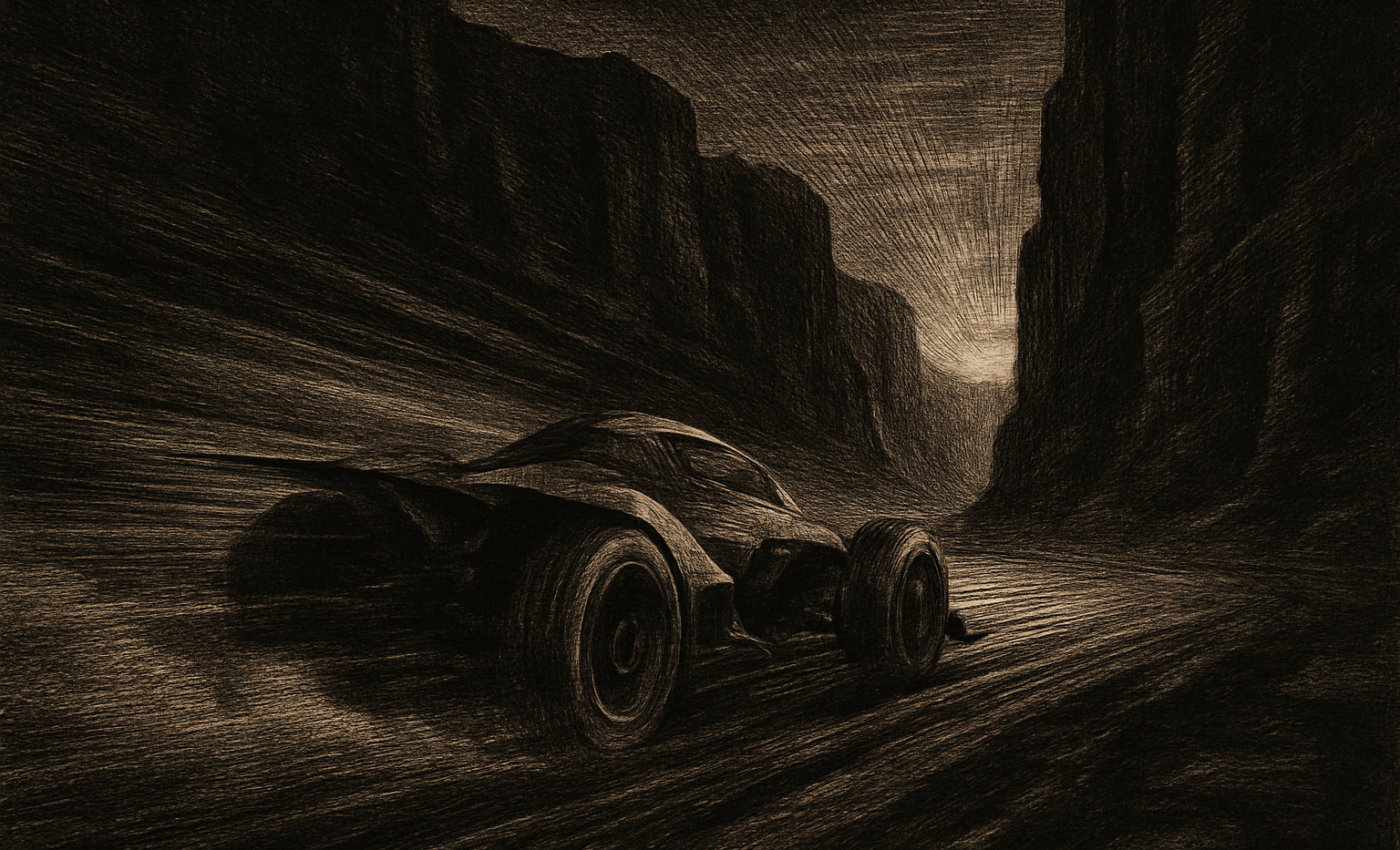
Star Wars Episode I: Racer puts you in the cockpit of a podracer, four feet off the ground, running up to 600 miles per hour. It is a game about holding a line while everything shakes. LucasArts developed and published the Nintendo 64 version in 1999, building it out of the podracing sequence from Star Wars: Episode I – The Phantom Menace. That sequence was the best part of the film. The game knows it.
Hard Numbers
- Title: Star Wars Episode I: Racer
- Year: 1999
- Developer/Publisher: LucasArts
- Platform reviewed: Nintendo 64
- Genre: Racing
- Score: 7.0/10
- Guinness record: Best-selling sci-fi racing game, 3.12 million units worldwide as of 2011
- Courses: More than 21, across over 8 worlds
- Racers: More than 20, plus all film racers
- Sequel: Star Wars Racer Revenge, 2002, PlayStation 2
Anakin Skywalker and Sebulba Are Both Yours to Drive
The roster is the hook. You take the controls as Jedi-to-be Anakin Skywalker or any one of over 20 pod racers, and the game includes all of the racers and race courses on Tatooine from The Phantom Menace. It then adds several courses, on Tatooine and various planets, so the track list runs past what the film showed.
Jake Lloyd and Lewis MacLeod, who portrayed Anakin Skywalker and Sebulba in The Phantom Menace, reprise their roles in the game. That is a small thing that matters more than it should. The voices are the ones from the film, and the game never has to pretend otherwise.
The Afterburner Will Kill You
Racing is not simply about speed. Each podracer carries an afterburner the player can engage for a boost. While the engine is engaged, its temperature rises. Push it too long and the engine catches fire and explodes, destroying the podracer and costing several seconds to respawn and continue racing.
That is the whole design in one mechanic. The boost is the fastest way forward and the fastest way to lose. Colliding with too many walls or obstacles damages one or both engines, and severe damage destroys the podracer outright, so you steer carefully or you fall behind. You can repair the podracer while competing, but repairs slow you down until they finish or you stop them. Every decision costs speed somewhere.
Three Modes, One Missing
Single-player splits three ways. Tournament mode runs a championship, and finishing races awards money, with higher-ranked finishes paying more. You spend it on parts or repair droids, unlock tracks, and unlock racers.
Free Race mode lets you practice any previously unlocked course with any unlocked racer. You cannot earn money or unlock tracks and racers there, but you can set the difficulty of the opponents.
Time Attack pits you against the clock for the fastest time on a given course. This mode is not available in the PC version. The N64 version has it, and that is the version to own.
Split Screen on the Nintendo 64
Multiplayer differs by platform. The N64 and Dreamcast versions feature a two-player split-screen mode, while the Windows and Macintosh versions allow play over a local area network. Split screen is the right call for a console racer in 1999, and it holds up as the reason to keep a second controller nearby.
The courses span more than 21 tracks across over 8 different worlds. Hazards include methane lakes, meteor showers, and the notorious Tusken Raiders. The variety keeps the racing from settling into one rhythm.
The Guinness Record Still Stands
Episode I: Racer received generally positive reviews from critics, and several major media outlets listed it as one of the top Star Wars video games. As of 2011, it holds the Guinness record as the best-selling sci-fi racing game, with worldwide sales of 3.12 million units, ahead of series like Wipeout and F-Zero.
Two podracing games followed. Star Wars: Racer Arcade arrived in 2000 with many similar tracks and characters. A sequel, Star Wars Racer Revenge, came in 2002 for the PlayStation 2.
The game later returned. It received an HD re-release for Nintendo Switch and PlayStation 4 in June 2020, and came to Xbox One in October 2020.
Where the Nintendo 64 Version Wins and Loses
Ranking what this game does best:
- The afterburner risk-reward loop, which turns every straight into a gamble.
- Tournament mode’s money and unlock structure, which gives the racing somewhere to go.
- Split-screen multiplayer on N64, which the PC and Mac versions replace with LAN play.
- Time Attack, which the PC version drops entirely.
- The film cast returning for Anakin and Sebulba.
The ceiling is real. The podracer explodes, you respawn, you lose several seconds, and on a bad lap that is the race. The repair system is honest about its cost, but it is not fun to sit still while your competitors pass. The game is at its weakest when it asks you to stop racing.
What the N64 Release Gets Right
Star Wars Episode I: Racer is a licensed game that understood its source better than most. The film’s podrace was a set piece built on speed and disaster, and the game rebuilds that as a system: an engine that overheats, a boost that punishes greed, and a track list that runs past Tatooine into eight worlds.
The 3.12 million units and the Guinness record are not an accident. This is the rare tie-in that got a sequel and an HD re-release two decades later because the core loop held. The N64 version carries Time Attack and split-screen, which the PC release does not, and that makes it the one to play.
It is not perfect. The respawn penalty is harsh, and the repair mechanic asks you to slow down in a game about not slowing down. But the afterburner alone justifies the price of entry.
7.0 of 10.
Get the Notebook.
The day's best stories and every fresh verdict, in plain English, in your inbox by seven. One email a day, no more.