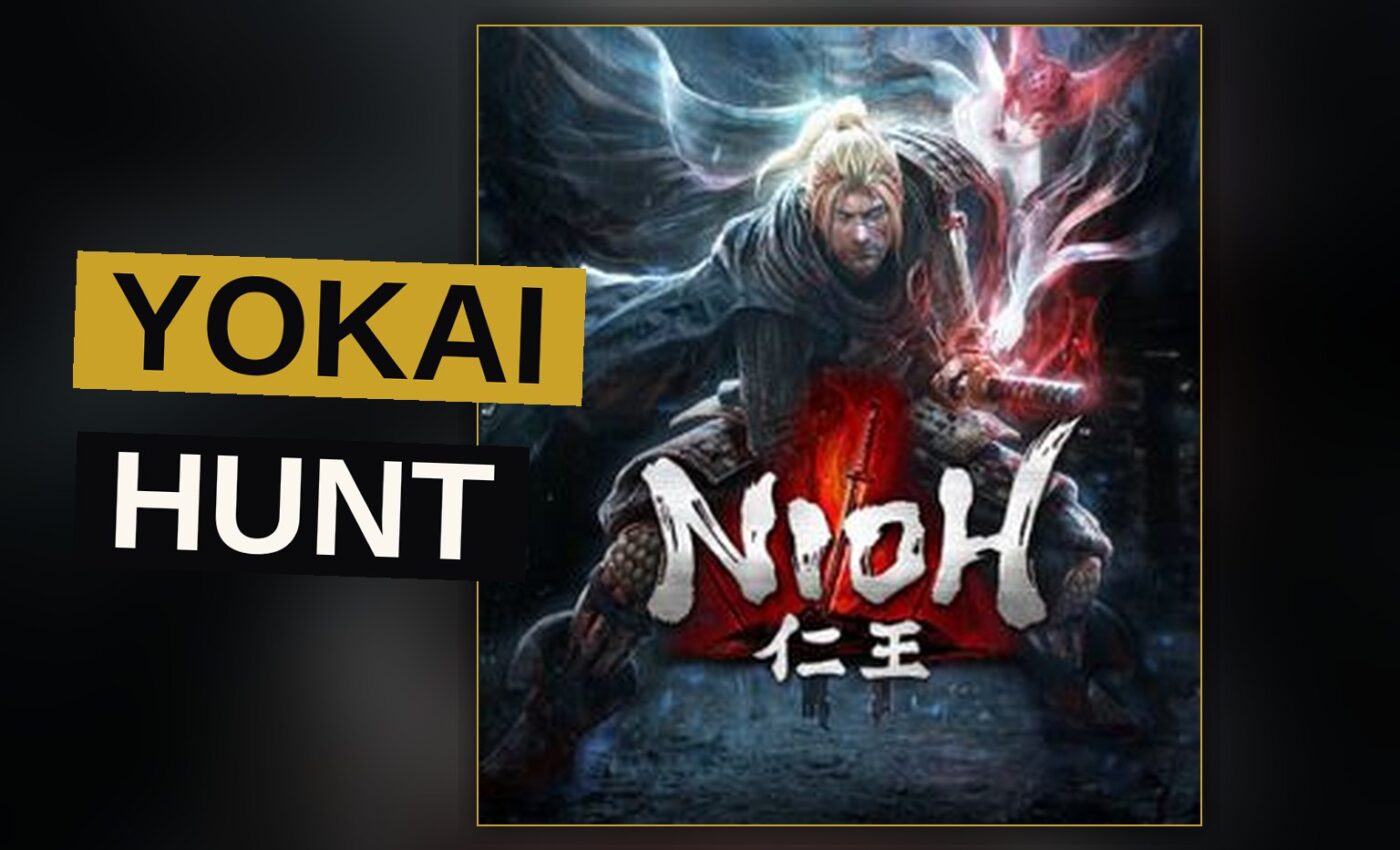
Nioh is a samurai action game built around the idea that you are not a trained warrior. You are William Adams, an English sailor who washes ashore in feudal Japan and becomes a monster hunter. That premise is the game’s engine, and it drives a combat system that rewards patience over speed and punishes players who forget to manage their stamina. The result is a brutal, demanding experience that respects the player’s time even as it frustrates it.
Trailer, via IGDBcom.
Sword, Shield, and Stamina
The core loop in Nioh is simple to explain and difficult to master. You have a sword, a shield, and a limited amount of stamina. Enemies hit hard, and your health bar fills slowly. The game wants you to learn the timing of attacks, to parry, to dodge, and to spend stamina wisely. It is a game about reading tells, and it expects you to remember them.
Stamina is the currency of survival. Every attack, every block, every roll costs it. Run out, and you are dead. This creates a rhythm where fights feel like a negotiation between you and the enemy, each waiting for the other to slip. It is exhausting, but it is also satisfying when you land a perfect combo and watch an enemy stagger.
Yokai and Their Patterns
The game also introduces yokai, supernatural creatures that require different tactics. Some are fast, some are slow, some hit hard from range. Learning their patterns is half the fun. The difficulty curve is steep, and the game does not hold your hand. You will die. You will learn. You will get better.
Yokai come in many forms, and each type requires a different approach. Here is a quick breakdown of the main types you will face:
| Yokai Type | Weakness | Example |
|---|---|---|
| Fire | Water | Hellfire Demon |
| Water | Fire | River Demon |
| Earth | Wind | Stone Demon |
| Wind | Earth | Wind Demon |
Understanding these elemental weaknesses is crucial. Using the wrong weapon against a yokai can leave you helpless. The game encourages you to experiment, to try different builds, and to adapt on the fly. This variety keeps the combat fresh, even after dozens of hours.
The Village Between Battles
Between battles, you return to a village where you can upgrade weapons, purchase items, and craft equipment. This downtime is necessary, but it can feel like a break from the action. The village is functional, not flashy. It exists to support your journey, not to entertain you.
The village also serves as a hub for multiplayer content. Players can invade each other’s worlds, either to help or to hunt. This adds a layer of social interaction that is rare in single-player games. It is a small feature, but it changes the dynamic. Suddenly, you are not fighting alone.
The Sounds of Battle
The music in Nioh is sparse but effective. It swells during boss fights and recedes during exploration. The sound design is similarly understated, with clangs, roars, and screams that reinforce the tension. It is a game that relies on atmosphere, and it delivers.
The voice acting is minimal, which is appropriate given the setting. Most characters speak in Japanese, with subtitles provided. This gives the game a sense of authenticity, even if the localization is occasionally awkward. The translation is serviceable, but it is not the highlight of the package.
A World Worth Dying In
Nioh is set in Sengoku-era Japan, a period of constant warfare between rival clans. The world is dense with shrines, hidden paths, and side quests. Exploring it feels rewarding because the game rewards curiosity. Shrines grant bonuses, and clearing them can open new areas. Side quests often involve helping villagers, tracking down yokai, or simply surviving a gauntlet of enemies.
The presentation is dark and atmospheric. Snow clings to armor, rain streaks across screens, and fire illuminates camps at night. The art direction leans into the grotesque, with enemies that look like demons and bosses that are massive, imposing figures. It is a world that feels alive, even when it is punishing you.
The Difficulty That Tests You
Nioh is not an easy game. It is not meant to be. The difficulty is front-loaded, meaning early encounters can feel impossible until you learn the systems. Boss fights are particularly punishing, requiring precise dodges, perfect blocks, and a deep knowledge of the enemy’s pattern. Failure is frequent, but the game never feels unfair. It is simply hard.
The game also features a skill tree that lets you customize your character. You can focus on sword skills, spear skills, or ranged attacks. This allows for a degree of replayability, though the core loop remains the same. Progression is slow, and you will spend hours grinding for experience points and souls to spend on upgrades.
The Payoff of Persistence
Nioh is a challenging, rewarding game that demands your attention. It is not for everyone, and its difficulty will alienate players who want a more forgiving experience. But for those who stick with it, the payoff is significant. The combat is deep, the world is rich, and the sense of accomplishment is real.
It is a game that respects the player’s time, even as it tests their resolve. It is a game that asks you to commit, and it rewards that commitment with a satisfying loop of skill and mastery. It is a game that you will talk about with friends, and you will recommend to others.
The game has its flaws. The pacing can drag in the middle, and some areas feel repetitive. The difficulty spike in the early hours can be frustrating. But these are minor complaints in a package that is otherwise excellent.
Nioh is a triumph of design. It takes a simple idea and builds a complex, engaging experience around it. It is a game that you will return to, not because you have to, but because you want to. It is a game that earns its reputation.