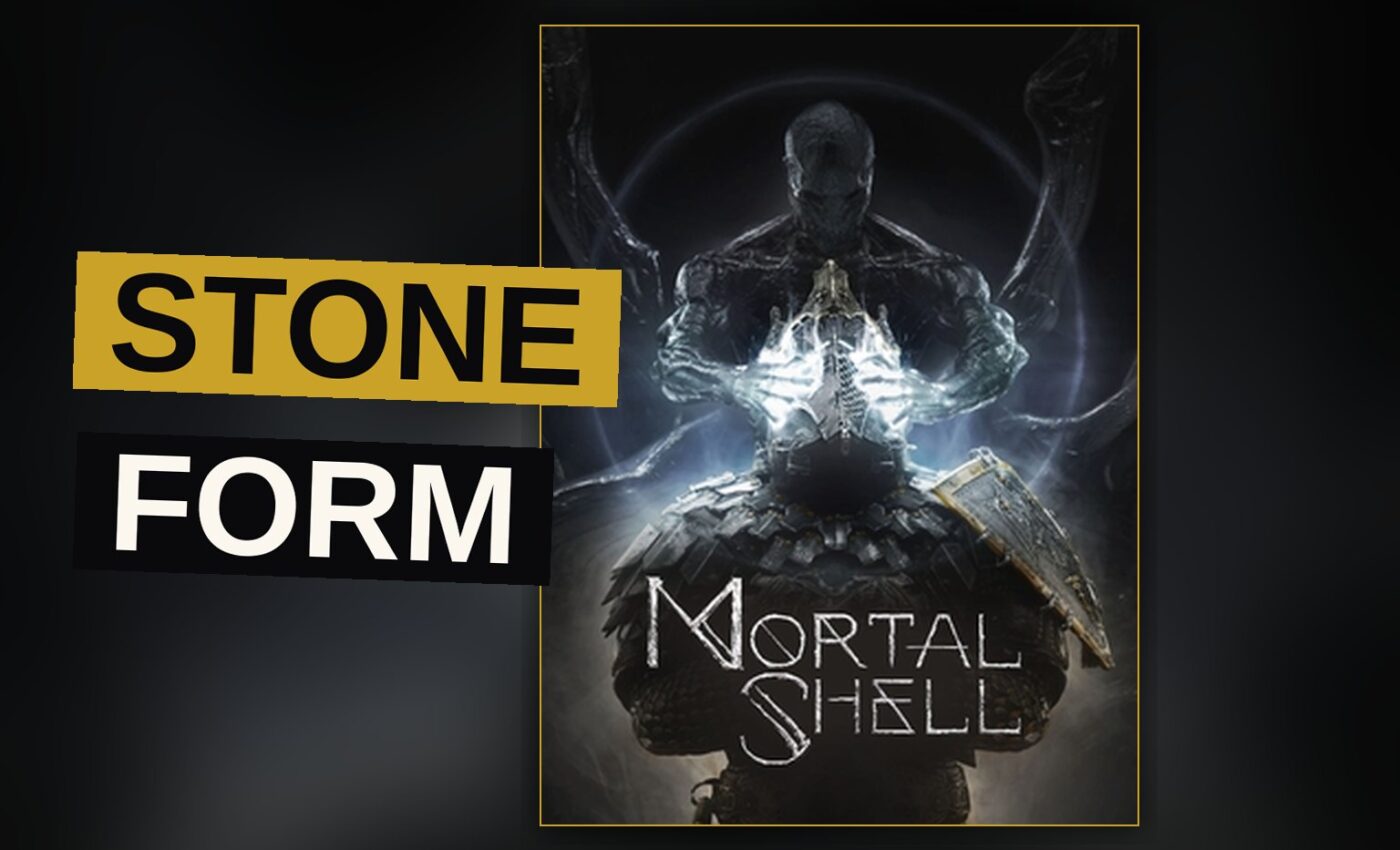
Mortal Shell arrived on 18 August 2020 for PlayStation 4, Xbox One and Microsoft Windows, made by Cold Symmetry and put out by Playstack. A remastered version, Mortal Shell: Enhanced Edition, followed on 4 March 2021 for PlayStation 5 and Xbox Series X/S, and on 18 November 2021 for Amazon Luna. A Switch port with all the DLC included, called Complete Edition, landed on 19 December 2022.
It is a third-person action-RPG built on melee combat. A sequel, Mortal Shell II, was released on August 20th, 2026. The game has sold one million units as of September 2023.
The pitch is simple. You wake as an empty vessel in a shattered world, do the bidding of a figure called the Dark Father, and hunt down hidden sanctums of devout followers to harvest sacred glands. The dead litter your path. Scattered across the land are the remnant anima of lost warriors, and you can inhabit them.
Those warriors are the Shells, and the game’s own copy treats them as the center of how you approach combat.
Trailer, via GameSpot Trailers.
The Shells Are the Point
Mortal Shell hands you the remains of defeated warriors and lets you occupy their bodies. Each Shell has its own mastery of skills and weapon upgrades. The game’s promotional copy says inhabiting a Shell widens your understanding of different forms of combat, and that you should pick the one that fits how you play.
Cold Symmetry built a roster rather than a single hero. You can move between bodies and learn the fight from more than one angle. The source lists role-playing and indie as the game’s genres, with action, fantasy and open world as its themes, and single-player as its mode. Nothing in that record says how many Shells there are, or how long each one takes to learn.
What the record does say is that the choice of body is presented as a playstyle decision. The developers frame it as a way to widen your understanding of combat, not as a difficulty setting or a cosmetic skin.
Combat Demands You Commit
The game’s own description calls combat strategic and deliberate. Survival demands superior awareness, precision and instincts. You commit your sword only when an opportunity opens. You calculate your parries to unleash devastating counterblows.
That last line is the design thesis as the developers state it. The parry is not a passive action. You calculate it, then commit to the counterblow that follows.
Combat is strategic and deliberate.
The game’s copy is explicit that survival demands precision and instincts, and that the sword only comes out when an opportunity opens. That is the loop the developers describe. It is a melee system, third person, single player, and the source does not describe any ranged or magic-first path through it. The arcane abilities it does mention are upgrades that imbue your attacks, not a separate way to fight.
A World Built From Marsh, Obsidian and Ice
Mortal Shell runs a non-linear campaign. You draw your own path across marsh-infested lowlands, through a gargantuan cathedral of obsidian rock, and into an ancient crypt frozen into the crest of a mountain.
Three regions, and the game lets you take them in your own order. The source lists “Open world” as a theme and stops there. It does not describe map size, icon density, or how the regions connect on a map. What it does say is that the campaign is non-linear, and that you draw your own path.
The names of the regions are the only description the source gives. Marsh, obsidian, frozen crypt. Everything else about how they play is left to the player to find.
The Dark Father and the Glands
You are implored to do the bidding of the mysterious Dark Father. You traverse a tattered landscape and track down hidden sanctums of devout followers. There, in the game’s most hallowed grounds, you overcome formidable foes and harvest the sacred glands.
The Dark Father is desperate for you to complete your task. The game asks the question directly: but to what end?
That question is the hook the developers chose to lead with. The source poses it and does not say whether the game answers it. The task is framed as something you are implored to do, not something you chose, and the glands are the object of the search.
Iron Sharpens Iron
The stronger your connection to each Mortal Shell grows, the better you can harness their innate talents. You craft unique upgrades, sharpen your blade with acid, and study dark arcane abilities that imbue your attacks with supernatural devastation.
Here is how the game’s stated systems compare.
| Element | What Mortal Shell Does | What the Source States |
|---|---|---|
| Shells | Multiple bodies, each with unique skills and weapon upgrades | Inhabit a Shell that fits your style |
| Combat | Deliberate, parry-driven, counterblow-focused | Commit your sword only when an opportunity opens |
| Campaign | Non-linear, three distinct regions | Draw your own path |
| Upgrades | Talents, acid blade sharpening, arcane abilities | Craft unique upgrades |
| Foes | Desperate adversaries devoted to inscrutable gods | Do not let fear halt your journey |
Creatures Both Pitiable and Grotesque
Your path is guarded by desperate adversaries, devoted to inscrutable gods. The game describes them as creatures both pitiable and grotesque, and it tells you not to let fear halt your journey. Muster your courage and face them down.
That instruction is the developers’ own framing. They want the enemies to be unsettling as well as hard, and they say so in the copy. The source does not name a single enemy, a boss, or a faction. It gives the mood and the allegiance and leaves the rest.
The Veterans Behind It
The game’s marketing says Mortal Shell was developed by a coalition of seasoned veterans with an unbridled passion for the soulslike genre. That is a claim from the people selling it, not a verified fact, and it should be read that way.
The source gives the game’s genre as role-playing and indie, with action, fantasy and open world themes, single-player, third person. Those are labels, not measurements. The veterans claim is the kind of line that shows up on every store page in this genre, and it tells you about the pitch rather than the product.
What 7.6 Buys You
Mortal Shell received mixed to positive reviews from critics. Metacritic lists a score of 7.6 out of 10.
That number is the only critical measure in the source, and it sits alongside one million units sold as of September 2023. Both figures come from the same record, and neither one explains the other. A 7.6 is a decent score, and a million units is a real audience, but the source does not connect the two, and it does not break the sales down by platform or by edition.
What the source establishes is a game with a clear set of stated systems: multiple bodies, deliberate melee, a non-linear map, per-character upgrades, and a narrative frame built on a task you did not choose. What it does not establish is how those systems land in practice, whether the parry timing holds up, or whether the story pays off the question it raises. The score is a summary from critics, not a verdict on any one of those parts.
The sequel is out, dated August 20th, 2026. The source states the release and nothing more about it. That is the honest limit of what can be said here, and it is worth saying plainly rather than dressing the gap up as a tease.
Get the Notebook.
The day's best stories and every fresh verdict, in plain English, in your inbox by seven. One email a day, no more.