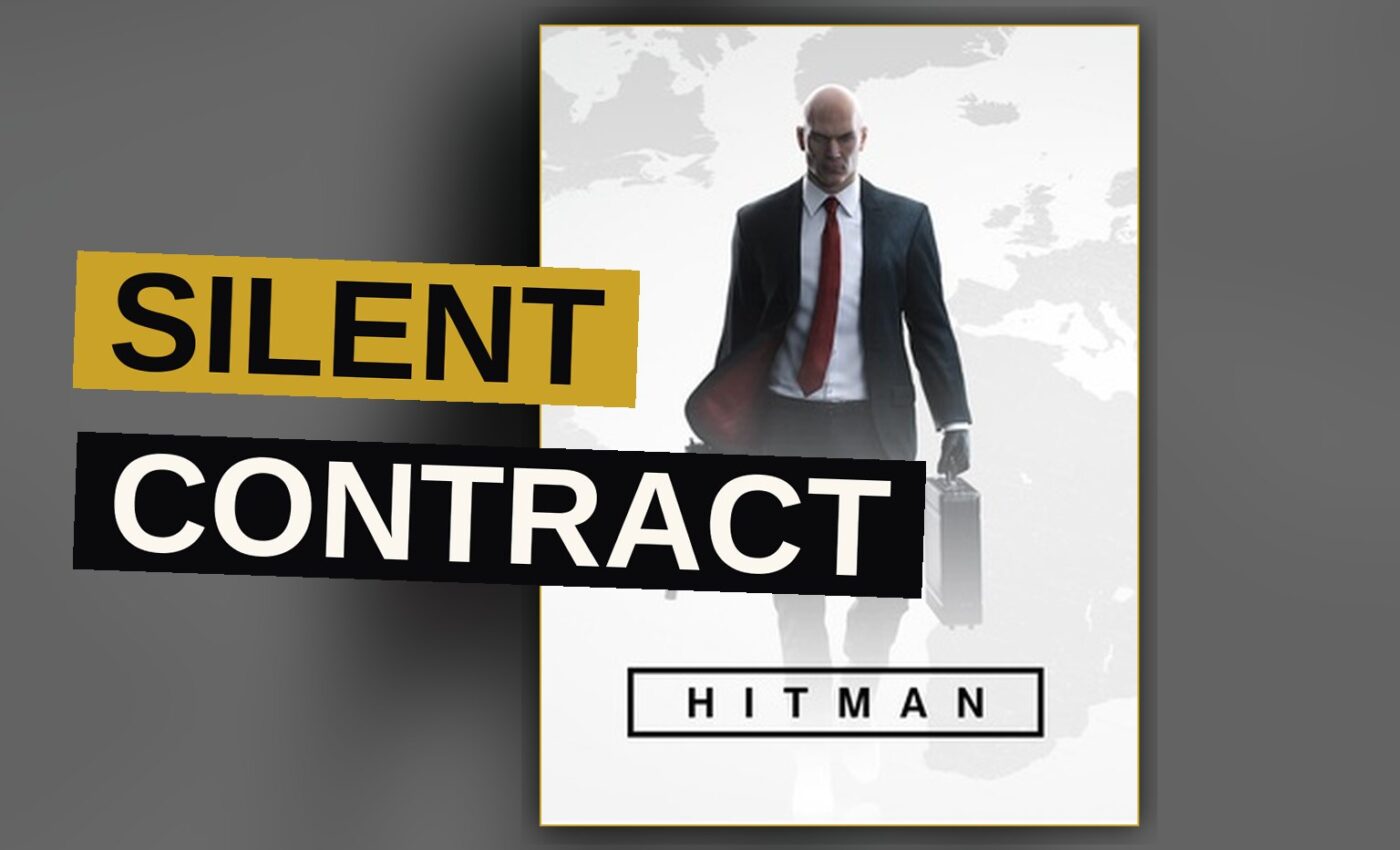
Hitman is a puzzle game wearing a trench coat and a red tie. That is the first thing to understand about the 2016 entry in IO Interactive’s long-running series, and it is the thing the game’s own developers have said outright. You play Agent 47, a genetically engineered assassin, and you kill people in large, open-ended sandboxes scattered across the globe. The shooting is not the point. The thinking is.
Paris, Sapienza, Marrakesh, Bangkok, Colorado, Hokkaido
The game shipped in six episodes, each set in one location: Paris, Sapienza, Marrakesh, Bangkok, Colorado and Hokkaido. Paris opens the run with a fashion event and a pair of targets. The second episode moves to the Italian town of Sapienza, the third to Marrakesh, and the fourth to Bangkok. Colorado and Hokkaido close the run. Each map is a self-contained sandbox you can freely explore, and each one hides a web of routines, restricted zones and scripted opportunities.
The structure matters because it changes how you play. You are not pushed down a corridor toward a boss. You are dropped into a working world and told to figure it out.
Disguises, chandeliers and a garrote wire
Agent 47 is vulnerable in a firefight, so the game pushes you away from open combat. You can carry explosives, pistols, assault rifles and long-range sniper rifles. You can also strangle a target with a specially equipped garrote wire, poison their food, or drown them in a toilet. The tools are varied, and the game rewards you for using the quiet ones.
Disguises are the core of the system. You knock out non-playable characters, take their clothes, and walk through areas that were closed to you a minute earlier. You eavesdrop on conversations to learn where a target will be and when. You tamper with the environment — a chandelier can be rigged to fall and kill someone standing beneath it. The game calls these scripted opportunities, and they require several steps to set up.
- Explosives, pistols, assault rifles and sniper rifles
- Bladed weapons and throwable items at close range
- The garrote wire for a silent kill
- Poisoned food or a drowning staged as an accident
- Environmental kills, including a rigged chandelier
A classless system that rewards patience
There is no class system here. You unlock new tools, starting locations, gear and agency pick-up points by completing challenges, and those challenges feed into a mastery level for each location. Kill a target in an unconventional way, find a unique item, reach a new area — all of it counts.
That design is what gives Hitman its length. A single map can absorb hours because the mastery track keeps handing you reasons to return with a different plan. The team envisioned the game as a service, and IO Interactive delivered new content in downloadable form over time. The episodic release was the delivery method, not a compromise.
The Shadow Client and the ICA
The story runs on two timelines. In 1999, an unnamed man is initiated into the International Contract Agency and shows exceptional aptitude as an assassin. The ICA cannot verify his background, which disturbs Erich Soders, the agency’s training director. Soders rigs a final test against the recruit. Diana Burnwood, his handler, helps him pass anyway. Soders approves him for field duty and washes his hands of it. The man tells Diana to call him “47.”
Twenty years later, in the game’s own story, 47 works through a series of contracts from Diana, now a senior figure at the ICA. The hits look unrelated. They are not. Diana slowly uncovers an unknown figure called the “Shadow Client,” who has been coordinating the contracts to strike at Providence, a secretive organization with hidden influence over global affairs. The Shadow Client uses the ICA and 47 as unwitting instruments, making the agency look responsible for attacks on Providence operatives while hiding his own hand. The game ends with a Providence representative approaching Diana to ask the ICA to deal with the Shadow Client.
It is a slow burn, and it is deliberately one. The plot is not the draw in the moment-to-moment play. It is the thread that pulls you from one map to the next.
What the 2016 Hitman gets right
The best thing about Hitman is that it trusts you. It hands over a large space, a target and a set of rules, then steps back. The developers refined the simulation and artificial intelligence of each level, and the result is a game where a plan falling apart is often better than the plan working.
The weaker part is the firefight. Agent 47 is meant to be fragile, and the game is honest about it, but in this reviewer’s judgment the shooting never feels like a real option so much as a punishment for getting caught. That is a design choice, and it is the right one for this series, but it does mean the action half of the “action and stealth” label is thin.
The episodic model also left a mark. Playing it as it shipped meant waiting between locations. In 2023 IO Interactive delisted the standalone version and consolidated the trilogy under a single package, Hitman: World of Assassination. That is the better way to play it now. The 2016 release is the first installment of the World of Assassination trilogy, and it is the successor to Hitman: Absolution. Following the under-performance of Absolution, IO Interactive returned to lead development, after Square Enix Europe had set up a Montréal studio for the next Hitman game.
What the 2016 Hitman proves is that the franchise’s oldest idea — give the player a world and a name — still works better than any scripted set piece. The maps are the argument. In this reviewer’s judgment, Paris and Sapienza in particular hold up as some of the strongest level design the series has produced, and the mastery system gives you a reason to keep pulling at them.
The score is 8 of 10.
Get the Notebook.
The day's best stories and every fresh verdict, in plain English, in your inbox by seven. One email a day, no more.