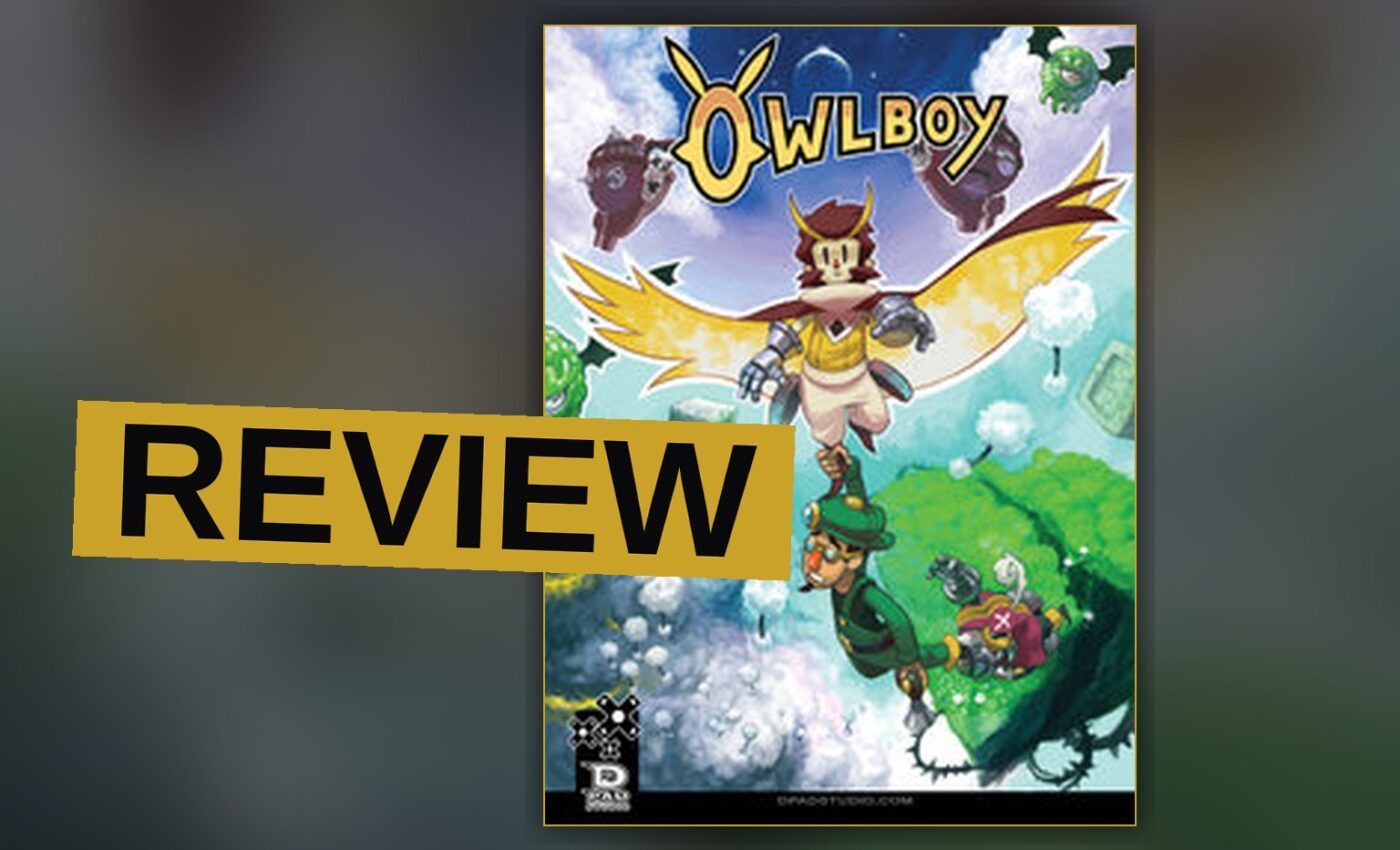
Owlboy is a game about carrying things. You carry a bird, a friend, a weight, a story. It is also a game about falling, and about getting up again.
The 2016 platformer from Norwegian studio D-Pad Studio landed on PS4, Linux, PC, and Mac to a warm critical embrace. The published critical score sits at 8.9/10, and that number feels earned. Owlboy is a deliberate, handcrafted thing, the product of a small team working for nearly a decade. It shows in every pixel, every animation frame, every quiet beat of its story.
The game follows Otus, a mute young owl. He lives on a floating island called Vellie, a place of wind and ruins, where the sky is a constant presence. The owls of Vellie are guardians, tasked with watching over the world below. Otus is not a natural guardian. He is clumsy, anxious, and overshadowed by his peers. But when pirates attack the island, Otus is thrust into a role he never asked for.
Trailer, via D-Pad Studio.
Flight, the Core Mechanic
Owlboy is, at its core, a game about verticality. Otus flies with a simple, satisfying glide. He can hover, dash, and carry objects — including his friends — through the air. The controls are tight, the physics generous. You will spend hours just moving through the world, feeling the wind push against you, learning the rhythm of flight.
The levels are built around this movement. You navigate crumbling towers, flooded caves, and storm-wracked ruins. Each area demands a different use of Otus’s abilities. One moment you are threading through narrow gaps, the next you are carrying a heavy crate across a chasm. The design is careful, never cruel. It trusts you to learn, and it rewards patience.
Combat is simple but effective. Otus can fire a blaster, but his real weapons are his companions. Each friend he carries has a distinct ability. One shoots straight, another fires in an arc, a third can break through barriers. You swap between them mid-flight, matching their shots to the enemies below. It is a clever system, one that keeps combat fresh without ever overcomplicating it.
Geddy and the Rest of the Cast
The story of Owlboy is carried by its small cast. Otus is silent, but his friends speak for him. Geddy is a loud, brash bird who joins early and never stops talking. He is the comic relief, but he is also the heart. His banter with Otus is the game’s emotional engine, a running dialogue that turns a simple adventure into a friendship.
The other companions are less developed. There is a heavy, slow-moving friend who serves as a battering ram, and a small, nimble one who can squeeze into tight spaces. Each has a moment to shine, but none matches Geddy’s presence. The game knows this. It gives Geddy the best lines, the most screen time, and the hardest emotional beats.
The villains are a mixed lot. The pirates who attack Vellie are cartoonish, almost comical in their menace. But the game’s later antagonists are more interesting, figures of tragic ambition and misplaced loyalty. The plot twists are predictable if you have played many games in this genre, but they land with weight because the characters have earned your care.
Handcrafted Pixels and Sound
The art direction is the game’s most striking feature. Owlboy uses a 16-bit style, but it is a style pushed to its limit. The sprites are detailed, the animations fluid, the backgrounds layered with depth. Each island is a distinct place, with its own palette and mood. Vellie is green and warm, a home you want to return to. The later areas are colder, more alien, but no less beautiful.
The music matches the visuals. The soundtrack is a mix of gentle melodies and soaring orchestral pieces, composed by Jonathan Geer. It knows when to sit back and let the silence speak, and it knows when to swell for a boss fight. The sound design is equally careful. The flapping of wings, the rustle of grass, the clank of machinery — every sound feels placed, intentional.
The game’s length is modest. A first playthrough runs about eight to ten hours, depending on how much you explore. There are collectibles to find, secrets to uncover, and a New Game Plus mode for those who want more. But Owlboy is not a game that pads itself. It tells its story, plays its levels, and ends. That restraint is part of its charm.
A Story About Silence
The narrative is where Owlboy either wins you over or loses you. It is a story about failure, about being told you are not enough, and about proving that wrong. Otus is a protagonist who cannot speak, and the game makes that silence meaningful. His struggles are communicated through posture, through action, through the reactions of others. It is a brave choice, and it mostly works.
The game’s themes are heavy. There is loss, sacrifice, and the burden of expectation. The ending, in particular, is a gut punch. It does not give you a clean victory. It gives you a complicated one, a victory that costs something. That is rare in a platformer, and it is why the game lingers in memory long after the credits roll.
But the story is not perfect. The pacing stumbles in the middle, with a stretch of levels that feel like filler. Some characters are introduced and dropped without ceremony. And the mute protagonist, while effective, can feel like a limitation. The game works around it, but you sometimes wish Otus could just say what he is thinking.
Nine Years of Development
The development history of Owlboy is part of its legend. The game was in development for nine years, a marathon that nearly broke its creators. The team at D-Pad Studio was small, and the project grew beyond their initial plans. They rebuilt the engine, redrew the art, rewrote the code. The result is a game that feels handmade, every frame a labor of love.
That craft is visible in the details. The way Otus’s scarf flutters in the wind. The way enemies react to a hit. The way the camera frames a dramatic reveal. These are small things, but they add up. Owlboy is a game made by people who cared, and that care is felt in every moment.
The game’s technical performance is solid. On PC, it runs smoothly at high frame rates. The PS4 version holds up well, with minimal loading times and no major bugs. The Linux and Mac versions are similarly stable. It is a well-tested game, a rarity in the modern era of day-one patches.
Where Owlboy Sits Among Peers
Owlboy sits in a crowded genre. It draws from classics like Super Mario Bros. 2 and The Legend of Zelda, but it also owes a debt to modern indies like Shovel Knight and Celeste. Where it differs is in its tone. It is not a pure action game, nor a pure puzzle game. It is a story-driven adventure that happens to be a platformer.
Compared to Shovel Knight, Owlboy is slower and more contemplative. It does not demand the same precision, but it asks for more patience. Compared to Celeste, it is less punishing, but also less focused. Celeste is a game about a single mountain; Owlboy is a game about a world. Both approaches are valid, but they serve different moods.
The game’s closest cousin might be Klonoa, a PlayStation classic that also paired a cute protagonist with a heavier story. Like Klonoa, Owlboy uses its platforming to tell a tale of friendship and loss. It is a lineage that suits it well.
A Fair Score, Honestly Earned
Owlboy is not a perfect game. Its pacing drags in places, its combat is simple, and its story relies on tropes you have seen before. But it is a game that succeeds at what it sets out to do. It makes you care. It makes you fly. It makes you feel the weight of the things you carry.
The 8.9/10 critical score is fair. It is a game above average, well above it, but not a masterpiece in every respect. It is a game you should play if you love the genre, if you love handcrafted art, if you love a story that tries to mean something. It is a game that respects your time and your intelligence.
It is also a game that knows when to end. That is a gift.
Key Facts
- Title: Owlboy
- Developer: D-Pad Studio
- Release Year: 2016
- Platforms: PS4, Linux, PC, Mac
- Genre: Action-adventure platformer
- Critical Score: 8.9/10
- Approximate Playtime: 8–10 hours
- Mode: Single-player only
Owlboy vs. Modern Indie Peers
| Feature | Owlboy | Shovel Knight | Celeste |
|---|---|---|---|
| Primary Focus | Story and flight | Precision platforming | Precision platforming |
| Protagonist | Mute owl (Otus) | Knight (Shovel Knight) | Madeline |
| Tone | Melancholic, warm | Playful, retro | Intense, personal |
| Combat | Companion-based ranged | Melee and item-based | None (pure platforming) |
| Difficulty | Moderate | High | Very high |
| Narrative Weight | Central and emotional | Light, episodic | Central and personal |
| Art Style | Detailed 16-bit | 8-bit retro | Pixel art, modern |
| Length | 8–10 hours | 6–8 hours | 8–10 hours |
Owlboy is a game you should not miss. It is a quiet triumph, a work of craft and care that stands tall among its peers.
Get the Notebook.
The day's best stories and every fresh verdict, in plain English, in your inbox by seven. One email a day, no more.