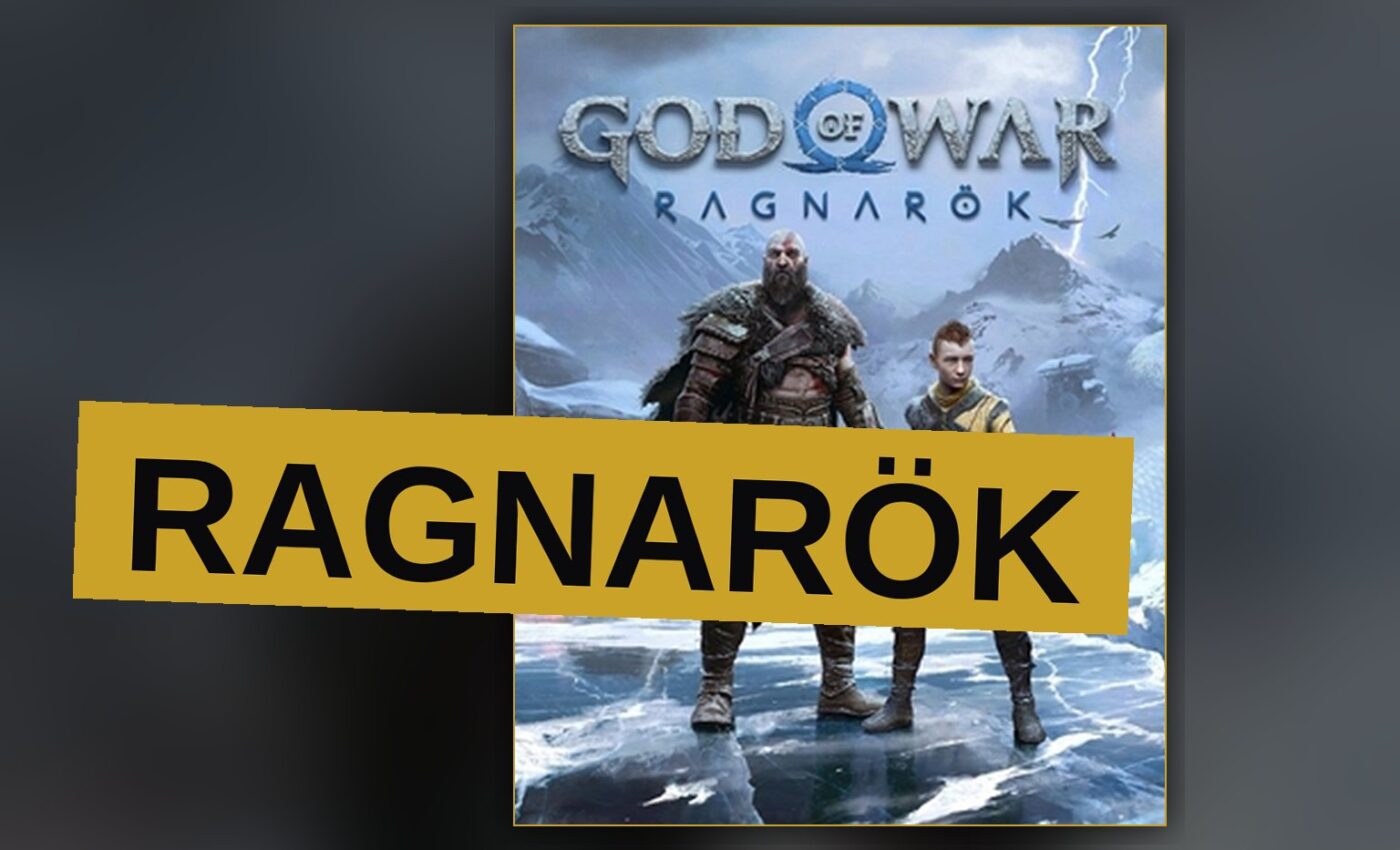
God of War Ragnarök ends the Norse saga that began with 2018’s reboot with a force both massive and intimate. Kratos and his son Atreus are back, and the end of the world is on the calendar. The game picks up roughly three years after the last one, with Fimbulwinter settling over the Nine Realms and Ragnarök looming.
The writing is sharper, the combat deeper, and the scale of what Santa Monica Studio has built difficult to overstate. This sequel understands what made its predecessor great and pushes every element further.
Trailer, via PlayStation.
The Weight of Prophecy
God of War Ragnarök is about trying to outrun a future that has already been written. Kratos has spent his life escaping the cycle of violence that defined his past, but prophecy keeps dragging him back. Atreus, older now, wrestles with his identity as Loki, the trickster god whose role in the coming apocalypse is supposedly fixed. If fate is real, does choice even matter?
The game handles this heavy theme with surprising grace. Kratos is no longer the rage-filled monster of the original trilogy; he is a father trying to teach his son a better way, even as the world demands he become a weapon again. Christopher Judge returns as Kratos, and his performance is the emotional anchor of the piece. Sunny Suljic returns as Atreus, and their dynamic has grown more complicated: they argue, misunderstand each other, and fight side by side.
The supporting cast is just as strong. Freya, voiced by Danielle Bisutti, is a grieving mother who blames Kratos for her son’s death, and her arc is among the game’s most compelling. Thor, voiced by Ryan Hurst, is a brutish, beer-bellied god of thunder far more interesting than his comic-book counterpart. Odin, voiced by Richard Schiff, is a manipulative patriarch who speaks in soothing tones while plotting your ruin. The voice work is excellent, and the motion capture brings every character to life with startling fidelity.
A World at War
The Nine Realms are bigger and more varied than ever. The game is not a true open world but a collection of large, interconnected spaces that reward exploration. Midgard is frozen and dying, a ghost of the realm you knew last game. Svartalfheim, realm of the dwarves, is a sprawling, industrial, grimy mining operation. Vanaheim, realm of the Vanir gods, is a lush jungle hiding ancient secrets. Alfheim, realm of the elves, is a desert of golden sand. Helheim is as cold and miserable as you would expect.
Each realm has its own visual identity, and the art direction is stunning. The game runs on a modified version of the 2018 entry’s engine, with the level of detail turned up considerably. Light filters through trees, snow drifts across frozen lakes, and combat particle effects are spectacular. On PS5, a performance mode targets 60 frames per second and mostly holds it; a quality mode targets 4K resolution at 30 frames per second, the better option for staring at the scenery.
The side content is worth your time. The Favor system returns, and many side quests have real narrative weight. One of the best involves a lost dragon you can free; another sends you hunting a spectral bear. The Berserker Gravestones, optional boss fights, will test your skills. These are not filler — they flesh out the world and its characters, and some are more memorable than the main story missions.
Combat That Cuts Deep
The combat is an evolution of the 2018 system and one of the best action-game combat systems ever made. Kratos wields the Leviathan Axe and the Blades of Chaos, and both feel distinct. The axe is slow and heavy, thrown and recalled with a press of a button; the blades are faster, cover more ground, and are perfect for crowd control. You can switch between them on the fly, and the game encourages using both in the same fight.
New is the Draupnir Spear, which adds a third dimension to combat. It can be thrown and detonated remotely, opening new strategies against armored enemies, and its moveset feels completely different from the other two weapons. The game gives you a lot of tools and expects you to use them.
The enemy design is top-notch. The basic draugr are back, joined by new foes like the Einherjar, Odin’s elite soldiers, who are fast, aggressive, and punishing if you get sloppy. The boss fights are the real highlight. Thor is a brutal brawler who hits like a truck, and his first fight with Kratos is a cinematic set piece that rivals anything in the series. The fight against the goddess Gná is a pure endurance test that will push your skills to the limit.
Atreus gets his own playable sections, a welcome change of pace. He uses a bow and magical abilities, and his combat feels lighter and more agile than Kratos’s. These sections are shorter but offer a new perspective on the world and its monsters.
The Sound of the End
The music is composed by Bear McCreary, who also scored the 2018 game, mixing Nordic choral arrangements, heavy percussion, and emotional string work. The main theme, “God of War Ragnarök,” is a rousing piece that sets the tone for the adventure. The soundtrack is available on streaming services and worth a listen on its own.
The audio design is just as impressive. The clang of the Leviathan Axe against a shield, the hiss of the Blades of Chaos, and the roar of a dragon all sound incredible. The game makes excellent use of the DualSense controller’s haptic feedback on PS5: you feel the tension in the bowstring as Atreus draws an arrow, and the impact of every hit in combat. It adds a lot to the experience.
A Story That Lands
The plot is long: around 30 to 40 hours if you mostly stick to the main path, and easily 60 hours if you want to do everything in the Nine Realms. The pacing is excellent — the game never drags and always gives you something new to do or see. The story builds to a climax both surprising and earned, ending on a note that feels like a true conclusion to this chapter of Kratos’s life.
The game does not shy away from its darker themes — grief, guilt, and the weight of legacy — but also has moments of genuine warmth. A scene early in the game where Kratos and Atreus share a quiet moment by a fire is one of the most moving things in the entire series. The game understands these characters are people, and treats them with respect.
The Final Blow
God of War Ragnarök is a masterpiece: a technical marvel, a narrative triumph, and a combat showcase all in one. It improves on its predecessor in almost every way, and delivers a conclusion that honors the journey that came before it. If you own a PlayStation 4 or PlayStation 5, or a PC, this is a game you need to play.
Hard Numbers
- Game: God of War Ragnarök
- Platforms: PS4, PS5, PC
- Release Year: 2022
- Developer: Santa Monica Studio
- Playtime: Roughly 30-40 hours for the main story; up to 60+ hours for completion
- Critical Score: 9.5/10
Get the Notebook.
The day's best stories and every fresh verdict, in plain English, in your inbox by seven. One email a day, no more.