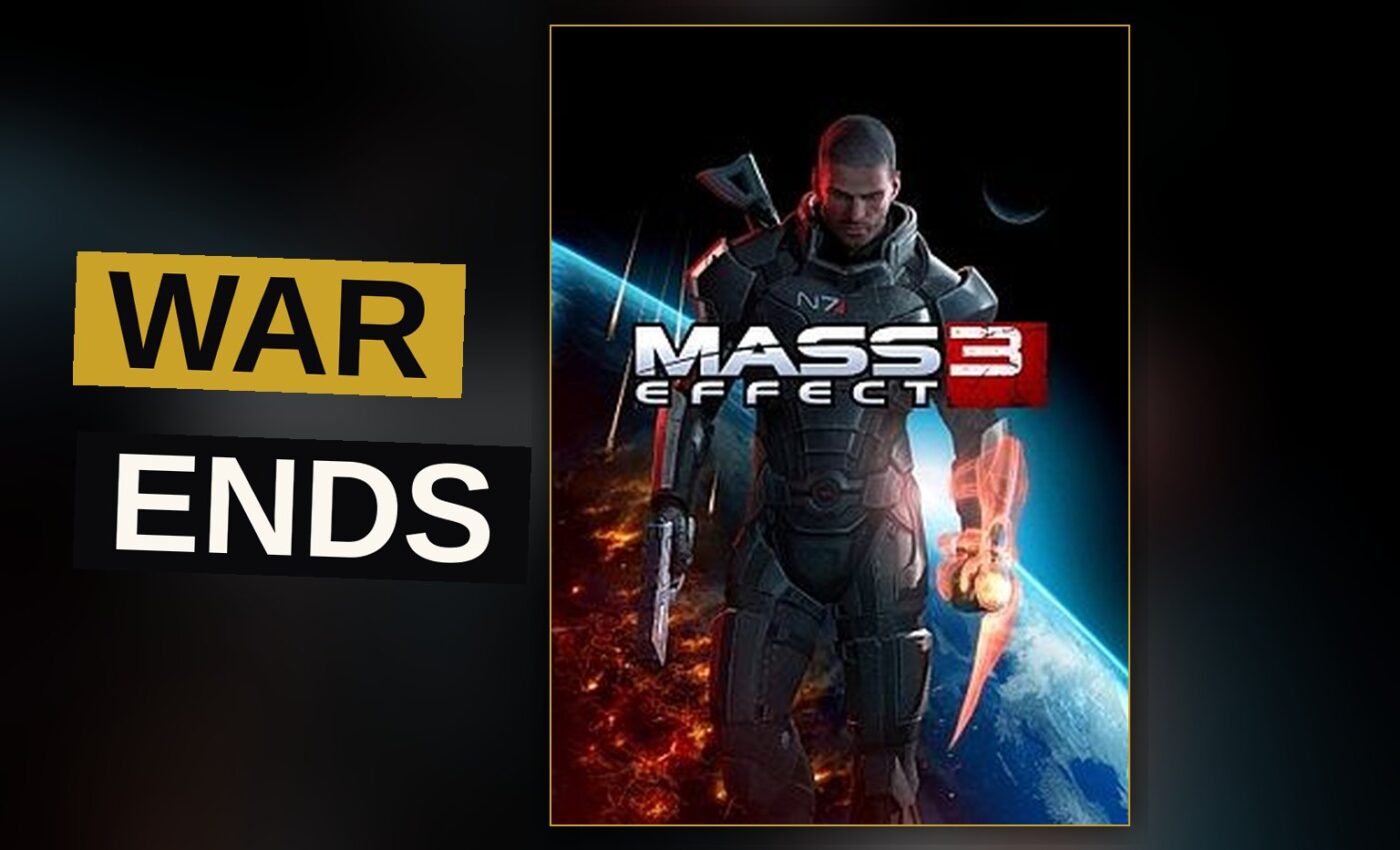
Mass Effect 3 closes the trilogy with a war that finally feels like war. The Reapers have arrived in force, and Earth is burning in the opening minutes. Commander Shepard is no longer chasing a mystery but leading a desperate retreat, and the game wastes no time making that clear.
The change in tone is immediate. Where Mass Effect 2 opened with a ship being destroyed, Mass Effect 3 opens with a child running from a city under siege. It is grim, direct, and effective. The galaxy is not being threatened anymore. It is being consumed.
The Weight of Every Choice
The game’s central mechanic is readiness. Every side mission, every conversation, every old friend you contact feeds into a war asset score. This is not a subtle system. The game tells you, plainly, that your chances of victory depend on how many people you have convinced to fight beside you.
What makes it work is that the game remembers. A character you saved in Mass Effect 2 shows up with a fleet. A decision you made in the first game changes who is alive to help you now. The game is built on the assumption that you have played the previous entries, and it rewards that investment with constant callbacks.
- The genophage cure on Tuchanka is a moral hammer blow
- The quarian and geth conflict forces you to pick a side
- The Citadel coup reshapes the political landscape
- The final run to the beam is a gauntlet of everything you have done
Each of these threads is a full mission arc with its own cast, its own stakes, and its own ending. None of them feel like filler. They feel like the payoff of a decade of storytelling.
Combat That Finally Works
The gunplay in Mass Effect 3 is the best the series has seen. Shepard moves faster, the cover system is more forgiving, and the powers combine in ways that feel genuinely tactical. Biotic combos are a real thing now. You can set an enemy on fire and then detonate that fire with a shockwave.
The enemy variety helps too. The Reaper forces are more than just the same husks and collectors. You get Brutes, Banshees, and Ravagers, each demanding a different response. A Banshee teleports and screams. A Brute charges. The game forces you to keep moving and keep thinking.
Weapon mods are back, and the weight system means you can carry a sniper rifle and a pistol without slowing your cooldowns. It is a small thing, but it opens the door to more interesting builds. The combat is no longer a chore between story beats. It is a pleasure on its own.
A Galaxy Worth Saving
The writing is where Mass Effect 3 earns its place. The conversations are tighter, the performances are stronger, and the emotional beats land harder. Garrus and Tali feel like old friends, not quest givers. Mordin Solus gets a moment that is rightfully considered one of the best in the series.
The game also gives you a hub that matters. The Citadel is busier, more alive, and full of small moments. You can overhear a soldier talking to his wife. You can find a salarian trying to sell you a fish. These are small touches, but they make the galaxy feel inhabited.
The voice acting is uniformly excellent. Jennifer Hale and Mark Meer both deliver a Shepard that carries the weight of command. The supporting cast, from Keith David’s Anderson to Martin Sheen’s Illusive Man, is superb. The Illusive Man in particular is a far more interesting antagonist here, and his scenes are some of the best in the game.
The Ending Problem
It would be dishonest to ignore the ending. The final minutes of Mass Effect 3 were controversial at launch, and they remain debated today. The game presents a choice, and that choice is more abstract than the personal, character-driven conclusions many players expected.
The extended cut, released later, adds context and closure. It does not change the fundamental structure, but it does soften the abruptness. As it stands now, the ending is ambitious and thematically consistent, even if it is not what everyone wanted.
The journey matters more than the destination. That is not an excuse. It is a description of how the game actually plays. The last hour is a letdown for some, but the forty hours before it are not.
The Sound of War
The score by Sam Hulick and Clint Mansell deserves mention. The main theme, “Leaving Earth,” is a mournful piano piece that sets the tone immediately. The combat tracks are driving and tense. The music never overpowers the scene, but it always supports it.
The sound design is equally strong. The Reaper horn is iconic. The chatter of your squadmates in combat feels natural. The game sounds expensive, and it shows.
A Flawed Masterpiece
Mass Effect 3 is not perfect. The side quests on the Citadel can feel like busywork. The scanning minigame is tedious. The ending divides opinion. But the core of the game, the story of Shepard rallying the galaxy against extinction, is executed with skill and confidence.
It is a game that respects your time and your history with its world. It asks you to make hard calls and then shows you the consequences. It is a worthy conclusion to one of the most important trilogies in the medium.
If you have played the first two games, you owe it to yourself to finish this one. If you have not, start at the beginning. The payoff is worth the journey.
Mass Effect 3 is a 9.1/10.