
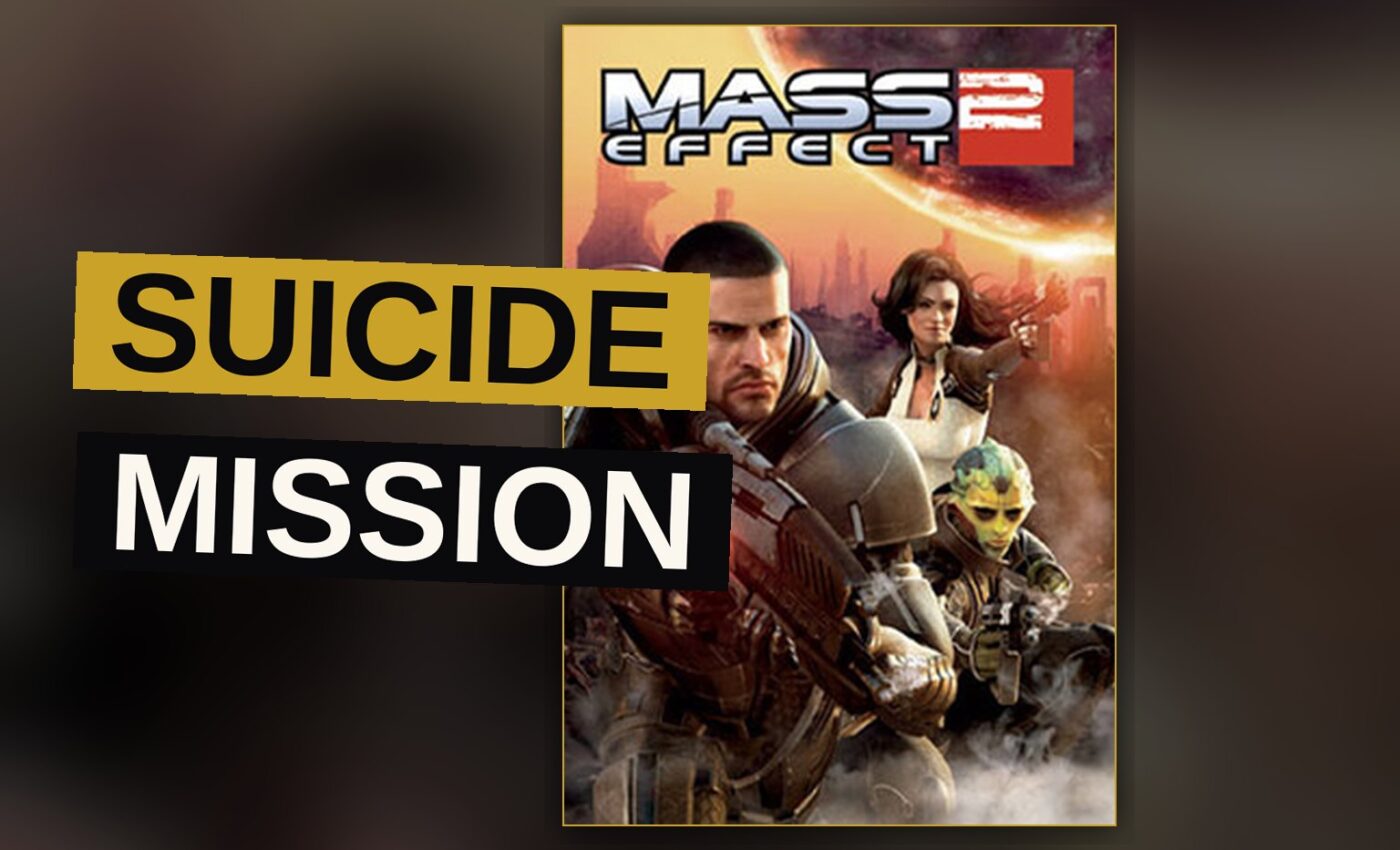
Mass Effect 2 opens with Commander Shepard dead. BioWare spends the rest of the game earning that back — then asks the player to risk everything on a suicide mission against the Collectors.
BioWare developed the game; it was published by Microsoft Game Studios and Electronic Arts. It came out for Windows and Xbox 360 in January 2010, with a PlayStation 3 version the following year. It is the second Mass Effect, a sequel to the original, and it is the best thing the series ever did.
The Collectors and Cerberus
Two years after Shepard repelled the Reapers, entire human colonies start vanishing on the fringes of known space. The culprits are the Collectors, an insectoid alien race working on behalf of the Reapers — the machine starships believed to wipe out organic civilization every 50,000 years.
To stop them, Shepard must work with Cerberus, a human supremacist group that justifies illegal experimentation and terrorist activity in the name of human advancement. That alliance is the game’s sharpest idea. The people helping you save humanity are the people you would otherwise be hunting.
A Galaxy of Races and One Suicide Mission
The Milky Way of the 22nd century runs on Mass Relays, transit devices believed to have been built by the extinct Protheans. The Citadel Council keeps order among humans, asari, salarians and turians. Around them sit the reptilian krogan and drell, the environmental-suited quarians, and the geth, a networked artificial intelligence that tried to open a portal for the Reapers in the first game.
Shepard’s job is to assemble the galaxy’s most elite team and command its most powerful ship. The pitch is simple and the game never lets you forget it: even then, they say it would be suicide.
- Six character classes, each tied to different powers and weapons
- Squad Points spent on four ranks per power — one point for rank one, ten for all four
- A new inventory system for near-instant weapon swaps
- Improved health regeneration that cuts time spent hunting restorative items
- Prompt-based actions that let Shepard interrupt conversations mid-sentence
Interrupting Conversations, Changing Fates
That last bullet is the whole design in miniature. BioWare moved away from the original’s exclusive focus on the main story, so optional missions carry the same intensity as the critical path. The interrupts are the best expression of it: a prompt flashes, you take it, and the fate of your crew — or the galaxy — shifts.
Jack Wall returned to score Mass Effect 2, aiming for a darker, more mature sound. He got it. The music matches a game that opens with your hero’s death and closes with a team you may not bring home.
Combat got the third-person shooter treatment: limited ammunition, regenerable health, and classes that actually play differently. The Vanguard lives in close range with shotguns. The Infiltrator hides and snipes. Importing a completed save from the original carries your decisions forward and hands you starting bonuses.
What the Recruitment Structure Buys
Mass Effect 2 is the rare sequel that fixes everything without losing what made the first one worth playing. The recruitment structure — find them, earn their loyalty, then risk them — turns a roster into a story. BioWare built a game where the diplomacy matters as much as the shooting, and where the shooting finally feels good enough to carry its half.
The Collectors are a thinner villain than the Reapers looming behind them, and the game knows it. That is a small complaint against a large achievement. Mass Effect 2 is the high point of the series and one of the best role-playing games of its decade.
Key facts
- Release: January 2010 (Windows, Xbox 360); PlayStation 3 the following year
- Developer: BioWare
- Publishers: Microsoft Game Studios, Electronic Arts
- Platforms: PC, PlayStation 3, Xbox 360
- Mode: single player, third person
- Score: 9.6 of 10
Get the Notebook.
The day's best stories and every fresh verdict, in plain English, in your inbox by seven. One email a day, no more.


