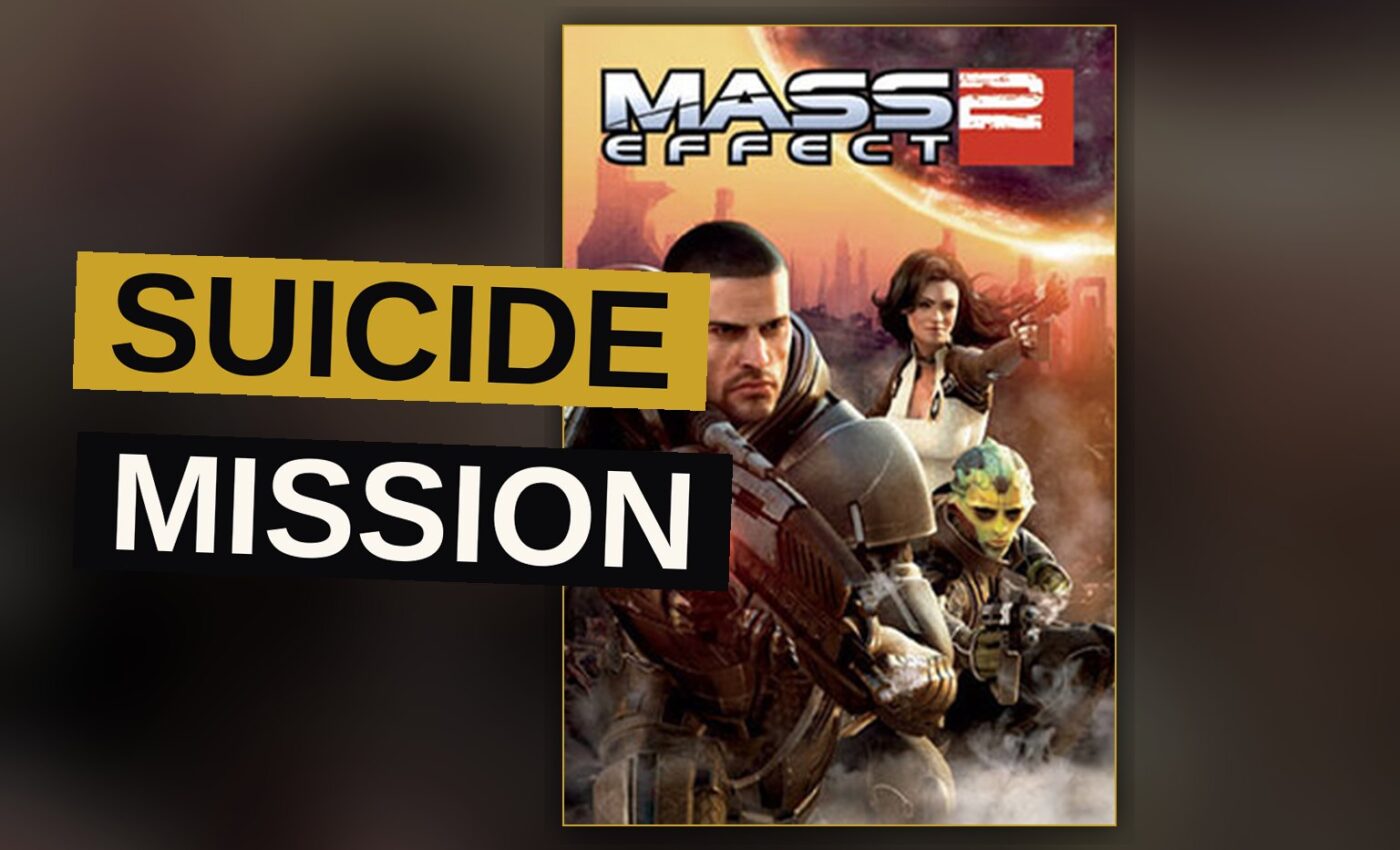
Mass Effect 2 is the rare sequel that takes everything its predecessor built and throws most of it away. Commander Shepard is dead in the opening minutes, the Normandy is destroyed, and the galaxy is facing an extinction-level threat that most people refuse to believe exists. BioWare responded to criticism of the first game’s clunky inventory and repetitive planets by cutting them entirely, replacing them with a tighter, more personal story about assembling a team of misfits and earning their loyalty one by one. The result is a game that trades the first entry’s sweeping exploration for something leaner, meaner, and far more memorable.
Death at the Start
The game begins with a cold open that does not mess around. The Normandy is ambushed by an unknown vessel, the crew is scattered, and Shepard is blown out of the ship’s hull into the vacuum of space. It is a bold choice to kill your protagonist in the first ten minutes, and it works. The resurrection plot that follows — courtesy of the shadowy Cerberus organization and its enigmatic leader, the Illusive Man — sets the tone for a story that is willing to take risks.
Martin Sheen voices the Illusive Man with a calm, silky menace that makes every conversation with him feel like a chess match. His eyes glow, his cigarettes burn, and his motives stay murky throughout. The game never fully answers whether Cerberus is right about the coming Reaper invasion, and that ambiguity is a feature, not a bug.
The character creation system returns, and it is as robust as ever. You can import a save from Mass Effect 1 to carry over your choices, and those choices ripple through the story in meaningful ways. A decision you made about the fate of a council in the first game will come back to haunt you here. That continuity is a gift to players who invested in the original.
Recruiting the Misfits
The heart of Mass Effect 2 is its squad. You recruit twelve companions across the galaxy, and each one has a personal mission that unlocks their loyalty — and often their survival. The cast is a rogue’s gallery of the galaxy’s most interesting people. There is a genetically engineered super-soldier with a god complex, a salarian scientist with a speech impediment and a dark secret, and a quarian engineer who is allergic to everything and brilliant at everything else.
The standout is Mordin Solus, the salarian who talks faster than he thinks and sings Gilbert and Sullivan while performing surgery. His loyalty mission forces you to confront the consequences of his past work, and it is one of the best-written sequences in the game. Another highlight is Jack, a volatile biotics user with a history of abuse that she has turned into a weapon. Her mission is raw and uncomfortable, and the game does not flinch.
Every companion has a loyalty mission, and completing them is not optional if you want to see the ending. The game makes this clear through its final act, which is built around the Normandy’s crew surviving a suicide mission. If you did not earn your squad’s loyalty, they will die. If you picked the wrong team for the wrong job, they will die. The stakes are real, and the game does not pull its punches.
The Suicide Mission That Delivers
The final mission is the best thing Mass Effect 2 does. It is a multi-stage assault on a Collector base, and it requires you to assign your squad to specific tasks based on their skills. Pick the wrong person for the tech specialist role, and they die. Send the wrong leader for the second fireteam, and they die. It is a tense, hour-long sequence that rewards attention and punishes carelessness.
The mission also makes the game’s central theme explicit. Shepard is not a hero because of their guns or their powers. They are a hero because they brought the right people together and trusted them. The game’s ending varies dramatically based on your choices, and it is possible to lose almost everyone — including Shepard. That sense of consequence is rare in video games, and it is why Mass Effect 2 is still discussed 16 years later.
The final boss fight is a letdown. It is a giant humanoid Reaper that you shoot until it dies, and it lacks the tactical depth of the missions that precede it. But the emotional weight of the sequence carries it. When the credits roll, you feel like you earned the ending you got.
Combat That Actually Works
The first Mass Effect had a shooting model that felt like a compromise. Mass Effect 2 fixes it. The game plays like a cover-based third-person shooter, with a heavy emphasis on positioning and squad powers. The weapons have weight, the enemies have clear tells, and the difficulty curve is fair. The ammo system was replaced with a thermal clip system that forces you to manage reloads, and it makes every encounter feel more urgent.
Each class plays differently. The Vanguard can teleport across the battlefield and shotgun enemies in the face. The Infiltrator can cloak and snipe from range. The Adept can lift enemies into the air and detonate them with biotic explosions. The game encourages you to experiment, and the squad powers mean you can build a team that covers your weaknesses.
The enemy variety is better too. The Collectors are a genuinely unsettling threat, with a design that suggests they were once humanoid. The husks they spawn are fast and dangerous, and the game’s boss fights — the human Reaper aside — are memorable set pieces. The final confrontation with the Collector General is a satisfying capstone.
Normandy as a Home Base
Between missions, the Normandy serves as your base of operations. It is a small ship, but it feels lived in. Your crew wanders the corridors, and you can talk to them between missions. Those conversations are where the game does its best character work. You learn about Garrus’s vigilante past, Tali’s exile from her people, and Liara’s transformation from shy archaeologist to ruthless information broker.
The ship also has a research terminal where you can upgrade your weapons, armor, and ship systems. These upgrades are not cosmetic. If you do not upgrade the Normandy’s shields, armor, or cannons, the ship will be destroyed during the final mission. The game makes this explicit, and it is a clever way to tie resource management into the narrative.
The music, composed by Jack Wall, is a highlight. The main theme is a pulsing, synth-heavy anthem that fits the game’s tone perfectly. The suicide mission track, with its driving percussion and choir, elevates an already tense sequence into something operatic.
Mako Gone, Scanning In
The first game’s Mako — a bouncy, unwieldy land vehicle used for exploring empty planets — is gone. In its place is a planet-scanning minigame that lets you find resources by firing probes at planets. It is not exciting, but it is faster than driving across a barren landscape. The trade-off is acceptable. The game’s side missions are fewer, but they are handcrafted and more interesting than the first game’s randomly generated bases.
The game’s DLC is worth mentioning. Lair of the Shadow Broker is an excellent addition that continues Liara’s story. Arrival sets up the events of Mass Effect 3. Overlord is a creepy side story about artificial intelligence. All three are worth playing if you can find them.
| Feature | Mass Effect 1 | Mass Effect 2 |
|---|---|---|
| Inventory | Clunky, item-heavy | Removed entirely |
| Planet exploration | Mako driving on empty worlds | Probe scanning |
| Combat feel | Compromise shooter | Tight cover-based shooter |
| Squad size | 6 companions | 12 companions |
| Final mission | Straightforward assault | Multi-stage suicide mission with permadeath |
The Score
Mass Effect 2 is not a perfect game. The final boss is weak, the planet scanning is tedious, and the Cerberus plotline raises questions the game never fully answers. But the core experience — recruiting a team, earning their trust, and leading them through a suicide mission — is unmatched. The game respects your time, respects your choices, and respects your intelligence.
The game was released in 2010 for PS3, PC, and Xbox 360. It is still the high-water mark for the series and for BioWare as a studio. The studio has not made a game this confident since.
The score is 9.6 out of 10.
Get the Notebook.
The day's best stories and every fresh verdict, in plain English, in your inbox by seven. One email a day, no more.