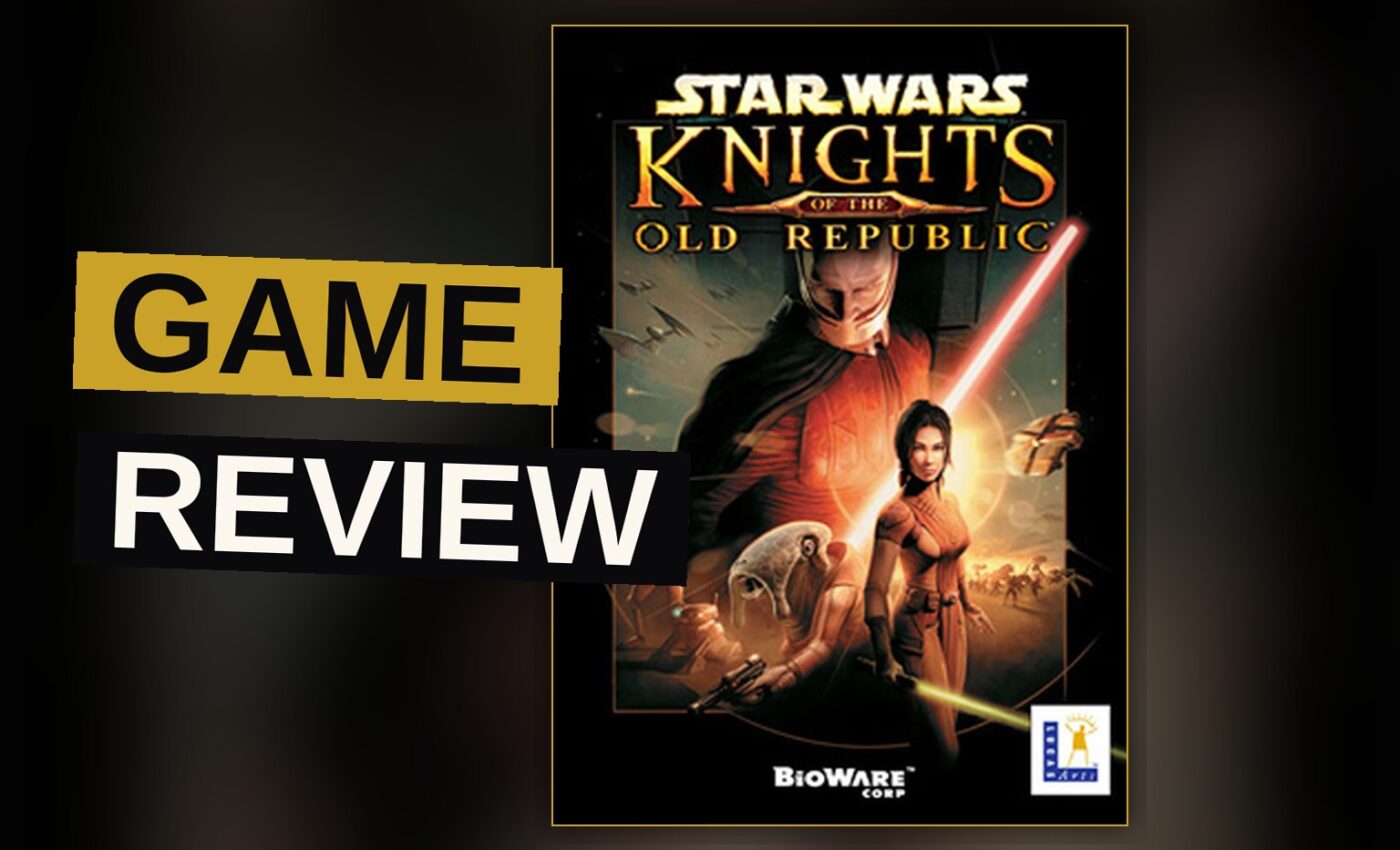
Star Wars: Knights of the Old Republic is a game about choice, and it earns every one of its decisions. Released in 2003 for the original Xbox and later ported to PC, iOS, and Android, it remains the gold standard for what a Star Wars role-playing game can be. It is a game that trusts the player with immense power, then asks what they will do with it.
The story opens four thousand years before the rise of the Empire, a time when the Jedi Order is fractured and the Sith, led by the dark lord Darth Malak, wage open war across the galaxy. You play as a soldier, a scout, or a scoundrel, waking aboard a Republic vessel under attack. The narrative is the work of BioWare, the studio behind Baldur’s Gate, and it shows in every conversation tree and moral fork.
Revan’s Hidden Truth
The central mystery of Star Wars: Knights of the Old Republic is its greatest weapon. The game spends dozens of hours building a cast of companions, a war, and a personal quest before it reveals the truth about your character. That revelation recontextualizes everything you have done. It is a twist that has been imitated countless times since, but rarely with this much craft.
Your companions are the heart of the journey. Carth Onasi is the Republic pilot who lost his family and carries the burden of his betrayed homeworld. Bastila Shan is the Jedi who wields the rare power of Battle Meditation. HK-47 is a murderous assassin droid who refers to organics as “meatbags” and delivers some of the funniest lines in the game. Each character has a personal quest that unfolds as you travel, and each one reacts to your moral alignment. Play as a paragon, and they will trust you. Fall to the dark side, and they will turn on you.
The game’s morality system is not a simple meter. Choices ripple outward. You can talk a slaver out of his ways or cut him down. You can give a widow the truth or a lie that spares her pain. The game rewards both paths with different dialogue, different endings, and different companion reactions.
Swoop Races and Taris
The game opens on Taris, an urban planet of towering skyscrapers and a brutal class divide. It is a slow burn, a tutorial that hides its lessons inside a murder investigation and a swoop race. The lower city is a warren of gangs, the upper city is a gilded cage, and the whole planet ends in a desperate escape from a Sith bombardment.
Taris is where the game teaches you its systems. Combat is a hybrid of real-time and turn-based mechanics, drawn from the rules of Dungeons & Dragons. You pause the action, issue orders, and watch the dice roll behind the scenes. It is not a twitch shooter, and it never pretends to be. The game wants you to think, to position your party, and to use your abilities with care.
The planet also introduces you to the game’s economy of light and dark. Early on, you meet a woman whose husband has been killed by the Sith. You can comfort her or exploit her grief. You can help a wounded soldier or leave him to die. The choices are small, but they set the tone for the entire game.
Building a Lightsaber on Dantooine
After Taris, the game opens up. You are taken to the Jedi enclave on Dantooine, a grassy world of rolling plains and ancient ruins. Here, you are trained in the ways of the Force, and you build your first lightsaber. It is a moment of pure wish fulfillment, the point where the game stops being a story about a soldier and becomes a story about a Jedi.
The training sequences are short but meaningful. You learn the basics of Force powers, from Push to Lightning, and you choose your path. The game does not lock you into a class at the start; it lets you evolve. A scoundrel can become a Jedi Consular. A soldier can become a Jedi Guardian.
Dantooine also introduces the game’s crafting systems. You can build your own lightsaber, upgrade your armor, and create items from salvaged parts. The systems are simple by modern standards, but they give you a sense of ownership over your equipment.
The planet ends with a choice that defines the game’s second half. You are sent to find an ancient Star Map, and the trail leads you across four worlds: the desert planet Tatooine, the ocean world Manaan, the jungle world Kashyyyk, and the industrial world Korriban. Each world is a self-contained adventure with its own cast, its own moral dilemmas, and its own path to the Star Map.
Sith Academy on Korriban
Korriban is the Sith homeworld, and it is the game’s darkest chapter. The planet is a tomb world, a place where the dark side of the Force is thick in the air. The Sith Academy at the top of the valley is a pit of ambition and betrayal, and the game lets you play it as a double agent, a true believer, or a saboteur.
The quests on Korriban are some of the game’s best. You can poison a rival, sabotage a trial, or help a student escape the Academy’s grasp. The game does not judge you, but it remembers. The companions who watch you act will react.
The final act of the game takes you to the Star Forge, a vast space station that has been corrupted by the dark side. The dungeon is long, the enemies are tough, and the ending depends entirely on your alignment. The game gives you a final choice, one that determines whether you save the Republic or rule it. You have spent forty hours becoming the person who makes that choice.
Enduring Legacy
Star Wars: Knights of the Old Republic was a commercial and critical success when it launched, and it has aged remarkably well. The graphics are dated, and the combat can feel clunky to modern players, but the writing and the structure hold up. The game has been ported to every major platform since its release, and it remains a touchstone for the genre. It spawned a sequel, a remake that has been in development for years, and a legion of fans who still quote HK-47’s lines.
The game’s greatest achievement is its sense of consequence. Every conversation, every side quest, every moral choice feeds into a larger narrative that respects your input. It is a game that rewards patience and punishes carelessness.
“Meatbags.”
That single word, delivered by HK-47, captures the game’s dark humor and its willingness to let characters be strange and memorable.
Final Score
Star Wars: Knights of the Old Republic is not perfect. The combat is slow, the graphics are old, and some of the voice acting has not aged well. But those flaws are minor next to the strength of the story, the depth of the characters, and the weight of the choices. It is a game that has earned its reputation, and it remains essential playing for anyone who loves Star Wars or role-playing games.
Hard Numbers
- Release date: 2003 (Xbox)
- Developer: BioWare
- Publisher: LucasArts
- Platforms: Xbox, PC, iOS, Android
- Setting: Four thousand years before the original Star Wars films
- Combat: Real-time with pause, based on Dungeons & Dragons rules
- Critical score: 9.4/10