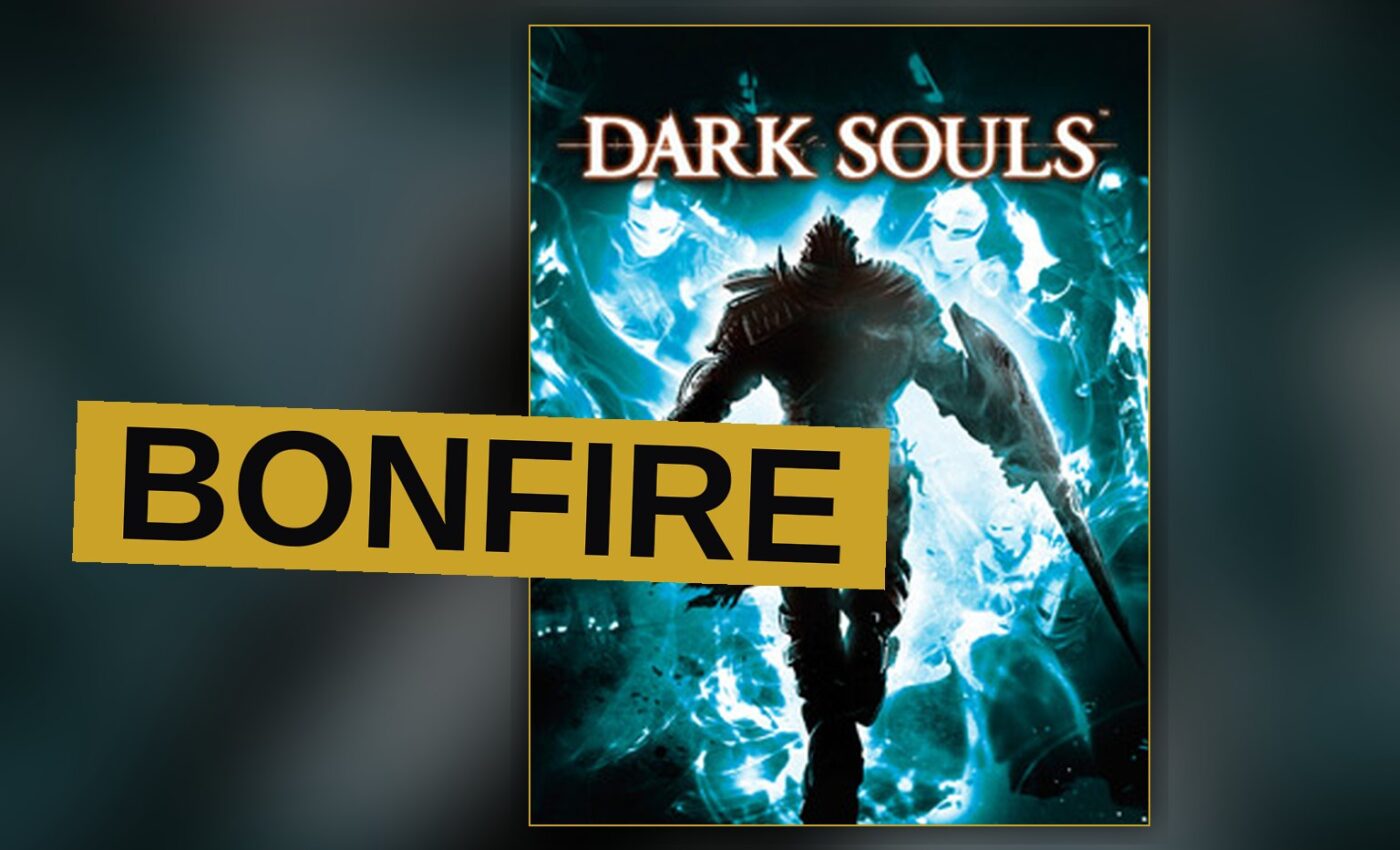
It is hard to think of a game that has been discussed more, and understood less, than Dark Souls. FromSoftware’s 2011 action-RPG was a cult hit on release, and it has since become a template for an entire genre of imitators. Players describe it in hushed, reverent tones, as if it were a trial to be endured rather than a piece of entertainment to be enjoyed.
The truth is that Dark Souls is both of those things. It is a brutal, unforgiving gauntlet that punishes every mistake, and it is a masterwork of level design, atmosphere, and quiet storytelling. It respects your intelligence, assumes your competence, and then breaks you anyway. This is a masterpiece.
Trailer, via Bandai Namco Entertainment America.
The Asylum and the First Bell
The game opens with your character, an Undead, locked in a cell in the Northern Undead Asylum. A knight in golden armor throws a corpse through the bars, and on that corpse is a key. You are told to escape, and you are given almost no other instruction. There is no quest marker, no map, and no tutorial beyond a few floating messages left by other players.
You fight the Asylum Demon, the tutorial boss, and you will likely die. That is the point. Death is not a failure state but a mechanic. When you die, you lose your souls — the currency for leveling and buying items — and you respawn at the last bonfire you rested at. If you make it back to the spot where you died without dying again, you recover those souls. If you die on the way, they are gone forever.
This system creates tension out of every step. The first time you ring the Bell of Awakening, you will have fought through the Undead Parish, survived a dragon’s breath, and beaten a knight in a church tower. The accomplishment feels real because the challenge was real.
Lordran’s Interconnected Map
The level design keeps players talking. Lordran, the world of Dark Souls, is a single, interconnected space. You can stand on a bridge and see the area you will be exploring hours later. Shortcuts are not conveniences; they are revelations. Opening a gate that leads back to a bonfire you left two hours ago produces a genuine thrill.
The game does not fast travel until late in the story. For most of your time, you walk. You learn the layout the way you learn your own neighborhood. You know which corners hide ambushes, which corridors have traps, and which doors are worth opening. This is not a game you play so much as a place you inhabit.
Enemies range from hollowed soldiers to giant rats to knights in black armor. The bosses are the highlights. The gargoyles on the church roof, the gaping dragon in the depths, and the knight Artorias in the DLC all offer distinct challenges. Each requires you to learn a pattern, and each punishes greed. The game rewards patience and observation, not reflexes.
Story Hidden in Item Descriptions
Dark Souls does not tell you its story. There are no cutscenes that explain the lore, and the few characters you meet speak in riddles. The plot — about a fading flame, a curse of the undead, and a cycle of linking the fire — is delivered through item descriptions, environmental details, and the occasional cryptic line of dialogue.
This approach frustrates some players and delights others. It is a story you piece together yourself, and it rewards those who read every description and talk to every NPC. The narrative is not the point, though. The point is the experience of moving through this decaying, beautiful world. You are a small, insignificant creature in a land that has already ended, and your actions feel both meaningless and vital.
The art direction is stunning. The game is not technically impressive by modern standards, but the visual design is timeless. The sunlit kingdom of Anor Londo, the poisoned swamps of Blighttown, and the ash-covered ruins of the Kiln of the First Flame all look like paintings. The music, when it appears, is sparse and effective. The sound of a bonfire lighting is one of the most comforting sounds in gaming.
Difficulty and Fairness
The difficulty is what everyone talks about, and it is what most people misunderstand. Dark Souls is not hard in the way a bullet-hell shooter is hard. It is hard in the way a puzzle is hard. Every enemy telegraphs its attacks. Every trap can be spotted if you are paying attention. The game gives you the tools to succeed; it just does not hold your hand.
Most games have trained players to be careless. Dark Souls punishes carelessness. It demands that you treat every fight as a real fight, not a scripted sequence. This is why the game has such a reputation. It is not unfair; it refuses to be forgiving.
There are moments of pure frustration. The run to the boss in the Depths is a slog, and the camera in tight corridors is an enemy in itself. The game also does not explain its mechanics well. The stat system is opaque, and the difference between a good build and a bad one is not obvious. You can make your character permanently weaker if you do not know what you are doing.
But the game is fair. Every death is your fault. It expects you to learn, and it rewards you for learning.
A Genre’s Starting Point
Dark Souls spawned a genre. Games like Bloodborne, Sekiro, and Elden Ring are direct descendants, and countless others have borrowed its mechanics. But the imitators often miss the point. They copy the difficulty without the fairness, or the atmosphere without the level design. What makes Dark Souls special is the whole package working together.
The multiplayer system is strange and wonderful. You can leave messages for other players, and you can summon them to help fight bosses. You can also be invaded by other players who want to kill you. Multiplayer is not a separate mode; it is woven into the single-player experience. It makes the world feel alive, even though it is a world of the dead.
The community is part of the game. Players have spent years discovering secrets, mapping the world, and explaining the lore. The game rewards cooperation and shared knowledge.
Score and Final Judgement
Dark Souls is not for everyone. If you want a game that tells you where to go and what to do, this is not it. If you want a game that respects your time, this is not it. If you want a game that challenges you and trusts you to rise to the occasion, this is exactly it.
It is about persistence, about learning from failure, and about the quiet joy of overcoming something that seemed impossible. You will remember it for years after you finish it, and you will want to play it again.
The technical issues are real. The framerate drops in Blighttown are notorious, and the PC port is a mess without mods. These are minor complaints against a game of this ambition and quality. Dark Souls is a landmark. It changed how games are made and how players think about challenge.
Key Numbers
- Game: Dark Souls
- Developer: FromSoftware
- Publisher: Namco Bandai
- Release: 2011 (PS3, Xbox 360), 2012 (PC), 2018 (PS4 remaster)
- Score: 8.6/10
- The game is considered one of the greatest of its generation.
Dark Souls is not a game you beat. It is a game that beats you, and then you get back up and beat it. That is the whole point.
Get the Notebook.
The day's best stories and every fresh verdict, in plain English, in your inbox by seven. One email a day, no more.