
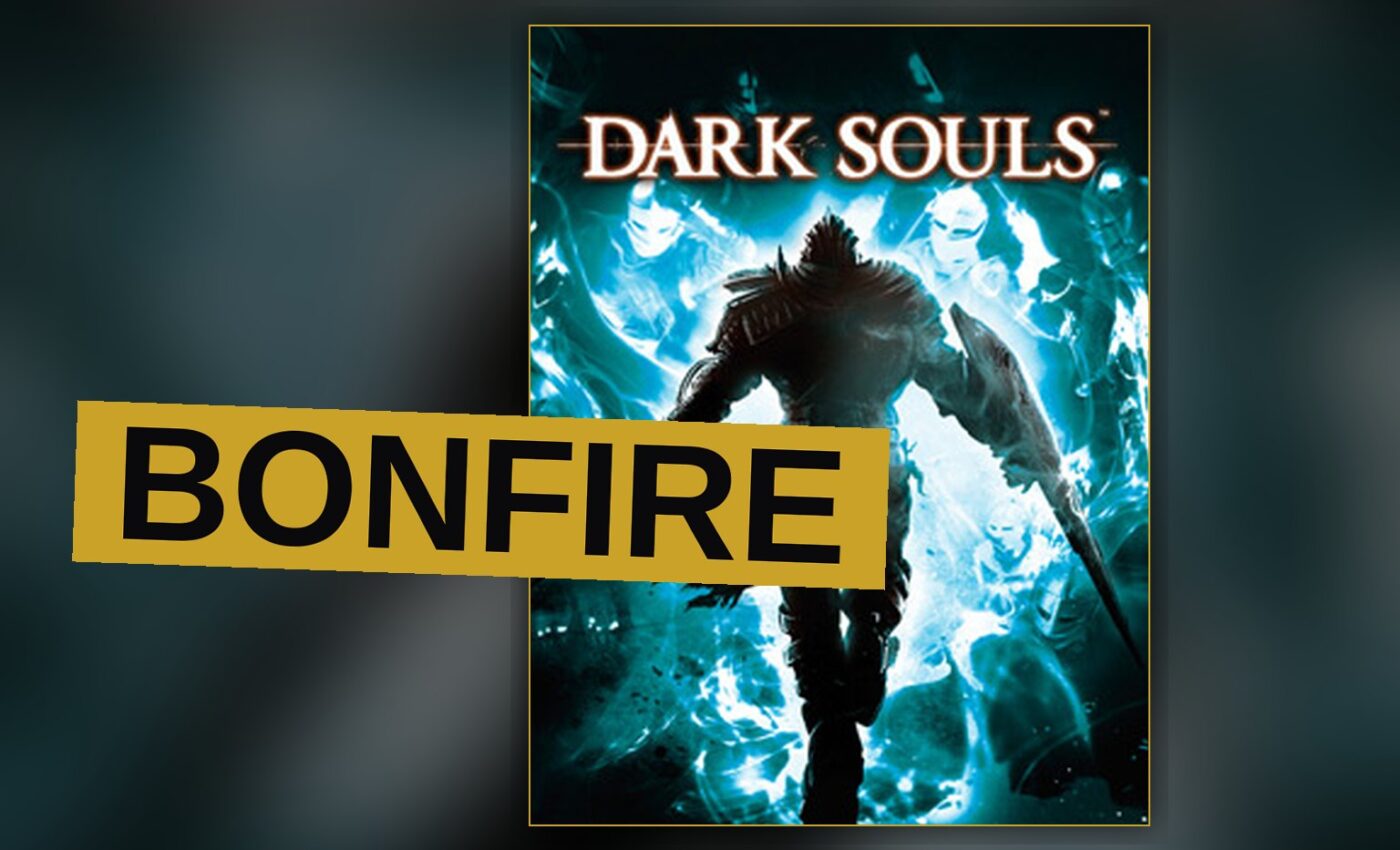
Dark Souls is a game about dying, and about what you do next. FromSoftware’s action role-playing game arrived in September 2011 for PlayStation 3 and Xbox 360, and it built its reputation on refusing to hold the player’s hand. You are the Chosen Undead, and Lordran does not want you here.
Trailer, via Bandai Namco Entertainment America.
The Northern Undead Asylum
The game opens with your character imprisoned. Escaping that cell is the tutorial, and it sets the tone: the world is hostile, the exits are hidden, and the answers are not written down. Lordran is one interconnected kingdom divided into distinct regions, linked by unlockable shortcuts. Areas can be approached by multiple routes, though some paths stay locked until you meet certain prerequisites.
Bonfires and Bloodstains
Bonfires are the spine of the design. Resting restores health and Estus Flask charges, lets you level up, attune magic, and repair or upgrade equipment. It also respawns most enemies, excluding bosses, mini-bosses, and killed non-player characters. Defeating enemies grants souls, which work as both currency and experience points. Die, and you return to the last bonfire with your carried souls and humanity dropped at the place of death. Reach the bloodstain and you recover them. Die again first and they are gone.
That loop is the whole argument. Every run through a region is a negotiation between caution and greed.
Gwyn, Nito, and the Four Lords
The story is deliberately cryptic, told through item descriptions, environmental detail, and quiet NPC dialogue. The Four Lords of Cinder — Gwyn, Lord of Sunlight; Nito, the First of the Dead; the Witch of Izalith; and Seath the Scaleless — once linked the First Flame and have abandoned their thrones. You collect the Lord Souls, defeat them, and reach the Kiln of the First Flame. The ending offers a choice: link the fire, or let it fade into the Age of Dark.
Messages, Summons, and Invasions
Combat is deliberate. Melee and ranged weapons, blocking, dodge rolls, backsteps, parries. Magic splits into sorceries, miracles, and pyromancies, and spells are not cast from a mana pool — each attuned spell has limited uses, restored at a bonfire. The online layer lets players leave messages, summon allies for co-operative play, or invade other worlds for PvP. It is strange, and it works.
The Prepare to Die Edition
A Windows port with additional content, the Prepare to Die Edition, followed in August 2012. That content reached PlayStation 3 and Xbox 360 separately as the Artorias of the Abyss pack in October 2012. A remastered version came to PlayStation 4, Windows, Xbox One, and Nintendo Switch in 2018. By April 2013, the game had sold 2.37 million copies worldwide.
What Holds Up
The difficulty is the selling point and the weak spot at once. Responses to it were divided, and the original Windows version drew criticism for technical issues. But the level design is the real achievement. Lordran folds back on itself, and the shortcuts you unlock teach you the map better than any marker could.
Dark Souls is not punishing for the sake of it. It is punishing because the game trusts you to learn. Two sequels followed, Dark Souls II in 2014 and Dark Souls III in 2016, but the first one is the one that changed how the genre talks to its players.
Key facts
– Release: September 2011
– Platforms: PlayStation 3, Xbox 360
– Prepare to Die Edition: August 2012 (Windows)
– Artorias of the Abyss: October 2012 (PS3, Xbox 360)
– Remastered: 2018 (PS4, Windows, Xbox One, Nintendo Switch)
– Sales: 2.37 million worldwide by April 2013
– Score: 8.6/10
Get the Notebook.
The day's best stories and every fresh verdict, in plain English, in your inbox by seven. One email a day, no more.


