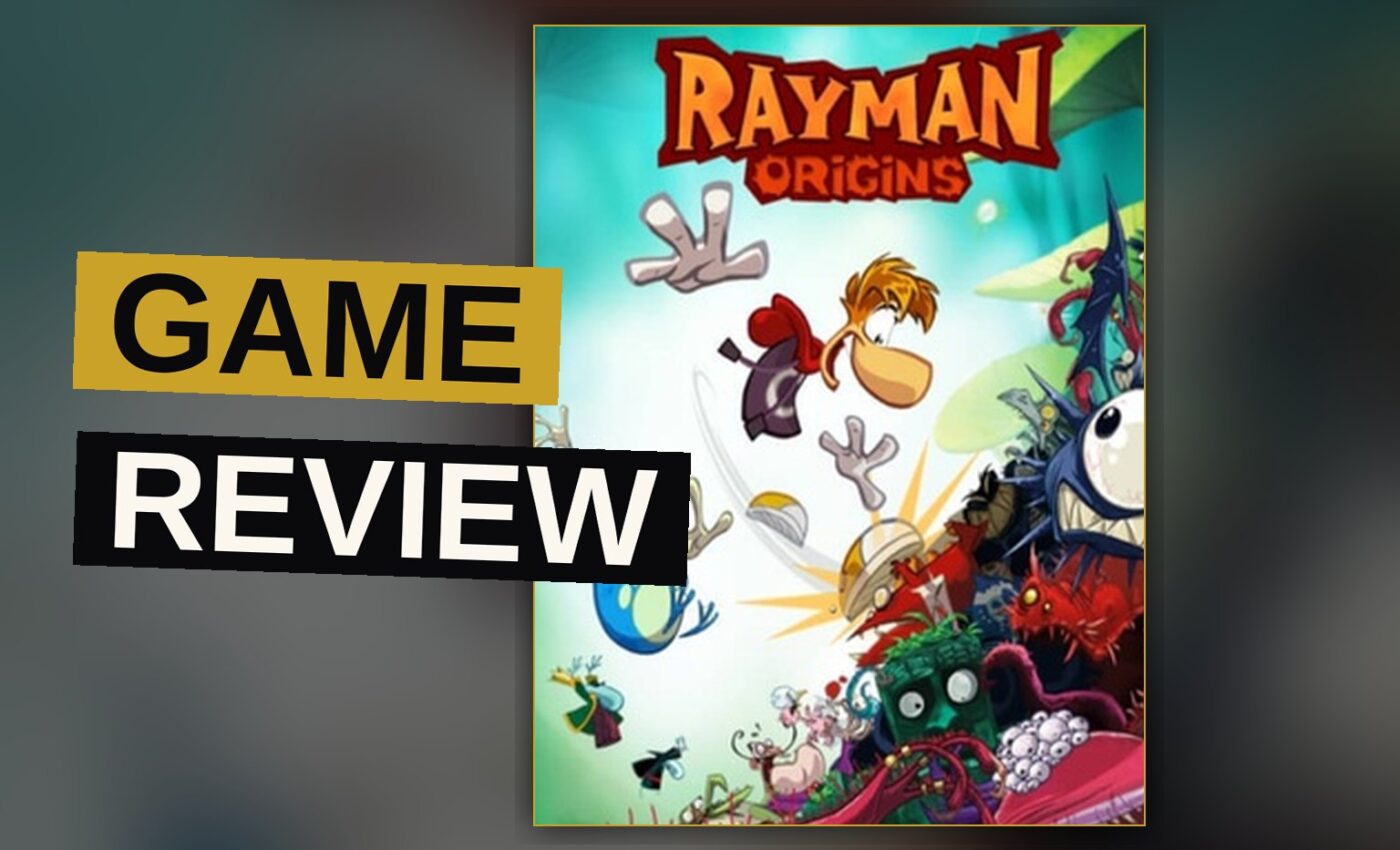
Rayman Origins landed in 2011 as the first main-line Rayman game since Rayman 3: Hoodlum Havoc in 2003. Ubisoft Montpellier built a side-scrolling platformer for PlayStation 3, Xbox 360 and Wii, with PlayStation Vita, Nintendo 3DS and Microsoft Windows versions following the next year and an OS X port from Feral Interactive landing on December 12, 2013. It earned critical acclaim for its art, its level design and its comedy, and it sold slowly at first before finding an audience.
Trailer, via Ubisoft.
A granny, a microphone, and the Snoring Tree
The story starts small and silly. Bubble Dreamer, Rayman, Globox and a couple of Teensies are asleep at the Snoring Tree, Bubble Dreamer’s resting grounds. Their snoring, picked up by a strange microphone disguised as a flower, wakes a grumpy old woman in the Land of the Livid Dead. She answers with an army of horrendous creatures and the Darktoons, who sweep across the world, capture the Electoons, imprison Betilla the Nymph and her sisters, and throw the Glade of Dreams into chaos.
Rayman and his friends fight back, lose, and get captured. Rayman escapes. The Bubble Dreamer, rattled by all of it, goes mad and starts having nightmares. The Magician then hands the heroes their task: collect enough Electoons to cure the Bubble Dreamer and put the Glade back together.
That premise is nonsense, and Rayman Origins knows it. The game treats the whole mess as an excuse to move, which is the correct instinct for a platformer. The plot never asks you to care about the Glade as a place. It asks you to run through it.
Four players, one couch, and a lot of slapping
Rayman Origins supports up to four local players, and anyone can drop in or out at any time. You pick Rayman, Globox or one of two Teensies, with more costumes unlocking as you go. You sit next to the people you play with, and the game is built entirely around that fact.
Take a hit and your character bubblizes, inflating into a ballooned state. A second player can slap you or jump on you to pop you free, a system that reads as a direct nod to New Super Mario Bros. Wii. Hearts absorb one hit. If every player is bubblized at once, or you take a hit while playing alone, the character explodes and you restart from the last checkpoint, usually a Darkblocker you already passed or the spot where you broke a cage.
The design is generous and cruel in the same breath. It wants four people laughing on a sofa, and it also wants them to fail together. Both things happen, often within the same thirty seconds.
Wall runs, mosquito rides, and the Lums
Movement opens up steadily. Rayman runs up walls, glides in midair, swims underwater and shrinks to reach areas he could not otherwise enter. Certain sections put you on a mosquito, where you shoot enemies or inhale them and fire them back out.
Yellow Lums are the currency of progress. Collect enough and you earn Electoons, which gate the story. Grab a Lum King and every Lum turns red for a short time; red Lums count double. Skull Coins sit in hidden or dangerous spots and are worth 25 Lums each, but take a hit while carrying one and you lose it and have to go back for it.
That rule is the one that decides whether a level is finished or abandoned. It turns optional collectibles into a test of nerve rather than patience. You do not fail because you cannot find the coin. You fail because you got greedy on the way out.
The Magician was the villain all along
The back half of Rayman Origins commits to a real twist. Rayman and company reach a gate that only opens if they rescue the Glade Kings, who have been turned into monsters by Bubble Dreamer’s nightmares. Free the kings and the Nymphs open the stargate, sending Rayman to a hideout in Moody Clouds, a steampunk-themed land.
There they learn the Magician, their supposed friend, caused everything. He admires Mr. Dark, the villain of the original Rayman. He is a Teensy who was mocked by the other Teensies for his weaker magic, and he set the Land of the Livid Dead forces and the Nightmares loose while everyone else was busy.
It is a thin motivation, and the game does not linger on it. The reveal lands as a joke more than a betrayal, which suits a game whose emotional register tops out at cheerful mischief. The Magician is not a tragic figure. He is a petty one, and Rayman Origins is fine with that.
A release schedule that split the audience
Rayman Origins did not arrive everywhere at once.
| Platform | Release window |
|---|---|
| PlayStation 3, Xbox 360, Wii | 2011, worldwide |
| PlayStation Vita, Nintendo 3DS, Microsoft Windows | 2012 |
| OS X (Feral Interactive) | December 12, 2013 |
| Rayman Jungle Run (Windows Phone 8) | May 29, 2013 |
| Rayman Legends (sequel) | 2013 |
The staggered launch is not a footnote. Rayman Origins was praised everywhere it went and still posted sluggish sales at the start, then sold well enough over time to contribute to Ubisoft’s earnings. A game this good should not have needed a slow burn to find its footing.
Pastagames, Jungle Run, and what came next
A mobile spin-off, Rayman Jungle Run, was developed by Pastagames and released for iOS, Android and Windows Phone 8, the last on May 29, 2013.
The bigger consequence was Rayman Legends, released in 2013 for Microsoft Windows, PlayStation 3, PlayStation Vita, Wii U and Xbox 360. It drew similar critical acclaim.
A remastered version, Rayman Origins: Enhanced Edition, is scheduled for Nintendo Switch 2, PlayStation 5, Windows and Xbox Series X/S on December 3, 2026. That is a fifteen-year gap between the original and its re-release.
What holds up and what does not
The art style is the first thing anyone mentions, and it deserves the mention. Rayman Origins looks hand-drawn and hand-painted in motion, with a level of detail that stands out against its contemporaries. The animation carries the comedy. Characters move with a looseness that sells every pratfall without a line of dialogue.
The level design is the second thing, and it is the more important one. Rayman Origins understands that a platformer lives or dies on the rhythm of its jumps, and it builds that rhythm deliberately, then breaks it on purpose. The difficulty curve is honest. It gets hard, and it stays hard.
The local-only multiplayer is the real limitation. Four-player co-op is the best way to play Rayman Origins, and it requires four people in one room with four controllers. In 2011 that was normal. It is not normal now.
The story is the weakest part, and it does not matter. The Magician’s turn is thin, the Glade of Dreams is a backdrop rather than a place, and the Bubble Dreamer’s nightmares are a device to justify the level themes. None of that costs the game anything, because the game was never selling you a story.
Where this one lands
Rayman Origins earns its reputation on mechanics rather than nostalgia. Ubisoft Montpellier took the original Rayman’s side-scrolling structure, rebuilt it with modern movement, and added a four-player mode that turns a solo challenge into a group argument. The Lums, the Skull Coins, the bubblize-and-slap recovery system and the mosquito sections all pull in the same direction: keep moving, keep laughing, keep trying.
The sluggish early sales are the most interesting fact in its history. Critical acclaim and commercial performance do not move together, and Rayman Origins is a clean example. It was praised for its graphics, its level design and its humor, and it still took time to find buyers. That says more about how platformers were marketed in 2011 than about the game itself.
Fifteen years on, the case for Rayman Origins is simple. It is one of the best platformers of its decade, and the only thing standing between it and a higher score is a multiplayer mode that refuses to leave the living room. The Enhanced Edition arriving on December 3, 2026 will test whether that limitation still reads as a flaw or as the point. Either way, the game underneath has not aged.
Get the Notebook.
The day's best stories and every fresh verdict, in plain English, in your inbox by seven. One email a day, no more.