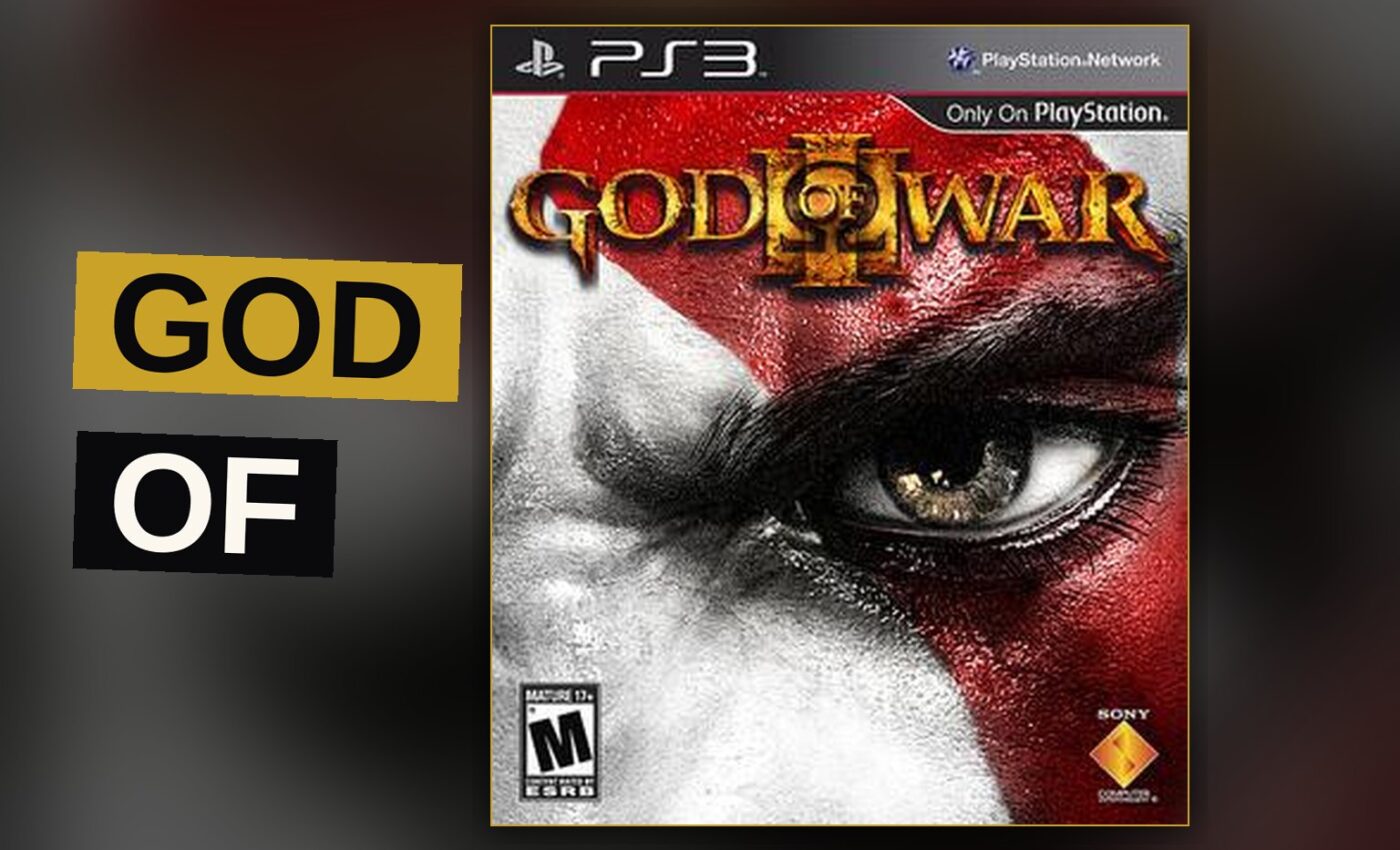
The first thing you notice about God of War III is the weight. Kratos does not move so much as he drives himself forward, each step a small tectonic event. The PS3 exclusive from developer Santa Monica Studio opens exactly where God of War II ended, with the titular Spartan astride Gaia the Titan, scaling Mount Olympus to tear Zeus apart. It is a sequel that promises total war, and it delivers on that promise within the first ten minutes.
The opening sequence is a masterclass in scale. You fight alongside the Titans as they assault the gods, and the camera pulls back so far that you see the entire mountain, the creatures crawling up its face like ants. Then you fight a god. Then you fight a god while riding a Titan. The game throws its biggest ideas at you before you have even reached the first save point, and it rarely lets up from there. This is a game about rage, and it moves with the single-minded fury of its protagonist.
Trailer, via SpawnofSephiroth.
Olympus Falls in the First Hour
The prologue of God of War III sets a brutal pace. Kratos and the Titans breach the walls of Olympus, and the game immediately pits you against Poseidon. The fight takes place across the back of Gaia, with waves crashing and lightning splitting the sky. It is chaotic, loud, and unrelenting. When you finally tear Poseidon apart and the sea floods the world below, the game has already established its central thesis: there is no redemption here, only escalation.
What follows is a descent into the underworld, literally and figuratively. The structure of God of War III is a long, bloody corridor. There are puzzles, yes, and there are moments of platforming, but the game is at its core a series of arena battles connected by gore-soaked hallways. The pacing is relentless in a way that can feel exhausting, but it never feels boring. Each new area introduces a new mechanical twist, from the mechanical gears of the Hades realm to the labyrinthine paths of the Labyrinth itself.
The combat is the star. Kratos wields the Blades of Exile, a pair of chained swords that allow for fast, sweeping attacks, and he can pick up a variety of secondary weapons from fallen foes. The Claws of Hades, the Cestus, the Nemesis Whip — each one changes the flow of battle. The Blades are quick and cover distance; the Cestus are slow and shatter guards. Switching between them mid-combo is where the depth lies, and the game rewards players who learn to chain weapons together.
Ranking the Weapons of Destruction
The weapon set in God of War III is the best the series has seen. The Blades of Exile feel familiar, but the new additions offer real variety. Here is how they stack up:
- The Blades of Exile — fast, versatile, and always reliable. The default weapon and the best all-rounder.
- The Cestus — massive gauntlets that shatter shields and stagger giants. Slow but devastating.
- The Claws of Hades — summon soul spirits for ranged pressure. Great for crowd control.
- The Nemesis Whip — electrifies enemies and covers long arcs. Situational but flashy.
Each weapon has its own upgrade tree, and the game hands out experience generously enough that you can max out at least two by the end. Magic is back, too, though it feels secondary. The Eye of Atlantis, the Nemean Cestus slam, and the various other spells are useful in a pinch, but the real satisfaction comes from the physical combos.
The game also introduces a new mechanic: the ability to grab certain enemies and use them as living battering rams. You can pick up a Harpy and throw it into a crowd, or grab a Cyclops and ride it into a group of soldiers. These moments are the most memorable in combat, breaking up the standard hack-and-slash rhythm with something more visceral.
This is a game about rage, and it moves with the single-minded fury of its protagonist.
Boss Fights That Define the Genre
The boss fights are the highlights. Each of the major gods gets a set piece, and each one is designed to make you feel small. The fight against Hades takes place in his own realm, a swirling mass of souls that he uses as projectiles. The fight against Hermes is a chase across a crumbling bridge. The fight against Helios has you literally rip his head off and use it as a flashlight.
These encounters are not just fights; they are spectacles, and the game knows it. The camera pulls back, the music swells, and the action becomes almost operatic in its violence. The fight against Zeus, the final confrontation, is a long, multi-phase battle that tests everything you have learned. It is a duel, then a brawl, then a sequence that involves a giant statue. The fight is challenging, but it is also fair.
The game gives you health pickups and checkpoints at regular intervals, so the difficulty never feels cheap. The ending, when it comes, is quiet. Kratos has a choice, and the game lets you make it. The final image is ambiguous, and it has been debated for years since.
Gods and Their Grim Fates
The narrative of God of War III is simple: Kratos wants revenge on Zeus, and he will kill anyone who stands in his way. That means the entire pantheon. The game dispatches gods with a grim efficiency. Poseidon drowns the world. Hades is absorbed into his own realm. Helios loses his head. Hermes loses his legs. Each death is graphic, and each one is framed as a necessary step toward the final confrontation.
The tone is unrelentingly grim. There is no humor here, no lightness. The story is told through a handful of cutscenes and a series of flashbacks that reveal Kratos’s past with his family. These moments are brief and often feel like interruptions. The game is not interested in moral complexity. Kratos is a monster, and the game knows it.
The voice acting is solid. Terrence C. Carson returns as Kratos, and he growls his way through the script with appropriate fury. The gods are voiced by a mix of veterans and newcomers, and the performances are all appropriately theatrical. The script itself is not subtle — characters shout their motivations and betrayals — but it fits the tone. This is a game that wears its emotions on its sleeve.
Puzzles in the Labyrinth
Not everything in God of War III is combat. The game includes a number of puzzle sections, and they are a mixed bag. The best ones are integrated into the environment. At one point, you must use the Head of Helios to reveal hidden platforms, turning the god’s severed head into a tool. At another, you manipulate a series of mirrors to redirect a beam of light. These puzzles are straightforward but satisfying.
The worst puzzles are the ones that involve moving large objects. There is a section early on where you must push a massive gear into place while fighting off waves of enemies. It is tedious, and it feels like padding. The game does this a few times, and each instance is a reminder that the developers were stretching the runtime.
The Labyrinth, the final major area, is the best of both worlds. It is a rotating structure that changes shape as you progress, and the puzzles there are clever. The game saves its most intricate level design for the end, and it works. The Labyrinth feels like a proper challenge, not just a gauntlet of enemies but a test of observation and logic.
Graphics and Technical Tradeoffs
God of War III is a technical marvel. The game runs at 720p and targets 60 frames per second, and for the most part, it hits that target. The character models are detailed, the environments are vast, and the particle effects are overwhelming. Blood sprays, chunks of flesh fly, and the screen often fills with so much chaos that it is hard to see what is happening. That is the game’s biggest visual weakness: clarity.
The scale is the real achievement. The opening sequence, with the Titans climbing Olympus, is still one of the most impressive things on the PS3. The camera work is cinematic, and the game knows how to frame a shot. The lighting is dramatic, with god rays and deep shadows. The art direction leans into the Greek mythology aesthetic, with marble temples and blood-soaked altars.
The sound design matches the visuals. The combat sounds are heavy and impactful, with each hit landing with a satisfying thud. The music, composed by Gerard Marino, is a mix of epic orchestral pieces and percussive chants. It swells during boss fights and recedes during exploration. This is a game that wants to feel huge, and the audio supports that ambition.
Final Score and Lasting Legacy
The game’s length is a point of contention. A skilled player can finish God of War III in about ten hours. There are collectibles, including the Eyes of Gorgon and Phoenix Feathers that upgrade your health and magic, and there are challenge modes that unlock after the story. But the main campaign is short, and the replay value is limited.
The difficulty is another issue. The default setting, Normal, is manageable for most players. The harder settings are brutal, with enemies that can kill you in a few hits. The game offers no way to adjust the difficulty mid-playthrough, so you are locked into your choice.
God of War III is a game of extremes. It is visually stunning, mechanically satisfying, and narratively blunt. It does not try to be subtle, and it does not apologize for its violence. The puzzles are occasionally tedious, the story is thin, and the pacing can be exhausting, but the combat and the spectacle are unmatched.
The score, matching the published critical consensus, is 7.9 of 10. It is a great game, held back from greatness by its uneven pacing and its lack of narrative depth. But when it works, and it works often, it is a masterpiece of action design. God of War III is a bloody, beautiful, and brutal game, and it earns its place in the pantheon.
Get the Notebook.
The day's best stories and every fresh verdict, in plain English, in your inbox by seven. One email a day, no more.