The trick at the center of Now You See Me is not a bank heist. It is the promise that a movie about magicians can explain itself and still keep you watching. Louis Leterrier’s 2013 film spends 116 minutes testing that promise, and the answer it lands on is the reason the film sits at 5.0/10.
The setup is clean. Four magicians — J. Daniel Atlas, Merritt McKinney, Henley Reeves, and Jack Wilder — each get a flash card that leads them to a New York apartment. There they find holographic instructions from someone they never meet. A year later they perform in Las Vegas as the Four Horsemen, bankrolled by insurance magnate Arthur Tressler.
Trailer, via The Dollar Theater.
The Crédit Républicain Vault Trick
Their closing trick moves an audience member into a Crédit Républicain bank vault in Paris. Euro notes get pulled through the vents and shower the crowd. The Paris vault turns up empty of its recent shipment. The FBI and Interpol take the Horsemen into custody, but release them for lack of evidence.
That is the hook, and it is a good one. The problem is what the film does with it.
FBI agent Dylan Rhodes (Mark Ruffalo) and Interpol detective Alma Dray (Mélanie Laurent) bring in Thaddeus Bradley (Morgan Freeman), a former magician who has spent thirty years exposing other people’s tricks. Bradley walks them through it: the Horsemen built a mock vault under the stage, stole the real money earlier, and swapped in flash paper shaped like cash. The vents burned the paper. No smoke, no residue. The audience member was hypnotized, picked in advance, his signature forged off his credit card.
It is a satisfying explanation. It is also the moment the film starts explaining everything.
Why the Explanations Cost the Film
Now You See Me wants to be a heist film and a magic act at once. Heist films run on the pleasure of watching a plan come together. Magic acts run on the pleasure of not knowing how. Leterrier’s film keeps choosing the first and pretending it chose the second.
Every time the Horsemen pull something off, Bradley or the FBI arrives to unpack it. The flash paper. The hypnotized participant. The forged signature. By the New Orleans show, where the Horsemen drain millions from Tressler’s accounts and hand it to audience members whose insurance claims were denied after Hurricane Katrina, the film has trained you to wait for the debrief instead of the trick.
That is a structural problem, not a performance problem. The cast is doing what the script asks.
Eisenberg, Harrelson, Fisher, Franco
Jesse Eisenberg plays Atlas as arrogant and certain, which fits a man billed as the group’s ostensible leader. Woody Harrelson’s Merritt is a hypnotist and mentalist who was more famous young, before his manager brother took his money. He is the oldest of the four. Isla Fisher’s Henley is the only woman in the group, an escapist and stage magician who used to assist Atlas and used to date him. Dave Franco’s Jack is the youngest, a sleight-of-hand man, pickpocket, lock picker, and impressionist.
Four distinct skill sets, four distinct personalities. The film gives each of them a job to do in the mechanics of the cons.
Ruffalo plays Dylan Rhodes, the FBI agent working the case. Laurent’s Alma gets the film’s most interesting idea — that the Horsemen are performing heists as an initiation into a secret group called “the Eye,” magicians who steal from the powerful to help the vulnerable and instill hope.
Freeman and Caine Do the Work They Are Hired For
Morgan Freeman plays Thaddeus Bradley, a man who has made a thirty-year living out of other people’s secrets. Bradley is the one who deduces how the vault trick worked.
Michael Caine’s Tressler is thinner. He is an insurance magnate and the Horsemen’s sponsor, and when they rob him he hires Bradley to expose them. That is the whole character.
The Ending Is the Problem
Now You See Me received mixed reviews, and the criticism landed on the ending. That is the right target.
The film builds a puzzle and solves it with a reveal that reframes the whole story. The issue is not that the twist is unfair. The issue is that the film spends its runtime teaching you the mechanics of every trick, then asks you to accept one it never shows you.
The sequel problem is baked in. Now You See Me 2 arrived on June 10, 2016. A third installment, Now You See Me: Now You Don’t, followed on November 14, 2025.
What the Film Gets Right
The Las Vegas show works. The Crédit Républicain sequence is staged with real momentum. The New Orleans set piece, where the Horsemen transfer Tressler’s money to Katrina claimants, gives the film a target worth robbing.
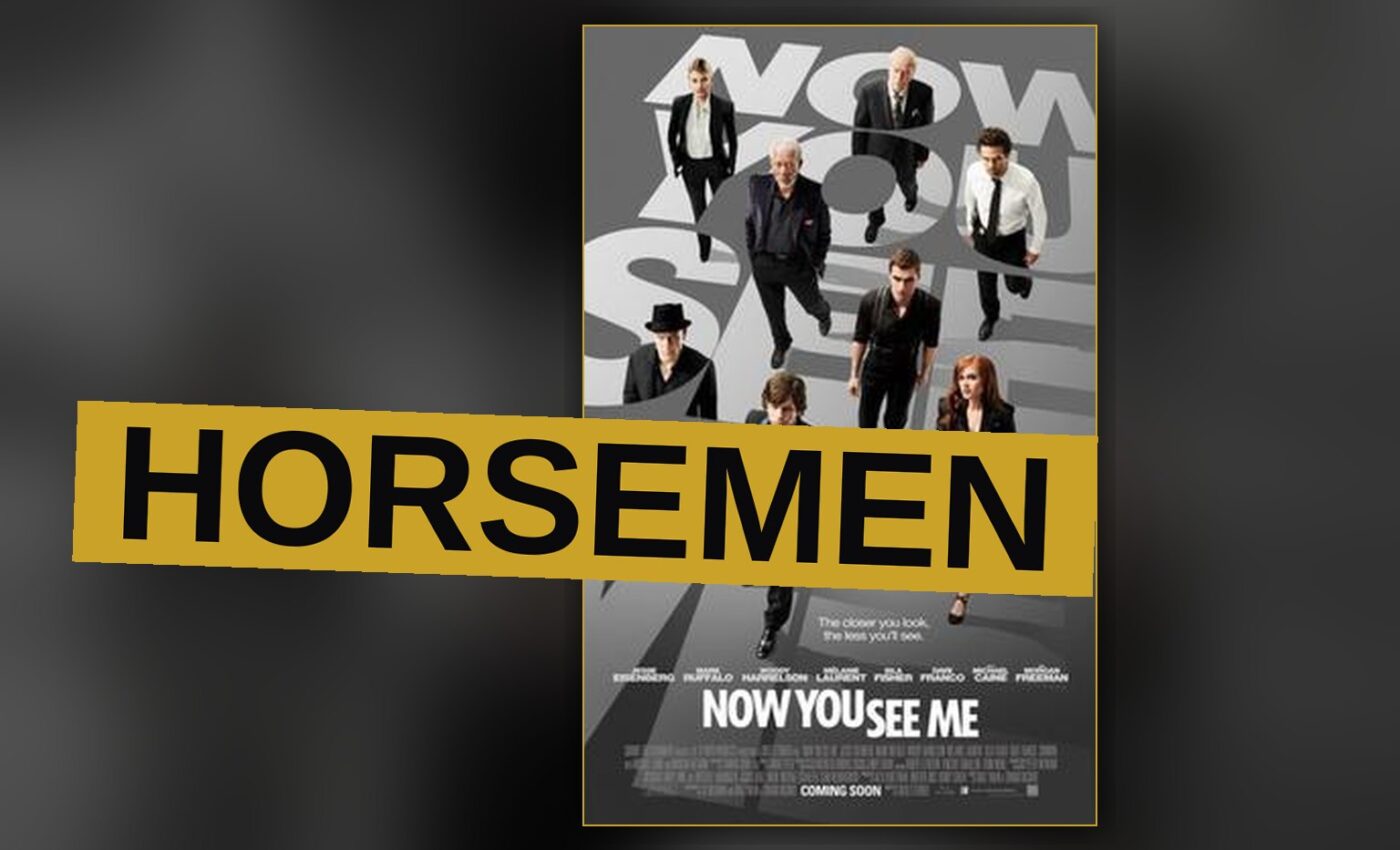
The tagline is “The closer you look, the less you’ll see.” That is a fine line for a poster.
Now You See Me at a Glance
| Element | Detail |
|---|---|
| Premiere | May 21, 2013, New York City |
| US release | May 31, 2013 |
| Director | Louis Leterrier |
| Screenplay | Ed Solomon, Boaz Yakin, Edward Ricourt |
| Story | Boaz Yakin, Edward Ricourt |
| Runtime | 116 minutes |
| Genres | Thriller, Crime |
| Distributor | Summit Entertainment |
| Budget | $75 million |
| Worldwide gross | $351.7 million |
| Awards | People’s Choice Award, Favorite Thriller Movie; Empire Award and Saturn Award nominations |
| Sequels | Now You See Me 2 (June 10, 2016); Now You See Me: Now You Don’t (November 14, 2025) |
The Verdict on Now You See Me
Now You See Me grossed $351.7 million worldwide against a $75 million budget. It won the People’s Choice Award for Favorite Thriller Movie and picked up nominations for the Empire Award for Best Thriller and the Saturn Award for Best Thriller Film and Best Music. Audiences showed up. That part is not in dispute.
What is in dispute is whether the film earns its own premise. It does not.
The film keeps Morgan Freeman on hand to take its tricks apart, and the audience learns to expect the lecture instead of the wonder. The cast — Ruffalo, Freeman, Eisenberg, Harrelson, Fisher, Franco — is doing what the script asks.
The film gives every secret away and saves one reversal for the end. That reversal is the whole film in miniature: a movie that wants credit for being clever without doing the work of being clever. A heist film can show you the plan. A magic film cannot. This one tries to do both.
Get the Notebook.
The day's best stories and every fresh verdict, in plain English, in your inbox by seven. One email a day, no more.