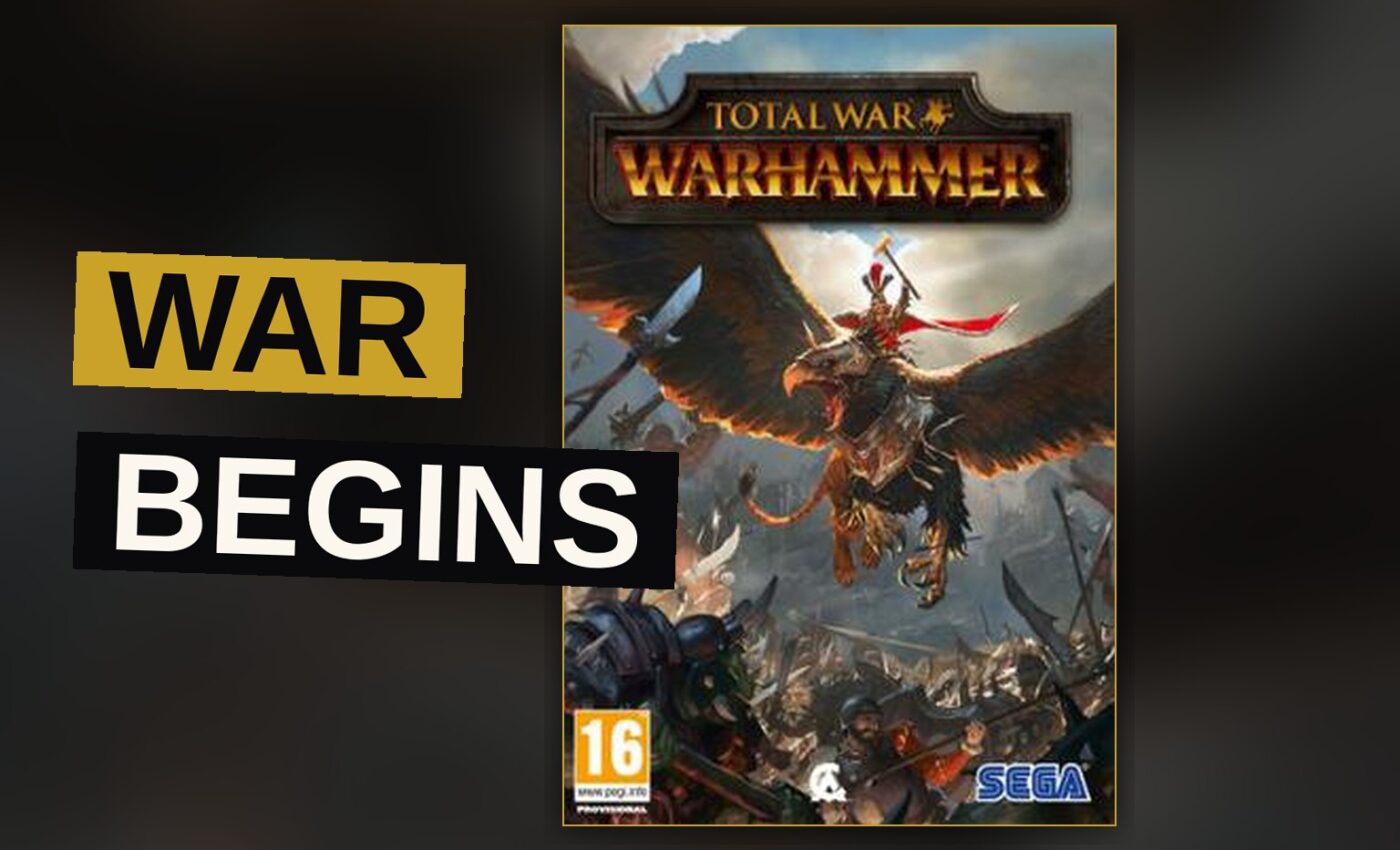
Total War: Warhammer is the first game in the long-running strategy series to abandon history. Instead of Napoleon or Rome, Creative Assembly built its 2016 release around Games Workshop’s Warhammer Fantasy setting, and the swap works. The game sold more than half a million copies in its first few days and pulled an 8.5/10 aggregate from 23 outlets. It also kicked off a trilogy that would run through 2017 and 2022.
Trailer, via IGDBcom.
Karl Franz and the Fractured Empire
The campaign begins with Karl Franz elected Emperor. His kingdom is already split — a civil war has broken out, and the elector counts resent his rule. His task is to unite the Empire before he can challenge the realms around it and bring peace to the Old World.
That peace does not hold. The Dwarfs carry an eternal grudge against the Greenskins. The Vampire Counts under Mannfred von Carstein raise armies from the dead in Sylvania and push west toward the Imperial throne. And in the north, the Chaos horde rides south to destroy everything in its path.
Four factions were playable at launch:
- The Empire, made up of humans
- The Greenskins, orcs and goblins
- The Dwarfs
- The Vampire Counts, the undead
A fifth, Chaos, was free to anyone who pre-ordered or bought the game in its first week, then sold as downloadable content. The Bretonnians, another human faction, arrived in February 2017 for campaign, skirmish and multiplayer.
Two Games Stacked on Each Other
Total War: Warhammer runs on two scales at once. On the campaign map, play is turn-based: you manage cities, move armies and run the politics of a kingdom. In battle, it switches to real-time tactics, and you control individual units and characters inside an army.
That structure is the same one the series has used for years. What changes is the setting. Monsters, warriors and heroes from the Warhammer universe take the field, controlled by either the player or the computer. The game lists real-time strategy, role-playing, turn-based strategy and strategy among its genres, and it supports single player, multiplayer and co-operative play from a bird’s-eye isometric view.
Each faction gets its own units and its own campaign mechanic, a first for the series. The Greenskins, who field Trolls and Giants, run on the “Waaagh!” system. That kind of faction-specific machinery is where the fantasy setting earns its keep rather than just reskinning historical troops.
What the Old World Gets Right
The pitch for Total War: Warhammer was a combination of colossal real-time battles and a turn-based sandbox of statecraft, politics and empire building. The game delivers hundreds of hours of that, and the factions give those hours a reason to differ from one another.
The Empire plays as a political repair job. The Dwarfs march out of their mountain strongholds to right old injustices. The Greenskins want carnage and get a system built around it. The Vampire Counts want the throne and hide their motives while they take it. Four campaigns, four arguments about what conquest is for.
The trilogy plan was already in place at launch. Total War: Warhammer was designed to combine with two further standalone instalments and extra content packs into what the series called the largest Total War experience ever. That is a promise about scale, and it is the right promise for this material. Warhammer Fantasy has the depth to fill it.
The Chaos Threat in the North
The northern threat is the campaign’s real spine. While the Old World tears itself apart over betrayal and war, something larger whispers from the north, and the fabric of reality begins to bend.
That is a strong frame for a strategy game. Your rivals are not the only problem. The map itself is a clock.
It also gives the four launch factions a reason to matter beyond their unit rosters. Karl Franz wants a banner strong enough to face a common enemy. Thorgrim wants old wrongs answered. Grimgor wants the fight. Mannfred wants the throne and says nothing about why.
Where the Game Stands
Total War: Warhammer is the tenth title in the series and the first to leave history behind. That decision could have been a gimmick. It is not, because the factions are built as arguments rather than skins, and because the campaign layer gives each one a different problem to solve.
The 8.5/10 aggregate from 23 outlets is a fair read. This is not a game that reinvents the turn-based campaign or the real-time battle. It takes both and finds material that fits them better than another century of European history would have.
The half-million copies sold in the first few days say the audience agreed. The two sequels that followed say the studio did too.
What matters most here is the trilogy structure. Total War: Warhammer was never meant to stand alone. It was built to combine with two more standalone games and additional content packs into one large experience. Judged on its own, it is a strong first instalment with four distinct factions and a northern threat that keeps the campaign honest. Judged as the opening of that trilogy, it is the foundation everything else rests on, and the foundation is solid.
The weak point is the launch roster. Four factions is a thin starting set for a game this size, and putting Chaos behind a pre-order window and then paid DLC splits the audience on what should be a core threat. The Bretonnians arriving in February 2017 helped, but the base game’s faction count is the one place where the ambition and the delivery do not quite line up.
That is a complaint about scope, not about quality. The turn-based campaign and the real-time battles both do what they set out to do, and the Warhammer setting gives them room the historical games never had. Monsters, magic and flying creatures change what a battle line means. The Old World gives the politics something worth fighting over.
For anyone who has bounced off earlier Total War games because the settings blurred together, this is the one that does not. The factions are distinct, the campaign mechanics are distinct, and the northern threat gives the whole map a direction. It is the strongest argument the series has made for leaving history behind.
The Numbers
- Released: 2016
- Developer: Creative Assembly
- Publisher: Sega
- Platforms: PC (Windows), macOS, Linux
- macOS and Linux port: Feral Interactive
- Series position: tenth Total War title, first in the Warhammer trilogy
- Launch factions: Empire, Greenskins, Dwarfs, Vampire Counts
- Chaos faction: free with pre-order or first-week purchase, later DLC
- Bretonnians: added February 2017
- First few days sales: over half a million copies
- Sequels: Total War: Warhammer II (2017), Total War: Warhammer III (2022)
- Critic aggregate: 8.5/10 from 23 outlets
Get the Notebook.
The day's best stories and every fresh verdict, in plain English, in your inbox by seven. One email a day, no more.