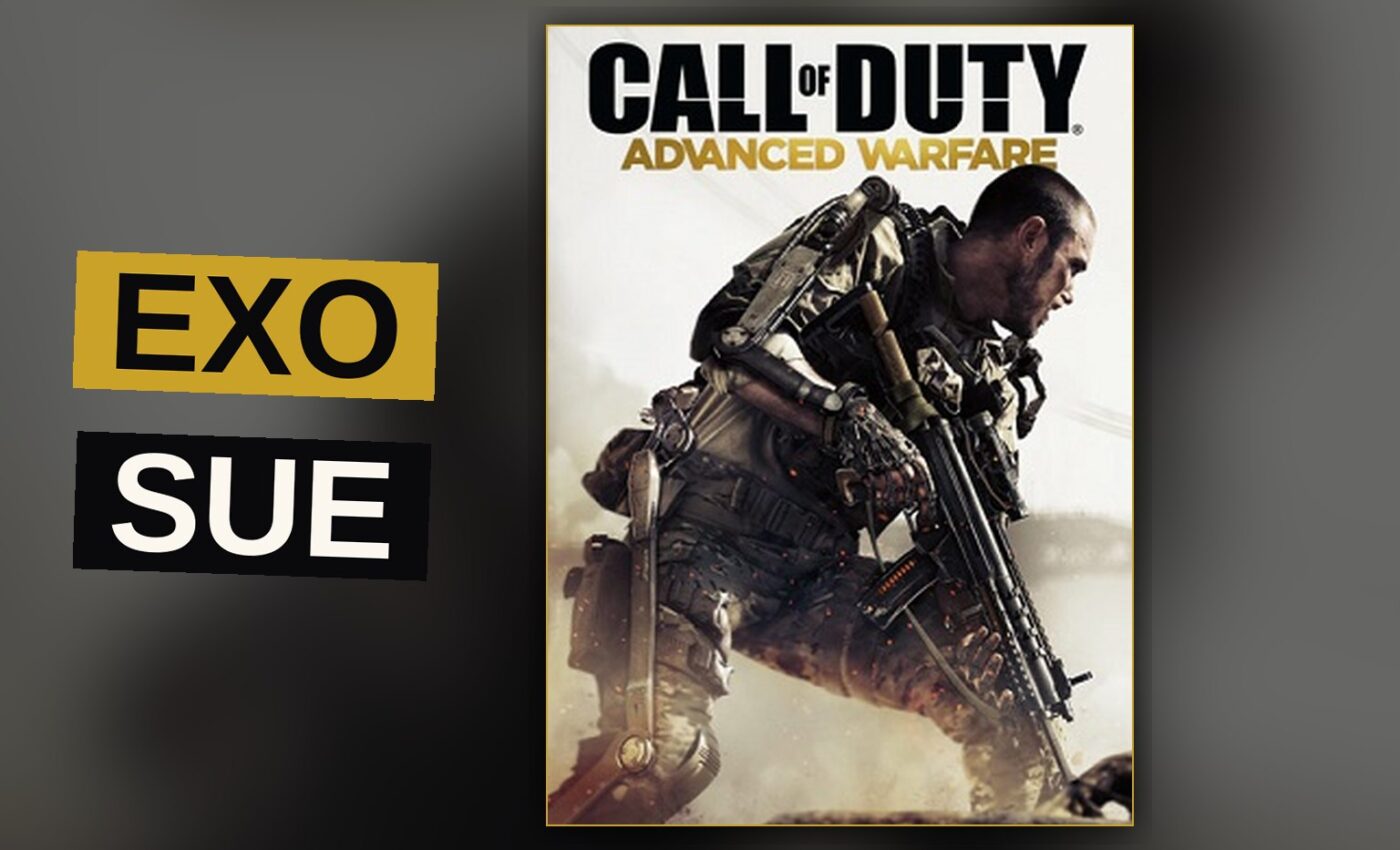
Call of Duty: Advanced Warfare arrived in 2014 with a jetpack, a rewritten engine, and Kevin Spacey. It is the eleventh major installment in the Call of Duty series, and the first that Sledgehammer Games built as the primary developer. It is also the first entry since Call of Duty 2 to run on an engine that was mostly rewritten and built from scratch.
Trailer, via IGDBcom.
Exo movements change the floor
Advanced Warfare, like the other Call of Duty titles, is a first-person shooter. The Exoskeleton lets the player boost, dash, and sky jump. The general gunplay remains unchanged, apart from new mechanics.
Advanced Warfare is the first game in the series that lets the player choose differing types of conventional weaponry. Regular conventional firearms sit alongside laser and directed-energy weaponry, and the two have differing attributes. That choice is a first for the series.
There is no traditional heads-up display. All information reaches the player through holographic projections from the weapon equipped. Exo abilities sit on top of the movement. Exo Cloak, for example, lets a player turn transparent for stealth for a period of time.
Jack Mitchell, Seoul, and Atlas
The story is set between 2054 and 2061. It follows Jack Mitchell of the United States Marine Corps, who is wounded in a battle in Seoul and discharged. Atlas, a private military corporation led by Jonathan Irons, recruits him and gives him advanced technology to return to the field.
Atlas sells its services to the highest bidder. As a global terrorist group carries out devastating attacks, Atlas grows into the world’s dominant military force. Mitchell is drawn into operations that raise questions about who is really steering the conflict.
Sledgehammer employed veteran actors Troy Baker and Kevin Spacey in lead roles. The single-player campaign is built as a cinematic story around one protagonist, and the publisher is Activision.
What High Moon and Raven built
Sledgehammer Games developed the PlayStation 4, Windows, and Xbox One versions. High Moon Studios developed the versions released on PlayStation 3 and Xbox 360. Raven Software developed the game’s multiplayer and the Exo-Zombies mode.
The wave-based cooperative survival mode and the multiplayer both build on the Exoskeleton movement and a loadout customization system. Exo abilities like Exo Cloak sit on top of that.
The game supports single player, multiplayer, co-operative, and split screen.
The Vietnam game that never shipped
Sledgehammer had been at work on a title set during the Vietnam War before Advanced Warfare took shape. That earlier project is the road not taken here. Work on Advanced Warfare itself started in late 2011, just before Modern Warfare 3 reached shelves.
The result was the first entry in the series since Call of Duty 2 to run on a game engine that was mostly re-written and built from scratch. A studio on its first primary Call of Duty was also working with new tools underneath it.
Movement, modes, and who built what
| Mode | What it adds | Who built it |
|---|---|---|
| Single-player campaign | Jack Mitchell, Atlas, a cinematic story set between 2054 and 2061 | Sledgehammer Games |
| Multiplayer | Exo movement plus loadout customization | Raven Software |
| Exo-Zombies | Wave-based cooperative survival | Raven Software |
| Split screen | Local play alongside the standard modes | — |
The campaign carries the cast and the plot. The multiplayer and the wave-based cooperative survival mode both build on the Exoskeleton movement and a loadout customization system.
Visuals, voice acting, and the Ghosts problem
Advanced Warfare was released to a positive critical reception and was declared an improvement over its predecessor, Call of Duty: Ghosts. Many critics praised the visuals, voice acting, single-player campaign, and fast-paced gameplay, but some criticism followed. The source record is truncated at that point, so what the criticism targeted is not known here.
The published critical score is 8.0/10, an aggregate across 20 outlets.
The engine, the cast, and the split
The engine rewrite is the part of this game that is easiest to miss. A mostly new engine, built from scratch, on a studio’s first primary Call of Duty, shipping across five platforms — that is the fact the source gives, and it is the fact worth holding onto. It does not say what the rewrite cost, or whether it paid off.
The cast is the other hard fact. Troy Baker and Kevin Spacey in lead roles, in a campaign built as a cinematic story around one protagonist. The source does not describe how either performance lands, and this piece will not fill that in.
What the source does establish is the shape of the work. Sledgehammer on the PlayStation 4, Windows, and Xbox One versions. High Moon on the PlayStation 3 and Xbox 360 versions. Raven on the multiplayer and Exo-Zombies. Three studios, one box.
What the record supports
The Exo movement is the change the source documents in the most detail. Boost, dash, and sky jump. Conventional firearms plus laser and directed-energy weaponry, a first for the series. A holographic display instead of a traditional HUD. Exo Cloak for temporary transparency.
Those are the facts. What the record does not say is what any of it meant afterward. It does not say the game changed the series, or that later entries answered it, or that the movement outlasted the campaign. It does not rank the modes or the abilities. It does not describe the old-console versions as lesser.
The 8.0/10 aggregate across 20 outlets is the one number the record gives, and it is a good one. It sits next to a positive reception and a stated improvement over Ghosts. That is the whole of what the score tells you.
Twelve years on, the case for Advanced Warfare rests on what can be checked: a rewritten engine, a first for the series in weapon choice, a holographic HUD, Exo movement, and a campaign with two veteran actors in lead roles. The rest is argument, and the source does not settle it.
Get the Notebook.
The day's best stories and every fresh verdict, in plain English, in your inbox by seven. One email a day, no more.